★
Loading archive…
Loading archive…
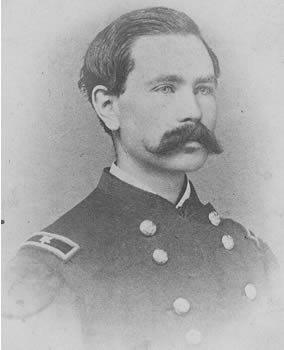
Colonel Brevet Brigadier General, U.S. Army
Support & adopt this hero ↓
Delavan Bates was a United States Army officer and Civil War veteran whose battlefield leadership at Petersburg, Virginia, ultimately earned him the Medal of Honor. During the action for which he was recognized, Bates served as Colonel of the 30th United States Colored Infantry, and his highest verified military rank was Brevet Brigadier General. Bates’s Civil War service placed him among the officers who commanded African American soldiers during one of the most important periods in the development of the United States Colored Troops. By 1864, Black regiments were being committed to major combat operations, and the 30th United States Colored Infantry became part of the Union forces operating against the Confederate defenses around Petersburg. Petersburg was strategically vital to the Confederacy because it served as a major transportation and supply center supporting Richmond, the Confederate capital. By the summer of 1864, Union forces had begun a prolonged effort to break the defensive system surrounding the city. One of the most dramatic and destructive engagements of that campaign took place on July 30, 1864, during the Battle of the Crater. Union engineers had excavated a tunnel beneath part of the Confederate defensive line and packed the underground chamber with explosives. When the mine was detonated, the blast destroyed a section of the Confederate works and created a massive crater. The explosion was intended to open a path through which Union troops could rapidly penetrate the Confederate defenses. Instead, the assault became confused and disorganized. Large numbers of Union soldiers entered the crater and nearby trenches, where movement became difficult and Confederate forces were able to regroup. The United States Colored Troops were eventually committed to the attack, and Delavan Bates led the 30th United States Colored Infantry into this extremely dangerous battlefield. Bates’s Medal of Honor action occurred on July 30, 1864, at Petersburg, Virginia. During the fighting, he displayed conspicuous gallantry while leading his regiment forward against the Confederate position. The conditions facing the attacking soldiers were exceptionally severe. The battlefield was crowded, smoke obscured visibility, artillery and small-arms fire struck the advancing formations, and the Confederate defenders were fighting from fortified positions. Bates continued to lead his men in this environment rather than directing them from a protected location. During the assault he was struck by a bullet that passed through his face, inflicting a severe wound. The injury was serious enough that surviving the battle itself was a significant achievement, yet his conduct before and during the wounding established the basis for his later Medal of Honor recognition. His action represented battlefield leadership in its most direct form. As Colonel of the regiment, Bates was responsible not only for his own safety but for the movement, discipline and effectiveness of the soldiers under his command. Leading troops during the Battle of the Crater required an officer to remain visible and exercise control in circumstances where normal battlefield organization was rapidly breaking down. The 30th United States Colored Infantry was part of a larger force of African American soldiers whose participation at the Crater became one of the most significant and tragic episodes in the combat history of the United States Colored Troops. The battle became notorious for its confusion, close-range fighting and heavy losses. For Black Union soldiers, the danger was particularly severe. They faced Confederate troops in an environment where racial hostility intensified the violence of the engagement. Bates’s leadership therefore occurred during one of the most difficult combat situations faced by any regiment in the Petersburg Campaign. His severe wound did not erase the significance of his actions. Years after the Civil War, the United States formally recognized what he had done at Petersburg. On June 22, 1891, Delavan Bates was awarded the Medal of Honor for his gallantry during the Battle of the Crater. The Medal of Honor had been authorized for the United States Army during the Civil War in 1862 and became the nation’s highest military decoration. In the nineteenth century, particularly in the decades following the Civil War, a number of veterans received the decoration years after the actions for which they were honored. Their battlefield conduct was reviewed through military records, recommendations and official documentation before recognition was granted. Bates’s case belonged to this pattern. His heroic action took place in 1864, but his Medal of Honor was formally awarded in 1891, nearly twenty-seven years later. For the project database, his decoration is correctly classified as Medal of Honor 1862–1895 Army. The 1891 date represents the formal award date, while the qualifying act of heroism remains the Battle of the Crater on July 30, 1864. No separate device, clasp, star, bar, oak leaf cluster or other additional attachment has been verified for Bates’s Medal of Honor. His Medal of Honor should therefore appear without any device or clasp. The decoration became the central verified award of his military career. Bates’s service also extended beyond the rank he held at the Crater. His verified action-time rank was Colonel, while his highest military rank was Brevet Brigadier General. The brevet system was commonly used during and after the Civil War to recognize distinguished or meritorious service. A brevet promotion represented official recognition of service and seniority, although it did not always carry the same permanent command authority or pay as a regular promotion. This distinction is important in Bates’s profile. At the Battle of the Crater, he was serving and fighting as Colonel of the 30th United States Colored Infantry. His later highest verified rank was Brevet Brigadier General. The Medal of Honor was not awarded because of that later rank. It recognized a specific act of battlefield leadership performed while he was a Colonel. A separate Army Civil War Campaign Medal is not included in his verified medal record. Bates unquestionably served during the Civil War and lived until 1918, meaning he survived well beyond the period in which the Army Civil War Campaign Medal was established. However, survival into that period and qualifying Civil War service do not by themselves prove that an individual soldier was personally issued or officially entitled to that later campaign medal. For this project, each medal must be supported by recipient-specific evidence. No sufficiently strong individual issue record, medal roll entry, named medal or comparable entitlement evidence has been verified for Delavan Bates. For that reason, the Army Civil War Campaign Medal remains excluded from his final verified rack. His final verified award history therefore consists of the Medal of Honor alone. After the Civil War, Bates lived for more than five decades. His life stretched from the era of the Civil War into the early twentieth century, allowing him to witness enormous changes in the United States and in the military institution in which he had served. The most enduring part of his public legacy, however, remained the events of July 30, 1864. At Petersburg, Bates led the 30th United States Colored Infantry during one of the most chaotic assaults of the Civil War. He remained in command under severe enemy fire and continued leading his regiment until he was shot through the face. That combination of personal courage and direct command responsibility became the basis of his Medal of Honor. His story is also inseparable from the history of the United States Colored Troops. The men of the 30th United States Colored Infantry fought as part of a broader transformation in the Union war effort, demonstrating that African American soldiers could serve effectively in major combat operations despite the discrimination and danger they faced. Bates’s role as their regimental commander placed him at the center of that history. The Battle of the Crater was not a Union tactical success, but the bravery displayed by individual soldiers and officers during the engagement remained historically significant. Bates’s Medal of Honor was recognition of such individual gallantry amid a larger battlefield disaster. Delavan Bates died on December 19, 1918. By the time of his death, the Civil War had ended more than half a century earlier, but his actions at Petersburg had already been formally preserved through the Medal of Honor. His legacy rests on his service in the United States Army, his leadership of the 30th United States Colored Infantry, his severe combat wound at the Battle of the Crater, his later brevet rank of Brigadier General and his recognition with the Medal of Honor. Delavan Bates is remembered as a United States Army Colonel, later Brevet Brigadier General, Civil War veteran, commander of African American troops and Medal of Honor recipient whose courage while leading his regiment at Petersburg became the defining act of his military career.
Become the named supporter for this profile and edit the tribute biography and portrait (Owner account required). Proceeds help keep the archive online.
$25 USD / year — annual sponsorship renewal. Keeps the page online and, where enabled, the family anniversary remembrance emails active.