★
Loading archive…
Loading archive…
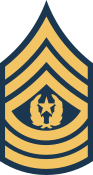
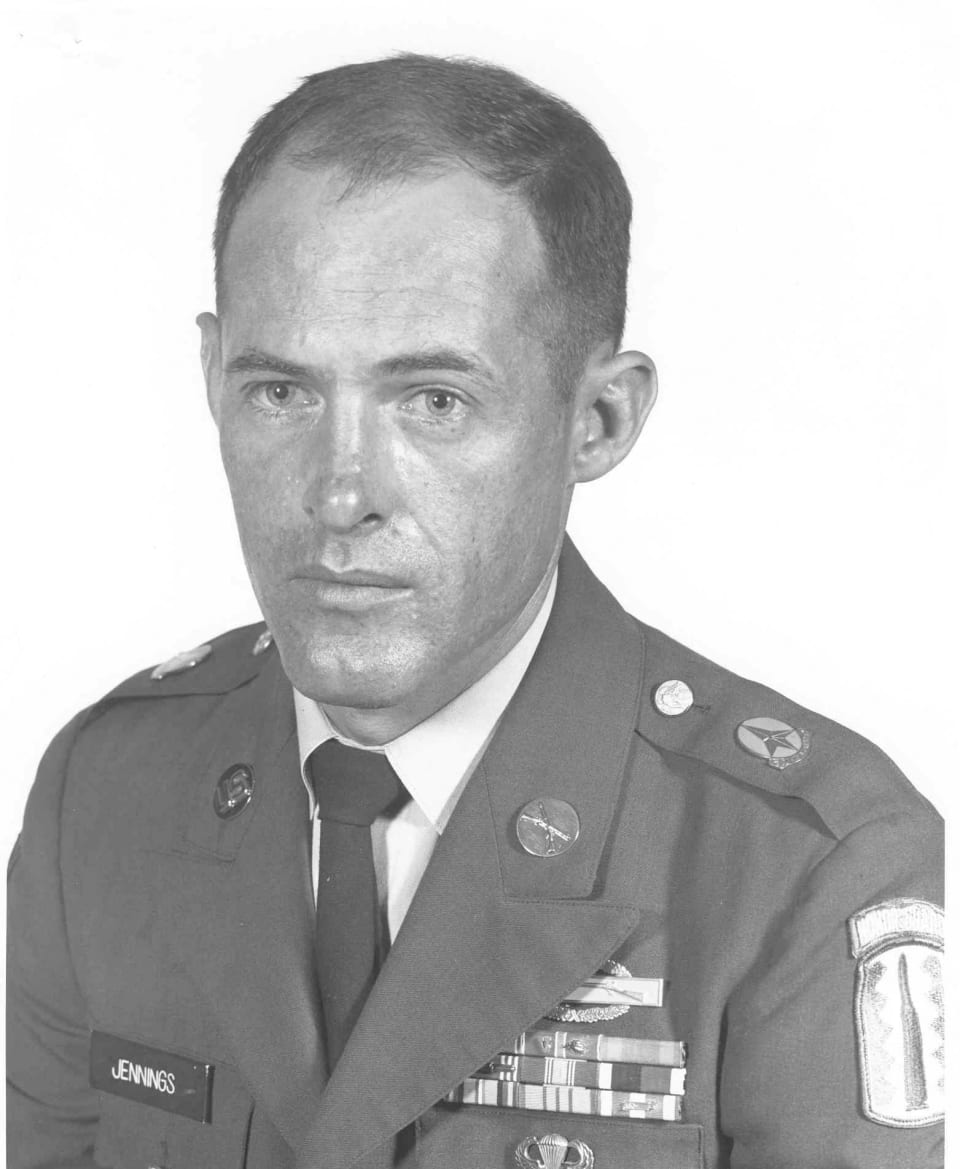
Delbert Owen Jennings — Command Sergeant Major, United States Army
Delbert Owen Jennings (23 July 1936–16 March 2003) was a United States Army soldier and Medal of Honor recipient whose leadership during the Vietnam War helped protect his fellow soldiers during an attack on their defensive position. He later attained the rank of Command Sergeant Major, the highest rank recorded in his military career.
Jennings was born in Silver City, New Mexico. His military record identifies San Francisco, California, as his place of entry into service. These locations represent different parts of his life: Silver City was his birthplace, while San Francisco was the city associated with his enlistment and Medal of Honor accreditation.
By December 1966, Jennings was serving as a Staff Sergeant with the 3rd Squad, 4th Platoon, Company C, 1st Battalion (Airborne), 12th Cavalry, 1st Air Cavalry Division. Although his regiment carried the Cavalry designation, his documented role in the action involved infantry defence, directing soldiers on the ground and helping evacuate wounded men.
On 27 December 1966, in the Kim Song Valley, Republic of Vietnam, Jennings helped defend an artillery position against an attack by a North Vietnamese Army regiment supported by mortars, recoilless rifles and machine guns. His conduct during the fighting became the basis of his Medal of Honor award.
At the beginning of the attack, Jennings occupied a bunker covering the principal enemy approach and used machine-gun fire to slow the assault. When his squad had to withdraw, he remained behind to cover its movement before rejoining his men. He subsequently stopped an enemy demolition team threatening a nearby howitzer and continued resisting the attackers while directing another withdrawal.
Recognising that some defenders were unaware of enemy soldiers behind them, Jennings crossed an area under fire to warn them and guide them toward a secondary defensive perimeter. He also helped incoming reinforcements locate their landing area by throwing white phosphorus grenades, exposing himself in the resulting light.
After the final assaults were repulsed, Jennings led volunteers beyond friendly lines to retrieve eight seriously wounded men. Despite sniper fire and the danger of booby traps, the group recovered the casualties so they could receive treatment.
For his actions, Jennings received the Medal of Honor, Army, the United States’ highest military decoration. President Lyndon B. Johnson presented the medal at the White House on 19 September 1968. Jennings received it during his lifetime, and the award recognised his conduct as a Staff Sergeant. His later rank of Command Sergeant Major should therefore be distinguished from his rank during the battle.
The Medal of Honor is the individually confirmed decoration established in the research supporting this biography. One award is documented, with no additional award device or clasp. His complete entitlement to other personal decorations, campaign medals, service medals and unit awards remains unresolved; those awards should not be inferred from the length of his career or his service in Vietnam.
Jennings’ battlefield record demonstrates direct leadership of his squad and of the volunteers who recovered the wounded. It also shows the practical responsibilities of a noncommissioned officer under attack: maintaining resistance, protecting soldiers during movement, warning others of danger and helping casualties reach medical care.
Jennings died on 16 March 2003 in Honolulu, Hawaii, aged sixty-six. He was buried at Arlington National Cemetery in Virginia, in Section 7A, Grave 157.
His legacy rests on the soldiers he helped protect and the wounded men his party brought back from beyond the defensive perimeter. His Medal of Honor commemorates sustained courage and leadership during a battle in which the safety of his comrades repeatedly depended on his willingness to expose himself to danger.
Become the named supporter for this profile and edit the tribute biography and portrait (Owner account required). Proceeds help keep the archive online.
$25 USD / year — annual sponsorship renewal. Keeps the page online and, where enabled, the family anniversary remembrance emails active.