★
Loading archive…
Loading archive…
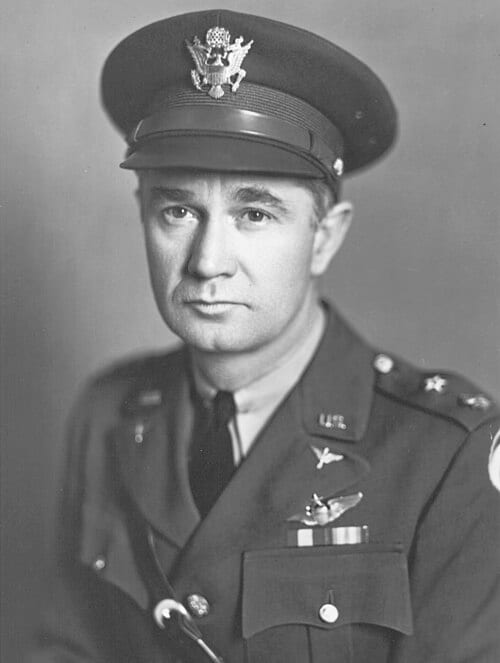
Colonel, U.S. Army Air Forces
Support & adopt this hero ↓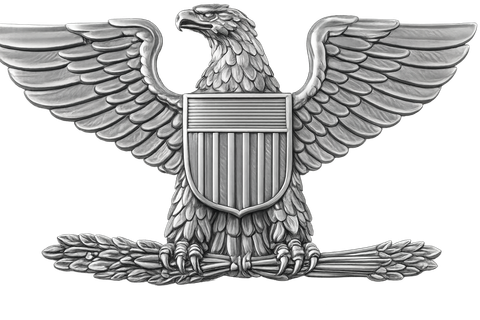
Some missions demand courage. Others demand a willingness to walk directly into enemy territory, knowing that the journey may have no return. Colonel Demas Thurlow “Nick” Craw did exactly that. On 8 November 1942, during the Allied landings in North Africa, he volunteered to cross enemy lines and negotiate with French forces to prevent further bloodshed. His mission cost him his life, but his extraordinary bravery earned him the Medal of Honor, the highest military decoration of the United States.
Demas Thurlow Craw was born on 9 April 1900 in Long Lake Township, Michigan. Known throughout his military career by the nickname “Nick,” he developed an early determination to become an Army officer. He enlisted in the United States Army in 1918 and served with the 12th Cavalry during the Mexican border period. His ambition to become a commissioned officer eventually led him to the United States Military Academy at West Point, which he entered in 1920. He graduated in 1924 and received his commission as a second lieutenant.
Craw's ambitions soon turned towards aviation. Despite an eye injury that temporarily threatened his flying career, he persevered and successfully completed military flight training in 1927. He transferred to the Army Air Corps and became a military pilot, flight instructor and squadron commander. His assignments included service with the 19th Pursuit Squadron in Hawaii. A capable aviator with a reputation for initiative and determination, Craw built a career that combined operational flying, military intelligence and international observation duties.
As international tensions escalated before America's entry into the Second World War, Craw was assigned to observe military developments overseas. His travels took him to several strategically important regions, including the Middle East and the Balkans. While observing British operations against Italian forces in Libya, he experienced combat at close quarters and sustained a wound. He subsequently served in Greece during the Greco-Italian War, accompanying allied forces near the front lines rather than remaining a distant observer.
During the German invasion of Greece in April 1941, Craw was captured and held for approximately six weeks before being exchanged at Sofia, Bulgaria. His conduct during the Greek campaign made a lasting impression. In recognition of his courage, King George II of Greece awarded him the Royal Order of George I, Officer of the Gold Cross, Fourth Class. It was a remarkable foreign distinction for an American officer whose service had demonstrated genuine solidarity with Greece during one of its darkest periods.
Following his return to Allied service, Craw continued his military observation duties in the Middle East, including operations connected with the North African campaign. He was promoted to lieutenant colonel in November 1941 and colonel in March 1942. By the time he returned to Washington in May 1942, he had gained extensive experience in international military operations and had witnessed the realities of modern warfare firsthand.
His defining moment came during Operation Torch, the Allied invasion of French North Africa in November 1942. Serving with the XII Ground Air Support Command of the Western Task Force and commanding General Lucian Truscott’s air contingent, Colonel Craw faced a dangerous situation near Port Lyautey in French Morocco. French forces were resisting the Allied landings, and continued fighting threatened to produce further casualties on both sides. A mission was proposed to reach the French commander and attempt to negotiate an end to the hostilities.
Craw volunteered.
Despite being warned that the assignment was extremely dangerous, he insisted that he was qualified to undertake it. On 8 November 1942, he accompanied Major Pierpont M. Hamilton and a soldier aboard the leading assault boats heading towards the shore. Their landing craft encountered heavy fire from shore batteries, while enemy aircraft strafed the landing area. Unable to proceed through the river as originally intended, the party eventually reached Mehdia Plage under continuing enemy fire.
Their journey was far from over. Travelling towards French headquarters in a small vehicle, Craw and his companions encountered further dangers, including fire from their own naval guns. As they approached Port Lyautey, a concealed French machine-gun position opened fire at close range. Colonel Craw was struck by a sustained burst and killed instantly. Hamilton survived, was captured, and ultimately continued the mission to establish contact with the French command.
Craw's decision to volunteer for this mission represented an extraordinary act of personal courage. He knowingly entered a hostile area in the hope of preventing unnecessary deaths and bringing the fighting to an end. His actions demonstrated that leadership is not measured solely by rank or command authority, but also by the willingness to accept personal risk for a greater purpose.
For his conspicuous gallantry and intrepidity above and beyond the call of duty, Colonel Demas Thurlow Craw was posthumously awarded the Medal of Honor. The award was authorized in War Department General Orders No. 11 on 4 March 1943. He also received the Purple Heart for the sacrifice he made in the line of duty.
Today, Demas T. Craw is remembered as a remarkable American military aviator, an experienced overseas observer, a decorated Army Air Forces colonel and a Medal of Honor recipient whose courage extended beyond the battlefield. His story is not simply one of a soldier who died under enemy fire. It is the story of an officer who willingly placed himself between opposing forces in the hope of saving lives. At Port Lyautey, Colonel Nick Craw undertook a mission few would have accepted. His final act remains a powerful testament to courage, duty, leadership and self-sacrifice.
Become the named supporter for this profile and edit the tribute biography and portrait (Owner account required). Proceeds help keep the archive online.
$25 USD / year — annual sponsorship renewal. Keeps the page online and, where enabled, the family anniversary remembrance emails active.