★
Loading archive…
Loading archive…
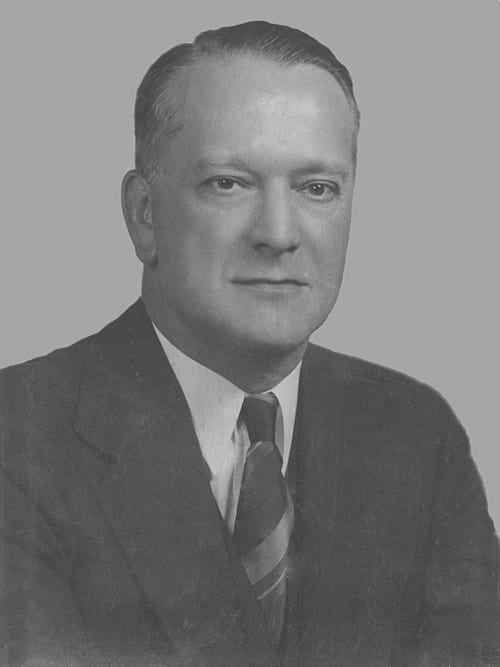
First Lieutenant, U.S. Army
Support & adopt this hero ↓
He kept fighting for two days despite repeated combat wounds
Deming Bronson earned the Medal of Honor for sustained courage near Eclisfontaine, France, on 26–27 September 1918. A first lieutenant in Company H, 364th Infantry Regiment, 91st Division, he remained with the fighting after being wounded repeatedly during the Meuse-Argonne Offensive.
Born in Rhinelander, Wisconsin, on 8 July 1894, Bronson grew up in Seattle after his family moved there in 1903. He studied forestry at the University of Washington and played football before becoming an Army infantry officer.
On 26 September, a grenade wounded his face and head, but he helped capture an enemy dugout. A bullet later struck his left arm. Ordered to seek treatment, he stayed with his company through the night. The next day he joined Company E in the attack on Eclisfontaine and helped capture a machine gun. During the withdrawal, an artillery shell wounded both his arms. He again refused evacuation and remained with the survivors overnight before going to a field hospital.
Bronson recovered and returned to civilian life. President Herbert Hoover presented his Medal of Honor on 19 November 1929. He worked in the paint industry, married Dorothy Brown in 1925 and raised two daughters. Later he settled in Roseburg, Oregon, and joined his family’s lumber business. He died there on 29 May 1957 and was buried at Arlington National Cemetery.
Medal of Honor citation
For conspicuous gallantry and intrepidity above and beyond the call of duty in action with the enemy. On the morning of 26 September, during the advance of the 364th Infantry, 1st Lt. Bronson was struck by an exploding enemy hand grenade, receiving deep cuts on his face and back of his head. He nevertheless participated in the action which resulted in the capture of an enemy dugout from which a great number of prisoners were taken. This was effected with difficulty and under extremely hazardous conditions because it was necessary to advance without the advantage of cover and, from an exposed position, throw hand grenades and phosphorous bombs to compel the enemy to surrender. On the afternoon of the same day he was painfully wounded in the left arm by an enemy rifle bullet, and after receiving first-aid treatment he was directed to the rear. Disregarding these instructions, 1st Lt. Bronson remained on duty with his company through the night although suffering from severe pain and shock. On the morning of the 27 September, his regiment resumed its attack, the object being the village of Eclisfontaine. Company H, to which 1st Lt. Bronson was assigned, was left in support of the attacking line, Company E being in the line. He gallantly joined that company in spite of his wounds and engaged with it in the capture of the village. After the capture he remained with Company E and participated with it in the capture of an enemy machine gun, he himself killing the enemy gunner. Shortly after this encounter the company was compelled to retire due to the heavy enemy artillery barrage. During this retirement 1st Lt. Bronson, who was the last man to leave the advanced position, was again wounded in both arms by an enemy high-explosive shell. He was then assisted to cover by another officer who applied first aid. Although bleeding profusely and faint from loss of blood, 1st Lt. Bronson remained with the survivors of the company throughout the night of the second day, refusing to go to the rear for treatment. His conspicuous gallantry and spirit of self-sacrifice were a source of great inspiration to the members of the entire command.
Become the named supporter for this profile and edit the tribute biography and portrait (Owner account required). Proceeds help keep the archive online.
$25 USD / year — annual sponsorship renewal. Keeps the page online and, where enabled, the family anniversary remembrance emails active.