★
Loading archive…
Loading archive…

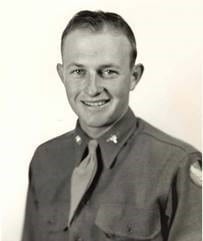
He stayed with his burning bomber to save a wounded crewman.
Donald Joseph Gott earned the posthumous Medal of Honor for his actions on 9 November 1944 during a bombing mission against Saarbrucken, Germany. A first lieutenant in the 729th Bombardment Squadron, 452nd Bombardment Group, Eighth Air Force, he stayed with his damaged B-17 to attempt a landing for an unconscious crewman.
Gott was born in Arnett, Oklahoma, on 3 June 1923. Before military service he worked at an aluminium plant in Bridgeport, Connecticut. He entered aviation training, earned his wings in January 1944 and joined the 729th Bombardment Squadron in England in August. His final flight was his 27th combat mission.
Antiaircraft fire left three engines damaged and burning, ignited a cockpit fire and wounded crew members. Gott and his copilot decided to reach Allied territory so the badly injured radio operator could receive help. After releasing the bombs, they flew the crippled aircraft toward friendly ground. Gott ordered the other crew members to bail out, while the copilot remained to assist him.
As they attempted to land with one functioning engine, the bomber exploded. Gott, his copilot and the radio operator died. Gott's mother received his Medal of Honor at Fargo High School, Oklahoma, on 18 June 1945. He is buried in Harmon Cemetery, Oklahoma.
Medal of Honor citation
On a bombing run upon the marshaling yards at Saarbrucken, a B-17 aircraft piloted by 1st Lt. Gott was seriously damaged by antiaircraft fire. Three of the aircraft's engines were damaged beyond control and on fire; dangerous flames from the No. 4 engine were leaping back as far as the tail assembly. Flares in the cockpit were ignited and a fire raged therein, which was further increased by free-flowing fluid from two damaged hydraulic lines. The interphone system was rendered useless. In addition to these serious mechanical difficulties the engineer was wounded in the leg and the radio operator's arm was severed below the elbow. Suffering from intense pain, despite the application of a tourniquet, the radio operator fell unconscious. Faced with the imminent explosion of his aircraft and death to his entire crew, mere seconds before bombs away on the target, 1st Lt. Gott and his copilot conferred. Something had to be done immediately to save the life of the wounded radio operator. The lack of a static line and the thought that his unconscious body striking the ground in unknown territory would not bring immediate medical attention forced a quick decision. First Lt. Gott and his copilot decided to fly the flaming aircraft to friendly territory and then attempt to crash land. Bombs were released on the target and the crippled aircraft proceeded alone to Allied-controlled territory. When that had been reached, 1st Lt. Gott had the copilot personally inform all crewmembers to bail out. The copilot chose to remain with 1st Lt. Gott in order to assist in landing the bomber. With only one normally functioning engine, and with the danger of explosion much greater, the aircraft banked into an open field, and when it was at an altitude of 100 feet it exploded, crashed, exploded again, and then disintegrated. All three crew members were instantly killed. First Lt. Gott's loyalty to his crew, his determination to accomplish the task set forth to him, and his deed of knowingly performing what may have been his last service to his country was an example of valor at its highest.
Become the named supporter for this profile and edit the tribute biography and portrait (Owner account required). Proceeds help keep the archive online.
$25 USD / year — annual sponsorship renewal. Keeps the page online and, where enabled, the family anniversary remembrance emails active.