★
Loading archive…
Loading archive…

Colonel, British Army
Support & adopt this hero ↓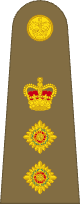
In late September 1918, near the shattered industrial landscape of Lens in northern France, an isolated trench position known as Canary Trench came under sustained trench-mortar, machine-gun, and artillery fire. The position, recently captured from German forces, had an exposed left flank and had scarcely been prepared for defence. Command of the platoon holding it fell to Temporary Lieutenant Donald John Dean, a twenty-one-year-old officer of the 8th Battalion, The Queen's Own Royal West Kent Regiment. Between 24 and 26 September his men endured repeated bombardment and five German attempts to retake the position. Dean worked alongside them under fire, directing the defence and the continuing consolidation of the trench. His conduct during those two days resulted in the award of the Victoria Cross.
The Second Supplement to The London Gazette of 14 December 1918 recorded his citation:
"For most conspicuous bravery, skilful command, and devotion to duty during the period 24th to 26th September, 1918, when holding, with his platoon, an advance post established in a newly-captured enemy trench north-west of Lens. The left flank of the position was insecure, and the post, when taken over on the night of the 24th of September, was ill-prepared for defence. Shortly after the post was occupied the enemy attempted, without success, to recapture it. Under heavy machine-gun fire, consolidation was continued, and shortly after midnight another determined enemy attack was driven off. Throughout the night Lt. Dean worked unceasingly with his men, and about 6 a.m. on 25th September a resolute enemy attack, supported by heavy shell and trench-mortar fire, developed. Again, owing to the masterly handling of his command, Lt. Dean repulsed the attack, causing heavy enemy casualties. Throughout the 25th and the night of the 25/26th September, consolidation was continued under heavy fire, which culminated in intense artillery fire on the morning of the 26th, when the enemy again attacked and was finally repulsed with loss. Five times in all (thrice heavily) was this post attacked, and on each occasion the attack was driven back. Throughout the period Lt. Dean inspired his command with his own contempt of danger, and all fought with the greatest bravery. He set an example of valour, leadership and devotion to duty of the very highest order."
The wording of the final sentence is confirmed by the original Gazette itself: “He set an example of valour, leadership and devotion to duty of the very highest order.”
Dean's military service had begun several years earlier. Born at Herne Hill, London, on 19 April 1897, into a family associated with the Kent brickmaking industry, he was educated at Quernmore College in Bromley. When war began in August 1914 he attempted to enlist but was rejected because he was under age. He instead served as a special constable and with the Volunteer Training Corps. On reaching eighteen on 19 April 1915, he enlisted as a private in the 28th Battalion, London Regiment, the Artists' Rifles. He reached France on 11 August 1915 and served at St Omer, Ploegsteert and on the Somme.
Commissioned into the 11th Battalion, Queen's Own Royal West Kent Regiment in October 1916, Dean subsequently served near Vimy Ridge and Givenchy and in the Tower Hamlets sector during the Third Battle of Ypres. He was wounded during his First World War service on several occasions. Following the disbandment of the 11th Battalion in 1918, he joined the 8th Battalion, with which he fought during the final months of the war and carried out the action at Canary Trench for which he received the Victoria Cross. He was also Mentioned in Despatches during the war.
King George V presented Dean with the Victoria Cross at Buckingham Palace on 15 February 1919. Returning to civilian life in Kent, Dean joined the family business and married Marjorie Emily Wood in 1923. They had a son and a daughter. At the same time he continued his military career in the Territorial Army, serving with the 4th Battalion, The Buffs, Royal East Kent Regiment. He became a major in 1930 and assumed command of the battalion as a lieutenant colonel in 1936.
When the Territorial Army was mobilised in 1939, Dean did not remain in command of his battalion. According to accounts of his wartime service, his divisional commander, Major-General Edmund Osborne, decided to replace him with a Regular Army officer because Osborne considered Territorial officers unsuitable for battalion command in the circumstances. This was a decision associated with Dean's divisional command, not an established British Army-wide policy requiring Territorial battalion commanders generally to be removed. Dean instead accepted command of No. 5 Group, Auxiliary Military Pioneer Corps.
No. 5 Group deployed to France with the British Expeditionary Force and performed labour and logistical duties in the Doullens area. Its men had little combat training and initially possessed only a limited allocation of rifles. When the German breakthrough in May 1940 threatened the Channel ports, Dean led his pioneers toward the coast. After obtaining rail transport from Saint-Pol, the group reached the Boulogne area, where several hundred pioneers were armed and incorporated into the town's improvised defences alongside the 20th Guards Brigade.
During the fighting at Boulogne on 23 May, Dean's force helped hold part of the defensive perimeter despite its shortage of heavy weapons and communications equipment. The pioneers were among the last troops to withdraw from their sector. Dean ensured that as many of his men as possible were evacuated before leaving himself. During the confused fighting he was incorrectly reported killed, but survived and returned to England. The Royal Pioneer Corps Association records that No. 5 Group suffered severe casualties during the operation.
Dean's Second World War service later took him to Madagascar in 1942, where he helped organise the repatriation of defeated Vichy French personnel. In 1943 he participated in the Sicily landings and subsequently served during the Italian campaign. He received two further Mentions in Despatches for his Second World War service and was promoted colonel in April 1945.
After the war Dean remained closely associated with both the Army and public life in Kent. He became a Justice of the Peace in 1951 and Deputy Lieutenant of Kent in 1957. He maintained a long association with the Royal British Legion at Sittingbourne and also served in honorary regimental appointments. In 1961 he was appointed an Officer of the Order of the British Empire, Military Division, for his work with the Kent Territorial and Auxiliary Forces Association. He also received the Danish Order of the Dannebrog. The precise grade of Dean's Danish decoration is described inconsistently in published sources, with authoritative British specialist organisations variously recording him as a Commander while some medal inventories describe him as a Knight. Pending confirmation from the original Danish award record, the grade is best left unspecified in the biography.
Colonel Donald John Dean, VC, OBE, TD, DL died at his home in Sittingbourne on 9 December 1985, aged eighty-eight. He was remembered as the last surviving British Army Victoria Cross recipient from the First World War. His military career had spanned both world wars, from service as an eighteen-year-old private in the Artists' Rifles to command and staff responsibilities as a colonel, with the defence of Canary Trench remaining the defining act of a lifetime of military and public service.
Become the named supporter for this profile and edit the tribute biography and portrait (Owner account required). Proceeds help keep the archive online.
$25 USD / year — annual sponsorship renewal. Keeps the page online and, where enabled, the family anniversary remembrance emails active.