★
Loading archive…
Loading archive…
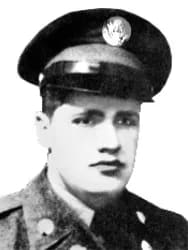
Sergeant First Class, U.S. Army
Support & adopt this hero ↓
The Korean War Medal of Honor Hero Who Gave His Life to Save His Men
There are moments in battle when courage becomes something greater than fear, training, or instinct. On May 20, 1951, near Seoul, Korea, Sergeant First Class Donald Raymond Moyer faced one of those moments. An enemy grenade landed among the soldiers around him. There was no time to throw it back and almost no time to think. Moyer threw himself onto the grenade, taking the explosion with his own body and saving several of his comrades. He was only 21 years old. His final act would earn him the Medal of Honor and place his name among the most extraordinary American soldiers of the Korean War.
Donald Raymond Moyer was born on April 15, 1930, in Pontiac, Michigan. He entered the United States Army from Keego Harbor, Michigan, and by the Korean War had risen to the rank of Sergeant First Class. He served with Company E, 35th Infantry Regiment, 25th Infantry Division, one of the Army formations heavily engaged in the fighting on the Korean Peninsula. By 1951, Moyer was serving as an assistant platoon leader, a position that placed considerable responsibility on a young noncommissioned officer in some of the war's hardest combat.
Moyer had already paid a heavy price before the action that made him famous. Records derived from the Korean War Honor Roll of the American Battle Monuments Commission state that he was seriously wounded in South Korea on January 3, 1951. He eventually recovered sufficiently to return to duty on March 21. That earlier wound is reflected in his entitlement to the Purple Heart with one bronze Oak Leaf Cluster, signifying an additional award of the Purple Heart. His verified wartime record also includes the Korean Service Medal, United Nations Service Medal for Korea, National Defense Service Medal, and the Republic of Korea Korean War Service Medal.
But the defining moment of Donald Moyer's life came two months after he returned to combat. On May 20, 1951, Company E was attacking commanding ground near Seoul that was defended by a numerically superior enemy force occupying prepared positions. As the Americans climbed the rocky terrain, automatic weapons, small arms, and grenades tore into the assault. Both the platoon leader and platoon sergeant were wounded. With the attack in danger of collapsing, Moyer moved forward, took command of the faltering platoon, and rallied the soldiers around him. The official Army Medal of Honor citation records that his leadership inspired the men to continue their advance despite increasingly intense enemy fire.
Then came the instant that defined his legacy. As the platoon approached the crest, an enemy grenade was thrown into the middle of the advancing soldiers. Moyer understood immediately what it meant. Rather than seek cover, he placed himself between the grenade and his comrades and absorbed the explosion. The official citation states that his action saved several soldiers from death or serious injury. Mortally wounded, he did not live to see the result, but the platoon continued forward and captured the enemy stronghold. His sacrifice had helped make their success possible.
The language of Moyer's Medal of Honor citation makes clear that his award recognized more than the final seconds of his life. It honored his decision to take command when his leaders were wounded, his willingness to expose himself while rallying a stalled assault, and finally his deliberate sacrifice when the grenade threatened the men beside him. The Army described his actions as gallantry and intrepidity above and beyond the call of duty and credited his leadership and devotion to duty with contributing significantly to the seizure of the enemy position. His Medal of Honor was authorized in Department of the Army General Orders No. 19, dated February 1, 1952.
Moyer never received the Medal of Honor himself. It was awarded posthumously. On January 16, 1952, at the Pentagon, Secretary of Defense Robert Lovett presented the medal to Moyer's father. The Congressional Medal of Honor Society records Moyer as a posthumous recipient and identifies his unit as Company E, 35th Infantry Regiment, 25th Infantry Division. His Medal of Honor is today associated with the continuing effort to preserve the memory of the Americans whose courage defined the Korean War.
His verified ribbon entitlement tells part of the same story. The Medal of Honor represents the action of May 20, 1951. The Purple Heart with bronze Oak Leaf Cluster records the physical cost of his combat service. The Korean Service Medal with three presently verified campaign stars reflects participation across multiple phases of the Korean War. The United Nations Service Medal connects his service to the multinational United Nations effort in Korea, while the National Defense Service Medal and Korean War Service Medal recognize his service within the broader historical framework of the conflict. These awards are not simply colored ribbons. Together they trace the path of a young soldier who was wounded, returned to combat, assumed leadership under fire, and ultimately died protecting his men.
Donald Raymond Moyer died on May 20, 1951, near Seoul. He was buried at Perry Mount Park Cemetery in Pontiac, Michigan. The Congressional Medal of Honor Society records both his burial there and his status as a Korean War Medal of Honor recipient. His life had lasted just 21 years, yet in the final minutes of it he made decisions that saved other lives and helped his unit complete its mission.
That is why Sergeant First Class Donald Raymond Moyer remains more than a name on a list of Korean War Medal of Honor recipients. When his platoon lost its leaders, he stepped forward. When the assault began to fail, he rallied it. When a grenade threatened the soldiers around him, he chose their lives over his own. His Medal of Honor citation preserves the official record, but the enduring meaning of his story is simpler: when his men needed someone to lead them forward, Donald Moyer did, and when they needed someone to save them, he gave everything he had.
Become the named supporter for this profile and edit the tribute biography and portrait (Owner account required). Proceeds help keep the archive online.
$25 USD / year — annual sponsorship renewal. Keeps the page online and, where enabled, the family anniversary remembrance emails active.