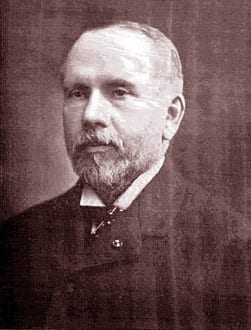
★
Loading archive…
Loading archive…

When the Union line began to break under a fierce Confederate assault, one officer refused to let panic decide the battle. At Peachtree Creek, Georgia, on July 20, 1864, Lieutenant Colonel Douglas Hapeman rallied his shaken soldiers, restored their shattered formation, and helped repel the enemy attack. His extraordinary courage under fire would earn him the Medal of Honor, America's highest military decoration, and secure his place among the remarkable heroes of the American Civil War.
Born on January 15, 1839, in Ephrata, New York, Douglas Hapeman came of age during a period when the United States was moving toward its greatest internal conflict. When the Civil War erupted in 1861, he answered the call to military service, beginning his career as a second lieutenant in Company H of the 11th Illinois Volunteer Infantry. His determination and leadership would carry him through some of the most demanding campaigns fought by the Union Army.
Hapeman's early wartime experience brought him into major operations, including Fort Donelson and Shiloh, where the scale and brutality of the Civil War became unmistakable. In 1862, he continued his military career with the 104th Illinois Volunteer Infantry, a regiment that would become central to his story.
But before Hapeman could achieve his greatest moment of battlefield heroism, he faced a very different test of endurance.
On December 7, 1862, during the Battle of Hartsville, Tennessee, Hapeman was captured by Confederate forces. His imprisonment lasted approximately five months, during which he endured the uncertainty of captivity far from his regiment and the men he had helped lead. His experience demonstrated that courage in war was not confined to the battlefield. It also demanded resilience when a soldier had lost his freedom and could no longer control his fate.
Following his release, Hapeman returned to military duty. His subsequent service carried him through the Chattanooga operations, including Missionary Ridge, and into the Atlanta Campaign of 1864. By then, he had developed the experience of an officer who understood both the enormous cost of combat and the importance of maintaining discipline when soldiers faced overwhelming danger.
That experience would prove decisive on July 20, 1864.
During the Battle of Peachtree Creek, Confederate forces launched a powerful assault against Union positions north of Atlanta. As the fighting intensified, the formation of Hapeman's men broke under the pressure of the attack. In such moments, confusion could spread rapidly, turning a local setback into a devastating defeat.
Hapeman responded with remarkable composure.
Rather than surrendering to the disorder around him, he rallied his soldiers under severe enemy fire, reorganized their broken ranks, and helped them stand against the Confederate attack. His leadership restored cohesion at a moment when the outcome remained uncertain. Through personal bravery and calm determination, he helped transform a dangerously disorganized position into an effective fighting force.
What makes Hapeman's actions especially compelling is the nature of his heroism. His defining achievement was not a solitary charge or the capture of an enemy flag. It was the ability to restore courage and discipline among men whose formation had been shattered by battle. He demonstrated that military leadership could be an extraordinary act of bravery in its own right.
His conduct at Peachtree Creek eventually received the nation's highest recognition. On April 5, 1898, nearly thirty-four years after the battle, Douglas Hapeman was awarded the Medal of Honor for his conspicuous coolness and bravery in rallying his men, reforming their broken ranks, and repulsing the attack.
The long interval between his battlefield action and the presentation of his award offers a powerful reminder that acts of extraordinary courage are not always recognized immediately. Some remain part of a regiment's history for decades before receiving national acknowledgment.
Hapeman completed his military service as a lieutenant colonel and was also recognized by the brevet rank of colonel. His wartime career reflected the transformation of a young volunteer officer into an experienced combat leader who had endured major battles, captivity, and the immense responsibilities of command.
After the war, Hapeman made his home in Ottawa, Illinois, where his military service and contributions to the Union cause remained an important part of his legacy. He died on June 3, 1905, at the age of sixty-six, and was laid to rest in Ottawa Avenue Cemetery.
Today, Douglas Hapeman is remembered as an American Civil War Medal of Honor recipient whose courage helped hold a Union position during one of the critical battles of the Atlanta Campaign. His story represents the sacrifices of the Illinois volunteer regiments and the countless soldiers who endured the uncertainty, suffering, and violence of a divided nation.
Yet his legacy reaches beyond a single battle or military decoration.
At Peachtree Creek, Hapeman demonstrated that true battlefield leadership is measured not simply by rank or authority, but by the ability to inspire others when fear threatens to overwhelm them. In the face of a collapsing formation and a determined enemy, he gave his soldiers something essential: the courage to stand together once more.
Douglas Hapeman's place in American military history was earned through that extraordinary moment of resolve. His Medal of Honor stands as an enduring tribute to a leader who refused to let his men surrender to chaos, reminding future generations that sometimes the greatest act of courage is giving others the strength to continue fighting.
Become the named supporter for this profile and edit the tribute biography and portrait (Owner account required). Proceeds help keep the archive online.
$25 USD / year — annual sponsorship renewal. Keeps the page online and, where enabled, the family anniversary remembrance emails active.