★
Loading archive…
Loading archive…
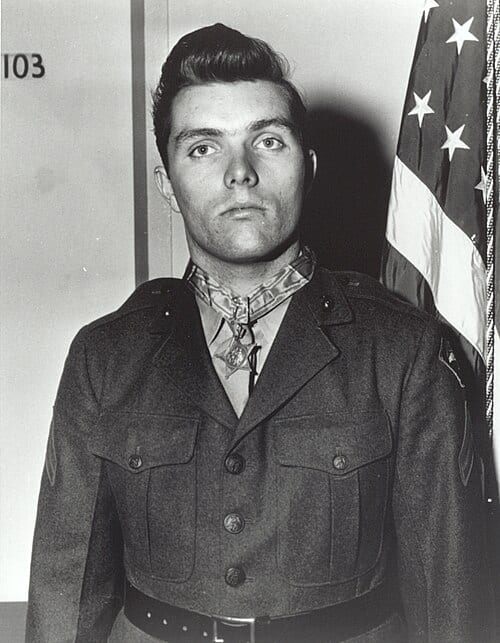
Major, U.S. Marine Corps
Support & adopt this hero ↓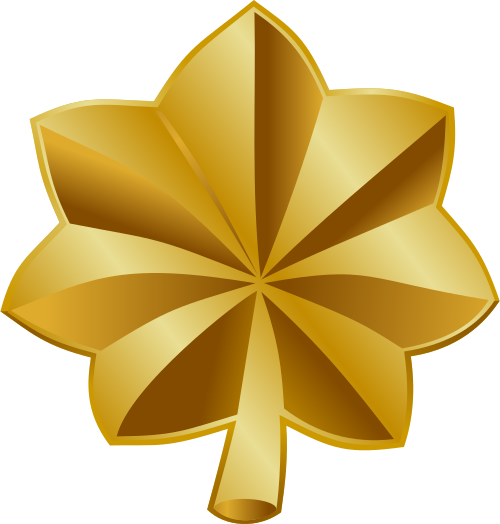
On 26 February 1945, as American Marines struggled against heavily fortified Japanese defenses on Iwo Jima, one young Marine took up a fallen comrade's bazooka and launched a remarkable one-man assault. His name was Douglas Thomas Jacobson. His extraordinary courage on Hill 382 would earn him the Medal of Honor and secure his place among the most distinguished heroes of the United States Marine Corps.
Born on 25 November 1925 in Rochester, New York, Douglas T. Jacobson enlisted in the Marine Corps Reserve on 28 January 1943, at just 17 years of age. Following recruit training at Parris Island, South Carolina, he joined the 3rd Battalion, 23rd Marines, 4th Marine Division. Deployed overseas in December 1943, he participated in the Pacific campaigns for the Marshall Islands, Saipan, Tinian and Iwo Jima, gaining extensive combat experience during the island-hopping campaign against Imperial Japan.
His defining moment came during the Battle of Iwo Jima. On 26 February 1945, while advancing toward Hill 382, Private First Class Jacobson took over the bazooka duties of a Marine who had been killed. Facing intense enemy fire, he destroyed a 20mm antiaircraft gun and its crew, eliminated machine-gun positions, demolished pillboxes and neutralized fortified blockhouses. When an adjacent assault company was held up by Japanese defenses, he volunteered to assist, destroying another pillbox and attacking an enemy tank that was threatening American forces. His official Medal of Honor citation credited him with destroying 16 enemy positions and killing approximately 75 Japanese soldiers, a contribution that helped his division break through one of Iwo Jima's formidable defensive strongpoints.
For this extraordinary display of gallantry and intrepidity above and beyond the call of duty, Jacobson received the Medal of Honor from President Harry S. Truman at the White House on 5 October 1945. His wartime service was also recognized through a Letter of Commendation and a commendation in 4th Marine Division orders for his excellent performance as a Browning Automatic Rifleman during the fighting on Saipan from 15 to 28 June 1944. His other documented honours included the Presidential Unit Citation with two bronze stars, the Marine Corps Good Conduct Medal, Asiatic-Pacific Campaign Medal with four bronze stars, American Campaign Medal, World War II Victory Medal, China Service Medal and National Defense Service Medal.
For Jacobson, receiving the nation's highest military decoration did not mark the end of his service. He reenlisted in April 1946 and served as a recruiting sergeant before joining the 1st Engineer Battalion, 1st Marine Division, in Peiping and Tsingtao, China. After further service in the Florida National Guard, he returned to the Marine Corps in 1953 and attended Officer Candidate School at Quantico, Virginia. Commissioned a second lieutenant in March 1954, he went on to serve as an executive officer, company commander, guard officer, rifle range officer and supply officer. His assignments included Japan, Camp Lejeune and Okinawa. Promoted to captain in 1957 and major on 1 July 1964, he ultimately retired from the Marine Corps with the rank of Major.
Major Douglas T. Jacobson died on 20 August 2000 in Port Charlotte, Florida. His legacy extends far beyond the Medal of Honor he received for his actions on Iwo Jima. He represents the determination, courage and fighting spirit of a generation of Marines who faced extraordinary dangers in the Pacific War. From a 17-year-old Marine Corps recruit to a decorated combat veteran and commissioned officer, Jacobson's life remains a powerful testament to courage under fire and a lifetime of service to his country.
Become the named supporter for this profile and edit the tribute biography and portrait (Owner account required). Proceeds help keep the archive online.
$25 USD / year — annual sponsorship renewal. Keeps the page online and, where enabled, the family anniversary remembrance emails active.