★
Loading archive…
Loading archive…
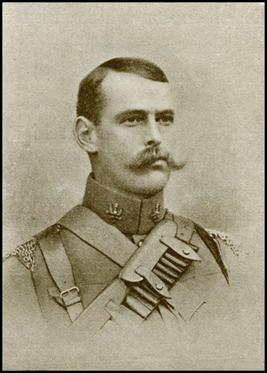
Colonel, British Army
Support & adopt this hero ↓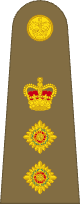
He rode through heavy fire to carry three comrades to safety
Edward Douglas Brown-Synge-Hutchinson earned the Victoria Cross not through a single charge, but through a series of deliberate rescues carried out while his regiment was withdrawing under heavy fire. Born Edward Douglas Brown in British India on 6 March 1861, he entered the British Army as a lieutenant in the 18th Hussars in November 1883. He transferred to the 14th King’s Hussars in March 1889 and later served as commandant of the Aldershot School of Instruction for Yeomanry. By the outbreak of the Second Boer War, he had risen to major.
The 14th Hussars deployed to South Africa in 1900. On 13 October that year, during fighting at Geluk, Boer troops closed to within approximately 400 yards and brought heavy fire against the withdrawing British cavalry. Brown saw that Sergeant Hersey’s horse had been shot and that the dismounted man was in immediate danger. Remaining behind the last retiring squadron, Brown helped Hersey mount behind him and carried him roughly three-quarters of a mile to safety.
His efforts did not end there. Brown next dismounted or halted under fire to hold the highly agitated horse of Lieutenant Browne, enabling the officer to remount when he could not otherwise have done so. Brown then carried Lance-Corporal Trumpeter Leigh out of the action. The official citation recognized the calm persistence with which he repeatedly placed himself at risk to save others during the withdrawal. His Victoria Cross was announced in the London Gazette on 15 January 1901.
Brown received the decoration from the Duke of York at Pietermaritzburg on 14 August 1901. His South African campaign service also brought the Queen’s South Africa Medal with seven clasps and the King’s South Africa Medal with the clasps South Africa 1901 and South Africa 1902. His surviving medal entitlement records participation in operations associated with Cape Colony, Tugela Heights, the Orange Free State, the Relief of Ladysmith, Johannesburg, Diamond Hill and Belfast.
After the war he adopted the additional surname Synge-Hutchinson, reflecting his maternal family connection. He continued to rise through the cavalry, eventually commanding the 14th King’s Hussars. In 1909 he revived the regiment’s distinctive Regimental Medal and became its first recorded recipient, although that internal regimental award does not form part of the official national order of wear.
His later honours reflected both military service and public duty. He was appointed a Knight of Grace of the Order of St John in 1911 and subsequently held the higher grade of Knight of Justice. In the 1915 Birthday Honours he was appointed a Companion of the Military Division of the Order of the Bath. His final recorded group also included the King George VI Coronation Medal of 1937.
Brown-Synge-Hutchinson retired from the Army as a colonel and died in London on 3 March 1940, three days before his seventy-ninth birthday. His Victoria Cross group is preserved with the collection of the Museum of the King’s Royal Hussars in Winchester.
His courage at Geluk was distinguished by restraint and responsibility. He did not act for spectacle or personal advantage. While others withdrew, he repeatedly turned back toward danger, using his horse, his strength and his authority to bring three fellow soldiers out of immediate peril.
Victoria Cross citation
On the 13th October 1900, at Geluk, when the enemy were within 400 yards, and bringing a heavy fire to bear, Major Brown, seeing that Sergeant Hersey’s Horse was shot, stopped behind the last squadron as it was retiring, and helped Sergeant Hersey to mount behind him, carrying him for about three quarters of a mile to a place of safety. He did this under a heavy fire. Major Brown afterwards enabled Lieutenant Browne, 14th Hussars, to mount, by holding his horse which was very restive under the heavy fire. Lieutenant Browne could not otherwise have mounted. Subsequently Major Brown carried Lance-Corporal Trumpeter Leigh out of action.
London Gazette, 15 January 1901.
Become the named supporter for this profile and edit the tribute biography and portrait (Owner account required). Proceeds help keep the archive online.
$25 USD / year — annual sponsorship renewal. Keeps the page online and, where enabled, the family anniversary remembrance emails active.