★
Loading archive…
Loading archive…
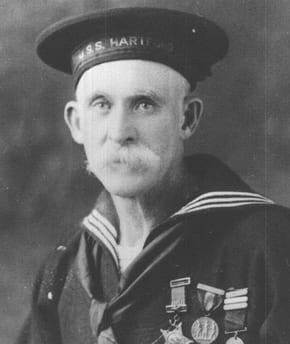
A boiler-room emergency aboard a battleship tested Edward Floyd in a way few sailors could have anticipated. On 25 January 1905, while serving as a boilermaker aboard the United States Navy battleship USS Iowa (BB-4), Floyd distinguished himself through extraordinary heroism when the manhole plate of Boiler D blew out. His actions during the dangerous shipboard emergency earned him the Medal of Honor, America's highest military decoration.
Born in Ireland on 21 February 1850, Edward Floyd entered the United States Navy and served as a boilermaker, a skilled engineering rating responsible for work involving the ship's boiler machinery. His Medal of Honor action took place in the Caribbean Sea aboard USS Iowa, where a sudden boiler failure created a serious emergency. Floyd was among six sailors whose extraordinary heroism during the January 1905 incident was officially recognized with the Medal of Honor. Their actions became part of a distinctive chapter in American naval history, demonstrating that courage was required not only in combat but also in the dangerous working spaces of a warship.
Floyd's official recognition was recorded in General Order No. 182, dated 20 March 1905. His Medal of Honor citation stated that he was serving aboard USS Iowa and was recognized "for extraordinary heroism at the time of the blowing out of the manhole plate of boiler D." The citation specifically identified the incident as having occurred on 25 January 1905. His award was a recognition of extraordinary heroism in the line of his naval profession, rather than an act performed during an engagement with an enemy.
Accredited to South Carolina for his Medal of Honor service, Floyd remained part of the historical record of the United States Navy's distinguished sailors. He died on 16 January 1923 and was buried at St. Lawrence Cemetery in Charleston, South Carolina, at the age of seventy-two.
Edward Floyd's legacy represents a remarkable form of naval courage. His defining moment did not take place on a battlefield or during a naval engagement, but amid the hazards of a battleship's engineering spaces. Through his extraordinary heroism aboard USS Iowa, he secured his place among the recipients of the Medal of Honor and left a lasting example of courage, professional duty and selfless service in the United States Navy.
Become the named supporter for this profile and edit the tribute biography and portrait (Owner account required). Proceeds help keep the archive online.
$25 USD / year — annual sponsorship renewal. Keeps the page online and, where enabled, the family anniversary remembrance emails active.