★
Loading archive…
Loading archive…
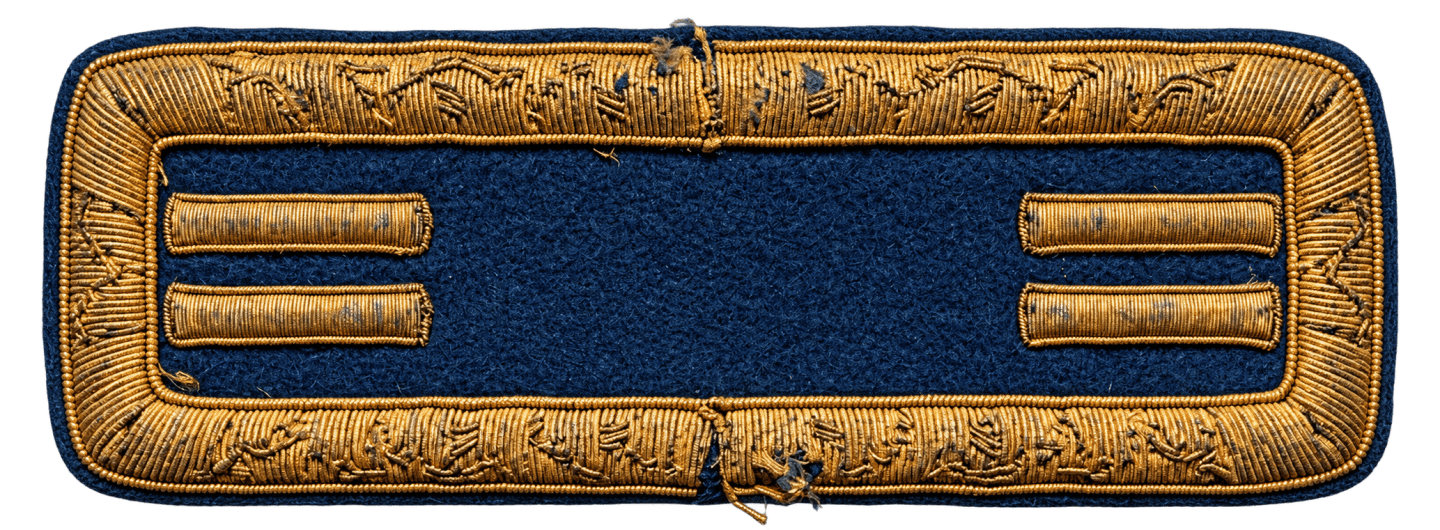
Edward Martin Knox was a Union Army artillery officer during the American Civil War whose courage at the Battle of Gettysburg earned him the Medal of Honor. At the time of the action for which he was recognized, Knox was serving as a Second Lieutenant in the 15th New York Battery, Light Artillery. He later attained the rank of Captain, which represents his highest verified rank.
Knox’s military career placed him in one of the most important and violent battles of the Civil War. By the summer of 1863, Confederate General Robert E. Lee had carried the Army of Northern Virginia north into Pennsylvania. Union and Confederate forces converged around Gettysburg, and the battle that followed from July 1 through July 3 became one of the decisive engagements of the war.
As an artillery officer, Knox had responsibilities very different from those of an infantry soldier. A light artillery battery depended on careful positioning, trained gun crews, ammunition supply, horses, and coordinated command. Artillery officers had to judge distance, select targets, maintain the rate of fire, protect their guns from enemy attack, and decide when a position could still be held or when withdrawal had become necessary.
Knox’s defining Medal of Honor action occurred on July 2, 1863, the second day of the Battle of Gettysburg.
July 2 produced some of the most desperate fighting of the entire battle. Confederate forces launched major attacks against the Union left and center, striking areas around the Peach Orchard, Wheatfield, Devil’s Den, and Little Round Top. Union artillery batteries were repeatedly exposed to infantry attacks, counterbattery fire, and the danger of being overrun.
Knox and the 15th New York Battery were caught in this intense battlefield environment.
As the fighting grew more severe, nearby batteries began withdrawing from their positions.
Knox, however, continued to hold his own battery’s position despite the danger.
His decision to remain meant that he and his men continued supporting Union forces while enemy pressure increased around them.
Eventually, the situation became so dangerous that the battery could no longer remain in place.
When the time came to withdraw, Knox helped move an artillery piece away manually.
This was extremely difficult work under combat conditions.
Civil War field artillery pieces were heavy weapons normally moved by teams of horses. If horses had been killed, wounded, lost, or could not safely reach the position, artillerymen sometimes had to attempt to move guns by hand.
Knox’s action required him to remain exposed while the battlefield around him was collapsing.
During this effort, he was severely wounded.
Despite the wound and the threat of enemy capture, he continued trying to save the gun.
This combination of holding the position after other batteries had withdrawn, attempting to remove the artillery piece manually, and suffering a serious wound formed the basis of his Medal of Honor recognition.
For his actions at Gettysburg on July 2, 1863, Edward Martin Knox was awarded the Medal of Honor.
The correct historical decoration for his final profile is the Medal of Honor 1862–1895 Army.
The Army Medal of Honor had been created during the Civil War as the highest national decoration for extraordinary gallantry and distinguished conduct. Its early form became associated with acts of exceptional bravery performed by Union soldiers and officers under direct enemy fire.
Knox did not receive the Medal of Honor immediately after Gettysburg.
His decoration was presented on October 18, 1892, almost three decades after the battle.
This long interval between battlefield action and formal recognition was not unusual among Civil War Medal of Honor recipients. Many wartime acts were reviewed years later through military records, official reports, recommendations, and supporting testimony.
The distinction between Knox’s action date and award date is therefore important.
His heroic action occurred on July 2, 1863.
His Medal of Honor was presented in 1892.
Because the presentation occurred during the historical period covered by the 1862–1895 Army version used by the database, Medal of Honor 1862–1895 Army is the correct medal selection for his final rack.
No verified device, clasp, star, bar, or other attachment is associated with Knox’s Medal of Honor.
His verified medal rack should therefore display the Medal of Honor without any additional device.
Knox’s rank at the time of his Medal of Honor action was Second Lieutenant.
This was a junior commissioned officer rank, but artillery officers at this level could carry significant battlefield responsibility.
A Second Lieutenant might supervise gun crews, command a section of artillery, direct firing, manage ammunition, and assume greater responsibility if senior officers became casualties or were separated from the battery.
Knox’s conduct at Gettysburg demonstrated the kind of direct leadership expected from an artillery officer under extreme battlefield pressure.
He later advanced to Captain.
This promotion represented a substantial increase in military responsibility.
A Captain could command a company or, in artillery service, exercise broader responsibility over a battery and its personnel.
For his final database profile, Rank should therefore remain Second Lieutenant, while Highest Rank should be Captain.
Knox’s combat specialization was clearly Artillery.
His Medal of Honor action was directly connected with maintaining an artillery position and attempting to save a gun during heavy fighting.
For that reason, the correct database classifications are Army and Ground combat, with Artillery as the Combat Achievement Modifier.
The Battle of Gettysburg continued after Knox was wounded.
Union forces survived the Confederate attacks of July 2 and maintained their defensive positions.
On July 3, Lee launched the massive infantry assault later known as Pickett’s Charge against the Union center.
That attack failed with severe Confederate losses.
Lee’s army then withdrew from Pennsylvania.
Gettysburg became one of the most important Union victories of the Civil War and marked the end of Lee’s second major invasion of the North.
Knox’s Medal of Honor action occurred during the critical second day, when the Union line faced some of its greatest danger.
Artillery played an essential role during that fighting.
Batteries attempted to break up advancing infantry formations, support friendly troops, and prevent Confederate forces from exploiting gaps in the Union line.
Artillery crews were particularly vulnerable when enemy infantry closed the distance.
Once attackers approached closely enough, a battery risked losing its guns, ammunition, and personnel.
This made Knox’s refusal to abandon his position prematurely especially significant.
His action reflected both professional responsibility and personal courage.
Remaining at an artillery position after neighboring batteries had withdrawn could mean isolation and capture.
Attempting to move a gun manually under fire made the danger even greater.
Knox nevertheless continued the effort until he was seriously wounded.
His Medal of Honor therefore recognized not simply endurance under fire, but his determination to preserve his artillery piece and continue his duty while the tactical situation deteriorated around him.
Knox’s later promotion to Captain indicates that his military career continued beyond the moment that made him famous.
His progression from Second Lieutenant to Captain shows advancement in commissioned leadership and confirms that his service should not be reduced to a single battlefield incident.
Nevertheless, Gettysburg remained the defining episode of his military legacy because it produced the extraordinary act of courage officially recognized by the Medal of Honor.
Knox survived the Civil War and lived for more than half a century after the battle.
He died on March 28, 1916.
By that time, more than fifty years had passed since Gettysburg, and the United States had changed dramatically.
His Medal of Honor nevertheless preserved the memory of the action he had performed as a young artillery officer during one of the nation’s most important battles.
His medal history must remain limited to recipient-specific verified awards.
The Medal of Honor 1862–1895 Army is his confirmed decoration.
Although Knox served during the Civil War and survived into the twentieth century, the later Civil War Campaign Medal should not be included in his verified rack without recipient-specific evidence establishing entitlement.
Under the current project standard, qualifying wartime service alone does not prove that an individual veteran personally received or was officially entitled to that later campaign medal.
His final verified medal count therefore remains one.
That single medal, however, represents the highest military honor of the United States and commemorates a very specific act of artillery courage.
For his final hero profile, the essential facts are clear.
Edward Martin Knox served in the United States Army.
He was a Second Lieutenant in the 15th New York Battery, Light Artillery, during his Medal of Honor action at Gettysburg, Pennsylvania, on July 2, 1863.
He held his battery position after other batteries had withdrawn, attempted to remove an artillery piece by hand when the position could no longer be maintained, and was severely wounded during the action.
His Medal of Honor was presented on October 18, 1892.
He later attained the rank of Captain, his highest verified rank.
His correct verified decoration is the Medal of Honor 1862–1895 Army, with no verified device or clasp.
Edward Martin Knox should ultimately be remembered as an artillery officer whose courage was demonstrated at the moment when his battery faced overwhelming danger.
Rather than abandoning his position prematurely, he remained with his guns and continued attempting to save them even as the battlefield situation deteriorated.
His determination and sacrifice at Gettysburg earned him the Medal of Honor and secured his place among the recognized heroes of the United States Army.
Become the named supporter for this profile and edit the tribute biography and portrait (Owner account required). Proceeds help keep the archive online.
$25 USD / year — annual sponsorship renewal. Keeps the page online and, where enabled, the family anniversary remembrance emails active.
