★
Loading archive…
Loading archive…

First Lieutenant, U.S. Army
Support & adopt this hero ↓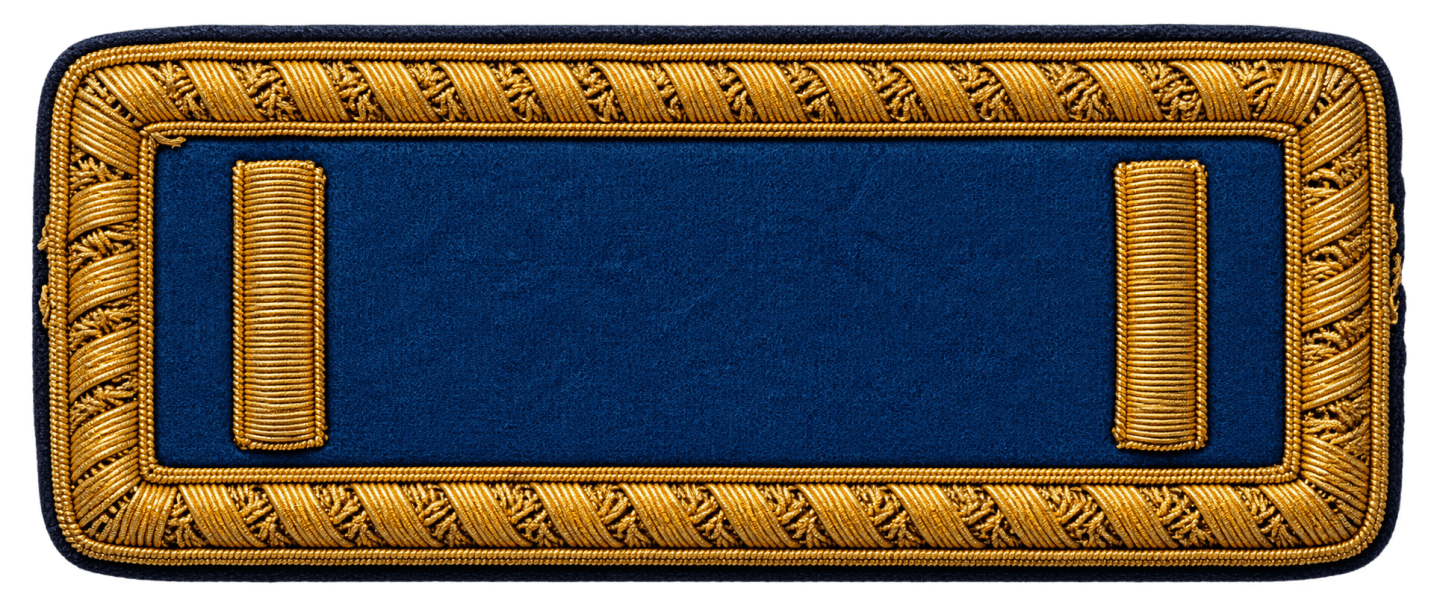
Edwin Goodrich was a Union Army cavalry officer during the American Civil War whose courage under enemy fire earned him the Medal of Honor. Born on March 22, 1843, in New York City, he later entered military service from Westfield, New York, and became associated with Company D of the 9th New York Cavalry. At the time of his Medal of Honor action he held the rank of First Lieutenant, and he later attained the higher rank of Brevet Major.
Goodrich served in a cavalry regiment during a period when mounted troops played a critical role in scouting, screening troop movements, protecting flanks, conducting raids, pursuing retreating forces, and fighting dismounted when necessary. Cavalry service required mobility, judgment, and personal courage, particularly because officers often had to make rapid decisions while operating close to enemy forces.
His Medal of Honor action occurred near Cedar Creek, Virginia, in November 1864, during the final phase of the Union campaigns in the Shenandoah Valley. The region had enormous strategic importance because it served both as an agricultural resource for the Confederacy and as a natural corridor through which Confederate armies could threaten northern territory.
The fighting around Cedar Creek formed part of Major General Philip Sheridan’s successful campaign to defeat Confederate forces in the Shenandoah Valley. By late 1864, Union cavalry units were increasingly important in maintaining pressure on the retreating Confederate forces and controlling the roads and countryside surrounding the battlefield.
Edwin Goodrich was serving as First Lieutenant of Company D, 9th New York Cavalry, when the action occurred.
During a withdrawal near Cedar Creek, Goodrich saw that a Sergeant had become trapped beneath his fallen horse.
The situation was extremely dangerous.
The Union command was falling back, meaning that enemy forces were advancing and soldiers remaining behind faced the possibility of being killed, wounded, or captured.
Instead of continuing to safety with the rest of the command, Goodrich turned back.
In the face of the enemy, he returned to the trapped Sergeant and rescued him from beneath the fallen horse.
His decision required extraordinary personal courage.
Goodrich deliberately moved toward danger while others were withdrawing, risking his own life to save another soldier.
This act of selflessness became the defining moment of his military career.
For his conduct near Cedar Creek in November 1864, Edwin Goodrich was awarded the Medal of Honor.
The correct historical version for his service is the Medal of Honor 1862–1895 Army.
The Army Medal of Honor had been established during the Civil War and was awarded for acts of extraordinary gallantry and distinguished conduct.
The early Army version featured the distinctive five-pointed star design associated with the original Medal of Honor.
Because Goodrich’s heroic action occurred while he was serving in the United States Army during the Civil War, the Medal of Honor 1862–1895 Army is the correct version for his profile.
No verified device or clasp is associated with his Medal of Honor.
Goodrich did not receive the decoration immediately after the war.
His Medal of Honor was formally presented on May 14, 1894, nearly thirty years after the action.
Delayed recognition was common among Civil War Medal of Honor recipients because many wartime actions were reviewed and formally recognized decades after they occurred.
His Medal of Honor citation emphasized the essential facts of his bravery: while his command was falling back, he returned in the face of the enemy and rescued a Sergeant who was trapped beneath his fallen horse.
The simplicity of the citation reflects the direct nature of his heroism.
He saw a fellow soldier in immediate danger and chose to risk his own life to save him.
Goodrich’s action rank was First Lieutenant.
This is the rank that should be used when describing the Medal of Honor action itself.
He later reached the rank of Brevet Major.
A brevet promotion was an honorary or recognition-based advancement commonly used during and after the Civil War to acknowledge distinguished or meritorious service.
Although brevet rank did not always carry the same permanent authority or pay as a regular promotion, it was nevertheless an important mark of military recognition.
For his final profile, First Lieutenant should therefore remain his Medal of Honor action rank, while Brevet Major should be recorded as his highest rank.
Goodrich’s combat specialization was Cavalry.
The 9th New York Cavalry served as a mounted regiment and participated in major campaigns of the Army of the Potomac and Union cavalry operations in Virginia.
For the database, the appropriate Combat Achievement Modifier is therefore Armor/Cavalry.
His service with the 9th New York Cavalry placed him within one of the most active mounted arms of the Union Army.
Cavalry units during the later years of the war had developed into powerful battlefield formations capable of operating both mounted and dismounted.
They could conduct reconnaissance, raid supply lines, seize important roads, delay enemy movements, and engage directly in battle.
Officers such as Goodrich were expected to maintain control of their men in highly fluid situations where units could become scattered or isolated.
The circumstances of his Medal of Honor action demonstrate those dangers clearly.
A retreat could quickly become chaotic.
Horses might be wounded or killed, roads could become blocked, and soldiers who fell behind risked capture.
Goodrich’s decision to return for a trapped Sergeant therefore required more than compassion.
It required the discipline to act decisively while enemy pressure was increasing.
His Medal of Honor recognized precisely that combination of courage and selflessness.
Goodrich’s medal history also includes the Civil War Campaign Medal 1861–1865 Army under the client’s current database workflow.
This decoration was established after the Civil War to recognize qualifying United States Army service during the conflict.
Goodrich’s service with the 9th New York Cavalry clearly occurred during the qualifying Civil War period.
He also survived long after the medal was established.
Edwin Goodrich died on November 26, 1910, in Chicago, Illinois.
Because he remained alive after the establishment of the Army Civil War Campaign Medal, the Civil War Campaign Medal 1861–1865 Army is included in his final profile under the current client rules.
The two medals represent different aspects of his military career.
The Medal of Honor 1862–1895 Army recognizes one specific act of extraordinary courage near Cedar Creek.
The Civil War Campaign Medal 1861–1865 Army represents his broader qualifying service in the Union Army during the Civil War.
No verified device or clasp is associated with either medal.
Goodrich’s career demonstrates that battlefield heroism was not always defined by attacking an enemy position or capturing a flag.
His act was one of rescue.
He willingly exposed himself to enemy danger so that another soldier would not be abandoned beneath a fallen horse.
Such an action reflected the military principle that soldiers have responsibilities not only to accomplish the mission but also to protect their comrades whenever possible.
His later brevet promotion to Major further reflected recognition of his military service.
Although his Medal of Honor action remains the most famous episode of his career, his progression from First Lieutenant to Brevet Major shows that his contributions were not limited to a single moment.
He continued to be recognized as an officer worthy of higher distinction.
Goodrich lived for more than four decades after the Civil War.
By the time of his death in 1910, the United States Army had undergone enormous changes, and the Civil War generation had begun to pass into history.
Yet his Medal of Honor ensured that the act he performed near Cedar Creek would remain permanently recorded.
His remains were associated with Portland Cemetery in Michigan after his death, preserving a physical memorial to a soldier whose heroism had taken place many years earlier in Virginia.
For his final hero profile, the central facts are clear.
Edwin Goodrich served in the United States Army.
He was a First Lieutenant in Company D, 9th New York Cavalry, when he performed the action that earned him the Medal of Honor.
His highest recognized rank was Brevet Major.
His defining action occurred near Cedar Creek, Virginia, in November 1864, when he returned under enemy pressure to rescue a Sergeant trapped beneath a fallen horse.
His final medal set includes the Medal of Honor 1862–1895 Army and the Civil War Campaign Medal 1861–1865 Army.
Edwin Goodrich should ultimately be remembered as a cavalry officer whose heroism was defined by personal sacrifice for another soldier.
While his command was retreating, he made the conscious decision to turn back toward the enemy rather than continue to safety.
That decision saved a fellow soldier and earned him the Medal of Honor.
His Medal of Honor remains the defining symbol of his bravery, while the Civil War Campaign Medal represents his broader service during the conflict.
Together, they preserve the military legacy of Edwin Goodrich as a Union cavalry officer whose courage, loyalty, and willingness to risk his own life for a comrade distinguished him among the soldiers of the American Civil War.
Become the named supporter for this profile and edit the tribute biography and portrait (Owner account required). Proceeds help keep the archive online.
$25 USD / year — annual sponsorship renewal. Keeps the page online and, where enabled, the family anniversary remembrance emails active.