★
Loading archive…
Loading archive…
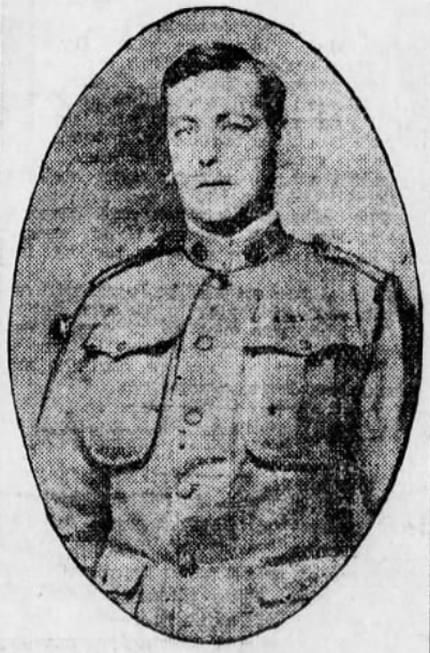
First Sergeant (Marine Corps) Captain (Army), U.S. Marine Corps
Support & adopt this hero ↓
A small boat. A river under enemy gunfire. And a United States Marine who refused to turn back. On 20 June 1900, Corporal Edwin Nelson Appleton crossed a dangerous stretch of water at Tientsin, China, and helped destroy enemy-occupied buildings. His extraordinary courage during the Boxer Rebellion earned him the Medal of Honor, America's highest military decoration.
But what led this young Marine from Brooklyn to one of the most dangerous military confrontations of his generation?
Edwin Nelson Appleton enlisted in the United States Marine Corps on 14 January 1898, just months before the Spanish-American War transformed America's military role overseas. His early service took him to the Caribbean aboard USS Dixie, an auxiliary cruiser involved in blockade operations and engagements against Spanish defenses.
On 22 June 1898, USS Dixie exchanged fire with Spanish positions at Casilda, Cuba. Appleton's documented service with the ship placed him within the period of this naval engagement, part of a demanding campaign that introduced American servicemen to the realities of overseas warfare.
Following the war with Spain, Appleton's Marine Corps career carried him to the Far East. Serving in connection with USS Newark, he became associated with American operations in the Philippines and the unfolding international crisis in China.
In 1900, the Boxer Rebellion threatened foreign communities and diplomatic missions throughout northern China. American Marines joined an international force operating under difficult and increasingly dangerous circumstances.
At Tientsin, Appleton faced the moment that would define his military legacy.
On 20 June 1900, enemy troops occupied buildings that threatened the American position. Reaching those positions meant crossing a river exposed to heavy enemy fire. There was little protection on the water, and the crossing demanded exceptional courage.
Appleton went forward.
Traveling in a small boat while hostile fire swept the area, he crossed the river and assisted in destroying enemy-occupied buildings. His conduct helped accomplish the mission despite the danger.
For his extraordinary bravery, Edwin Nelson Appleton received the Medal of Honor under General Orders No. 84, dated 22 March 1902. The citation preserved the essential facts of his courage: a Marine crossing a river under fire and helping eliminate enemy positions.
Appleton's service, however, did not end with that remarkable achievement.
He continued his Marine Corps career, reaching the rank of First Sergeant before his honorable discharge on 13 January 1903. He subsequently served in the United States Army from February 1908 until March 1915, adding another chapter to a military career that had already taken him through the Caribbean and across the Pacific.
During the First World War era, Appleton returned to military duty in the New York Guard. Appointed a captain in the 47th Infantry in November 1917, he transferred to the 14th Infantry in April 1918 and remained in state military service until November 1919.
His successive periods of military service reflected a lasting commitment that extended far beyond the single moment for which he is remembered.
Edwin Nelson Appleton died on 26 September 1937 and was buried in Green-Wood Cemetery in Brooklyn, New York.
Today, his name remains among the American Marines honored for extraordinary courage during the China Relief Expedition. His military career connected the Spanish-American War, the Philippine campaign and the Boxer Rebellion, three conflicts that shaped the expanding international responsibilities of the United States.
Yet his most enduring legacy is found in a single decision on a dangerous river in China.
What defines extraordinary courage? Is it the absence of fear, or the determination to act despite the danger?
For Edwin Nelson Appleton, the answer came at Tientsin.
He crossed under fire, helped accomplish the mission, and earned an enduring place in the history of the United States Medal of Honor.
Become the named supporter for this profile and edit the tribute biography and portrait (Owner account required). Proceeds help keep the archive online.
$25 USD / year — annual sponsorship renewal. Keeps the page online and, where enabled, the family anniversary remembrance emails active.