★
Loading archive…
Loading archive…
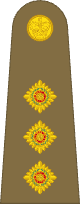
The Officer Who Turned Back to Save One of His Men
Captain Eustace Jotham had a clear path to safety. His patrol was almost surrounded, the enemy outnumbered his men by more than one hundred to one, and he had already ordered a withdrawal. Yet when one soldier lost his horse and was left behind, Jotham turned back. That decision cost him his life and earned him the Victoria Cross.
Eustace Jotham was born in Kidderminster, Worcestershire, on 28 November 1883. He pursued a military career and was commissioned into the Prince of Wales’s North Staffordshire Regiment before transferring to the Indian Army. He served with the 102nd Prince of Wales’s Own Grenadiers and later joined the 51st Sikhs, Frontier Force. By 1912, he had been promoted to captain.
During the opening months of the First World War, Jotham was attached to the North Waziristan Militia on the North West Frontier of British India. This was a dangerous region of rugged mountains, narrow valleys and isolated outposts, where small patrols could quickly be cut off by much larger tribal forces.
On 7 January 1915, Jotham commanded a patrol of approximately twelve North Waziristan Militia soldiers during operations against Khostwal tribesmen at Spina Khaisora in the Tochi Valley. His party entered a nullah and was attacked by an estimated 1,500 tribesmen. With his men nearly surrounded, Jotham recognized that remaining in position would lead to their destruction and ordered an immediate retreat.
Jotham could have escaped with the withdrawing patrol. Instead, he noticed that one of his men had lost his horse and was in danger of being overtaken. He turned back and attempted to rescue the dismounted soldier. Both men were killed.
The official Victoria Cross citation praised Jotham’s “most conspicuous bravery” and stated that he had “most gallantly sacrificed his own life” while trying to save his man. His posthumous award was announced in the Supplement to The London Gazette on 24 July 1915. The citation remains one of the clearest examples of an officer placing the life of a soldier above his own chance of survival.
Jotham was also Mentioned in Despatches for his service. The Commonwealth War Graves Commission officially records both his Victoria Cross and Mention in Despatches. On his Victory Medal ribbon, the mention is represented by a single bronze oak leaf.
His First World War service was further recognized by the 1914-15 Star, British War Medal 1914-1920 and Victory Medal 1914-1919. These campaign awards completed the medal group associated with his service on the Indian frontier during the first year of the war. The Victoria Cross and George Cross Association records all three medals as part of his entitlement.
Captain Eustace Jotham was only 31 years old when he died. He was buried at Miranshar Cemetery in North Waziristan and is commemorated on the Delhi Memorial at India Gate. His Victoria Cross was later presented to his father by King George V at Buckingham Palace on 29 November 1916.
Jotham’s story is remembered not because he was trapped without an escape, but because he had an escape and chose not to take it. Faced with the choice between saving himself and attempting to rescue one of his soldiers, he returned to danger.
Captain Eustace Jotham died as he had commanded, putting his men first.
Become the named supporter for this profile and edit the tribute biography and portrait (Owner account required). Proceeds help keep the archive online.
$25 USD / year — annual sponsorship renewal. Keeps the page online and, where enabled, the family anniversary remembrance emails active.
