★
Loading archive…
Loading archive…

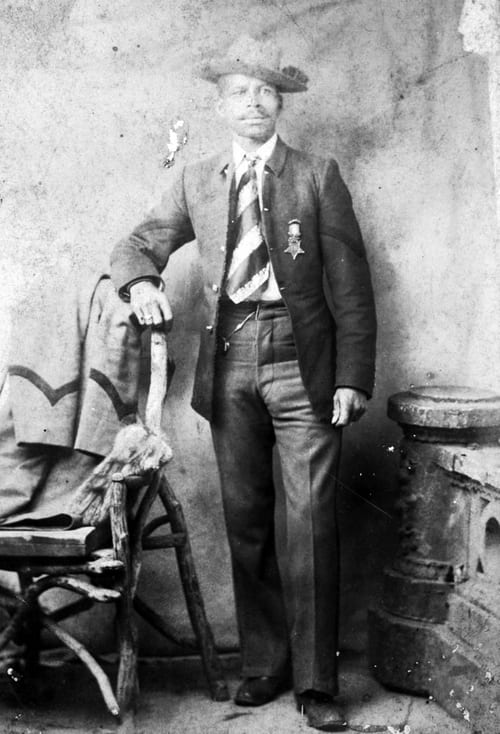
When repeated rescue attempts failed and wounded soldiers remained stranded under enemy fire, one cavalry private volunteered to go ashore. His courage helped bring the wounded to safety and earned him one of America's highest military distinctions. His name was Fitz Lee, a Buffalo Soldier of the 10th U.S. Cavalry whose extraordinary bravery during the Spanish-American War secured his place in American military history.
Born in June 1866 in Dinwiddie County, Virginia, Fitz Lee enlisted in the United States Army on 26 December 1889 in Philadelphia, Pennsylvania. He served as a Private in Troop M, 10th U.S. Cavalry, one of the celebrated Buffalo Soldier regiments. During his early military career, Lee served at Fort Leavenworth, Kansas, before the outbreak of the Spanish-American War brought his regiment into a new and dangerous campaign.
In 1898, as American forces prepared for operations in Cuba, Lee was selected as one of approximately fifty cavalrymen assigned to a special expedition under Lieutenant Carter P. Johnson. Their mission was to reinforce and supply Cuban independence fighters operating behind Spanish lines.
On 30 June 1898, Lee took part in the daring expedition at Tayabacoa, Cuba. A landing party involving American volunteers and Cuban fighters came under Spanish fire near an enemy blockhouse. The operation left wounded comrades stranded ashore after earlier rescue attempts had failed. Rather than accept their abandonment, Lee and other volunteers answered the call to return to the dangerous landing site. Facing enemy fire, they went ashore and helped bring the wounded to safety. For his conspicuous gallantry during this rescue, Private Fitz Lee received the Medal of Honor.
On 23 June 1899, Lee received the Medal of Honor for his actions at Tayabacoa. His official citation recorded his voluntary decision to go ashore in the face of the enemy and assist in rescuing his wounded comrades after several previous attempts had been frustrated.
The recognition came at an enormous personal cost. Following his service in Cuba, Lee's health deteriorated severely. He suffered from debilitating illness and serious loss of eyesight, eventually becoming unable to continue military service. He received his Medal of Honor while hospitalized at Fort Bliss, Texas, and was medically discharged from the Army on 5 July 1899.
After leaving the Army, Lee travelled to Leavenworth, Kansas, where fellow Buffalo Soldiers and former comrades offered him assistance. His final months were marked by illness, physical suffering and financial hardship. Fitz Lee died on 14 September 1899, aged just 33. He was buried with full military honors at Fort Leavenworth National Cemetery in Kansas.
Today, Private Fitz Lee is remembered as a courageous member of the Buffalo Soldiers and a Medal of Honor recipient whose actions at Tayabacoa exemplified the highest traditions of military service. His story represents more than an individual act of battlefield bravery. It reflects the courage, sacrifice and brotherhood of the African American soldiers who served their country despite the discrimination and obstacles of their era.
In July 2025, the United States Army installation in Virginia was officially renamed Fort Lee in his honor, ensuring that the name of this remarkable cavalryman continues to be remembered. His legacy endures through the Medal of Honor and the story of a soldier who risked his life when his wounded comrades needed him most.
Become the named supporter for this profile and edit the tribute biography and portrait (Owner account required). Proceeds help keep the archive online.
$25 USD / year — annual sponsorship renewal. Keeps the page online and, where enabled, the family anniversary remembrance emails active.