★
Loading archive…
Loading archive…
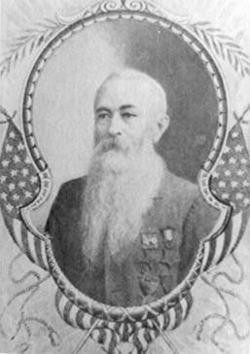
Forrester Lore Taylor was born on October 30, 1833, in Philadelphia, Pennsylvania. By the beginning of the American Civil War he was living in Beverly, New Jersey, where he became associated with a local militia organization. His military career would eventually take him from the enlisted ranks to commissioned command, through two New Jersey infantry regiments, and ultimately to recognition as a Medal of Honor recipient and Brevet Major in the United States Army. Taylor entered Federal service in 1862 when his militia organization became part of the 23rd New Jersey Volunteer Infantry, a nine-month regiment raised for Union service. He was mustered into the regiment as a Sergeant on September 13, 1862. The 23rd New Jersey was subsequently assigned to the First New Jersey Brigade of the Army of the Potomac, placing Taylor and his comrades within one of the principal Union field armies operating in the Eastern Theater. The regiment's first major combat experience came during the Battle of Fredericksburg in December 1862. The battle developed into a costly Union defeat, with repeated Federal attacks failing against strongly defended Confederate positions. For the relatively inexperienced soldiers of the 23rd New Jersey, Fredericksburg provided an early introduction to the realities of large-scale Civil War combat. Taylor remained with the regiment as it entered winter quarters after the campaign. During the months following Fredericksburg, Taylor advanced rapidly through the ranks. He was promoted from Sergeant to Second Lieutenant of Company G on December 26, 1862. On February 13, 1863, he became First Lieutenant of Company D. On April 18, 1863, shortly before the next major campaign, he was promoted to Captain and placed in command of Company H. This progression is important to his military record because his Medal of Honor action occurred while he was serving as Captain, although the highest rank later officially associated with him was Brevet Major. In the spring of 1863 the Army of the Potomac began the Chancellorsville Campaign. Taylor's regiment participated as part of the First New Jersey Brigade, and the fighting eventually carried the brigade into the area around Salem Church near Fredericksburg, Virginia. On May 3, 1863, the Union and Confederate forces were engaged in severe fighting as Federal troops attempted to operate against well-positioned Confederate units. The battlefield became increasingly dangerous as Union formations suffered casualties and were eventually forced to withdraw from exposed positions. It was during this fighting that Captain Taylor performed the act for which he would later receive the Medal of Honor. Two Union soldiers had been wounded and remained on the battlefield in circumstances that placed them in serious danger. Rather than abandoning them during the withdrawal, Taylor voluntarily exposed himself to enemy fire in an effort to rescue them. Taylor went onto the battlefield despite the risk to his own life and succeeded in bringing the two wounded men to safety. His official Medal of Honor recognition focuses specifically on this act: he voluntarily saved the lives of two wounded comrades and removed them from the battlefield at great personal risk. The significance of the action lies in the fact that Taylor was not merely carrying out a routine command responsibility. He knowingly placed himself in danger so that soldiers who might otherwise have been killed or captured could be removed from the battlefield. The action also reflects Taylor's responsibility as an infantry officer. As Captain of Company H, 23rd New Jersey Infantry, he was serving in direct ground combat rather than in a rear-area or administrative position. For that reason, his combat achievement classification is appropriately Infantry. His heroic action was a battlefield rescue undertaken by an infantry officer during active combat, and his profile therefore belongs within the United States Army and American Civil War categories. Taylor's original enlistment with the 23rd New Jersey expired shortly after the Chancellorsville Campaign. He was mustered out with the regiment on June 27, 1863, at Trenton, New Jersey. His military service, however, did not end there. He returned to the Army and joined the 34th New Jersey Volunteer Infantry, another Union regiment that included veterans of earlier New Jersey organizations. On October 6, 1863, Taylor was commissioned Captain of Company H of the 34th New Jersey Infantry. His later service with this regiment took him away from the eastern battlefields on which he had fought with the 23rd New Jersey. The 34th New Jersey performed military duties in areas including Kentucky and Tennessee, where Union forces were responsible for garrison, security and occupation operations as the war continued. Taylor remained in service with the 34th New Jersey until December 2, 1864. Although his active wartime service had ended, his conduct during the war received another form of military recognition. On March 13, 1865, he received the brevet rank of Major, United States Volunteers, for gallant conduct associated with the Battle of Chancellorsville. Brevet rank was an honorary form of promotion commonly used during and after the Civil War to recognize distinguished or gallant service without necessarily conferring all of the permanent authority or privileges of a regular promotion. This distinction explains the two ranks that must be preserved in Taylor's profile. His rank during the Medal of Honor action on May 3, 1863 was Captain. His highest recognized rank was Brevet Major. These two facts should not be merged or confused. When describing the rescue that earned the Medal of Honor, he should be identified as Captain Forrester Lore Taylor. When recording his highest military rank, Brevet Major is the appropriate designation. More than three decades passed before Taylor's Chancellorsville heroism received the nation's highest military decoration. On November 2, 1896, he was presented with the Medal of Honor for his actions of May 3, 1863. The award was made during his lifetime, making him a living recipient rather than a posthumous Medal of Honor recipient. The Medal of Honor itself had been created during the American Civil War. Congress authorized the Army Medal of Honor in 1862 as a means of recognizing extraordinary military conduct by soldiers. During the decades following the war, numerous Civil War cases continued to be reviewed, and veterans were sometimes recognized many years after the actions for which they were honored. Taylor's case is a clear example: his heroic rescue occurred in 1863, while his Medal of Honor was not presented until 1896. The year of presentation is particularly important for the historical representation of Taylor's medal. In 1896 the Army Medal of Honor ribbon design was changed from the earlier Civil War-era arrangement to a ribbon using vertical red, white and blue stripes. Because Taylor's medal was presented on November 2, 1896, his decoration belongs in the project's Medal of Honor 1896–1903 Army category rather than the earlier 1862–1895 Army category. The 1896 classification refers to the historical medal and ribbon period applicable when his award was issued; it does not change the fact that his heroic action occurred in 1863. Taylor received one verified Medal of Honor. No additional bar, clasp, service star, oak leaf cluster or other device has been established for the decoration. His verified database medal entry is therefore Medal of Honor 1896–1903 Army — 1896, with no device or clasp. A separate Civil War Campaign Medal has not been included in Taylor's verified ribbon rack. His service unquestionably places him within the American Civil War, and his record demonstrates substantial Union Army service with both the 23rd and 34th New Jersey Infantry. However, service during a qualifying historical period does not by itself demonstrate recipient-specific entitlement to a later-created campaign medal. Without sufficiently strong evidence showing that Taylor personally received or was specifically entitled to the Civil War Campaign Medal, it remains outside the final verified rack rather than being added by assumption. After the war Taylor eventually settled in Virginia. He lived on a farm in Campbell County south of Lynchburg, an area associated with the community of Lawyers and later with the Rustburg area. His postwar years were therefore spent far from the New Jersey communities connected with his Civil War enlistment. Like many veterans of the conflict, he lived for decades after the fighting while the Civil War gradually passed from living experience into national history. Taylor survived long enough to see his wartime act formally recognized. When he received the Medal of Honor in 1896, approximately thirty-three years had passed since the desperate fighting of the Chancellorsville Campaign. The decoration ensured that his decision to return for two wounded soldiers would remain permanently connected to his name and to the history of the 23rd New Jersey Infantry. Forrester Lore Taylor died on April 21, 1907, in Campbell County, Virginia, at the age of seventy-three. He was buried in the Taylor family cemetery on the property where he had lived. His burial place later became an important physical reminder of his military legacy, preserving the resting place of a Civil War officer whose battlefield conduct had received the highest military decoration of the United States. Taylor's military story is notable not because of a large collection of decorations, but because of a single, exceptionally significant act. He began his Federal service as a Sergeant, rose rapidly through the commissioned ranks, commanded infantrymen as a Captain, returned to military service after completing his first enlistment, and was ultimately recognized as a Brevet Major. Yet the defining moment of his career occurred on May 3, 1863, when he chose to risk his life to save two wounded comrades during the fighting around Chancellorsville and Salem Church. His final verified profile therefore records Forrester Lore Taylor as a United States Army officer, Captain at the time of his Medal of Honor action, highest rank Brevet Major, and an infantry veteran of the American Civil War. His verified award record consists of the Medal of Honor 1896–1903 Army — 1896, without any verified device or clasp. His enduring legacy rests on an act of battlefield rescue in which personal courage was directed not toward capturing an objective or defeating an enemy position, but toward bringing two wounded fellow soldiers safely away from a battlefield where remaining behind could have cost them their lives.
Become the named supporter for this profile and edit the tribute biography and portrait (Owner account required). Proceeds help keep the archive online.
$25 USD / year — annual sponsorship renewal. Keeps the page online and, where enabled, the family anniversary remembrance emails active.