★
Loading archive…
Loading archive…
Francis Asbury Wallar was one of the remarkable soldiers of Wisconsin’s famed Iron Brigade, surviving four years of some of the hardest fighting of the American Civil War and rising from the enlisted ranks to become an officer. His defining moment came at Gettysburg, where, as a young corporal, he captured the battle flag of the 2nd Mississippi Infantry during the savage fighting around the unfinished railroad cut.
Wallar was born on August 15, 1840, in Ohio. His family moved to Wisconsin while he was young, eventually settling in the southwestern part of the state. He was commonly known as Frank.
When the Civil War began, Wallar enlisted on July 16, 1861, and served in Company I of the 6th Wisconsin Volunteer Infantry. The regiment became part of the brigade that would earn lasting fame as the Iron Brigade of the Army of the Potomac.
Service with the 6th Wisconsin placed Wallar in one of the most heavily engaged Union infantry regiments of the war. A former company commander later remembered him as an unusually dependable soldier who was present through the regiment’s battles and skirmishes. Wallar progressed through the enlisted ranks from private to corporal, sergeant and first sergeant before eventually receiving a commission.
Gettysburg
On July 1, 1863, the first day of the Battle of Gettysburg, Corporal Wallar and the 6th Wisconsin were thrown into the desperate fighting west of town.
Confederate troops had taken position in and around an unfinished railroad cut north of the Chambersburg Pike. The 6th Wisconsin was ordered forward as part of a Union counterattack against the position.
The regiment charged across exposed ground toward the railroad cut. The fighting that followed was violent and close. Large numbers of Confederate soldiers were trapped in the cut, while the colors of the 2nd Mississippi Infantry became the focus of a struggle between the opposing soldiers.
In the midst of this fighting, Wallar seized the battle flag of the 2nd Mississippi Infantry.
Capturing an enemy regimental flag carried enormous military and symbolic importance during the Civil War. A regiment’s colors marked its position on the battlefield and served as a rallying point amid smoke, confusion and noise. Men routinely died defending them.
Wallar’s conduct at the railroad cut was immediately recognized. He was promoted from corporal to sergeant for conspicuous bravery on the battlefield.
More than a year later, his actions at Gettysburg brought the nation’s highest military decoration.
Medal of Honor
Francis Wallar was awarded the Medal of Honor on December 1, 1864.
He held the rank of Corporal in Company I, 6th Wisconsin Infantry when he performed the action for which the medal was awarded.
His official citation was exceptionally brief:
“Capture of flag of 2d Mississippi Infantry (C.S.A.).”
Behind those few words was a violent close-range encounter during one of the most important actions of the opening day at Gettysburg.
From Corporal to Officer
Gettysburg was not the end of Wallar’s war.
He continued serving with the 6th Wisconsin and rose through the ranks. Wisconsin’s official regimental roster records his progression through corporal, sergeant and first sergeant before his appointment as a second lieutenant on December 21, 1864.
He was subsequently mustered as an officer in March 1865 and ultimately attained the rank of First Lieutenant.
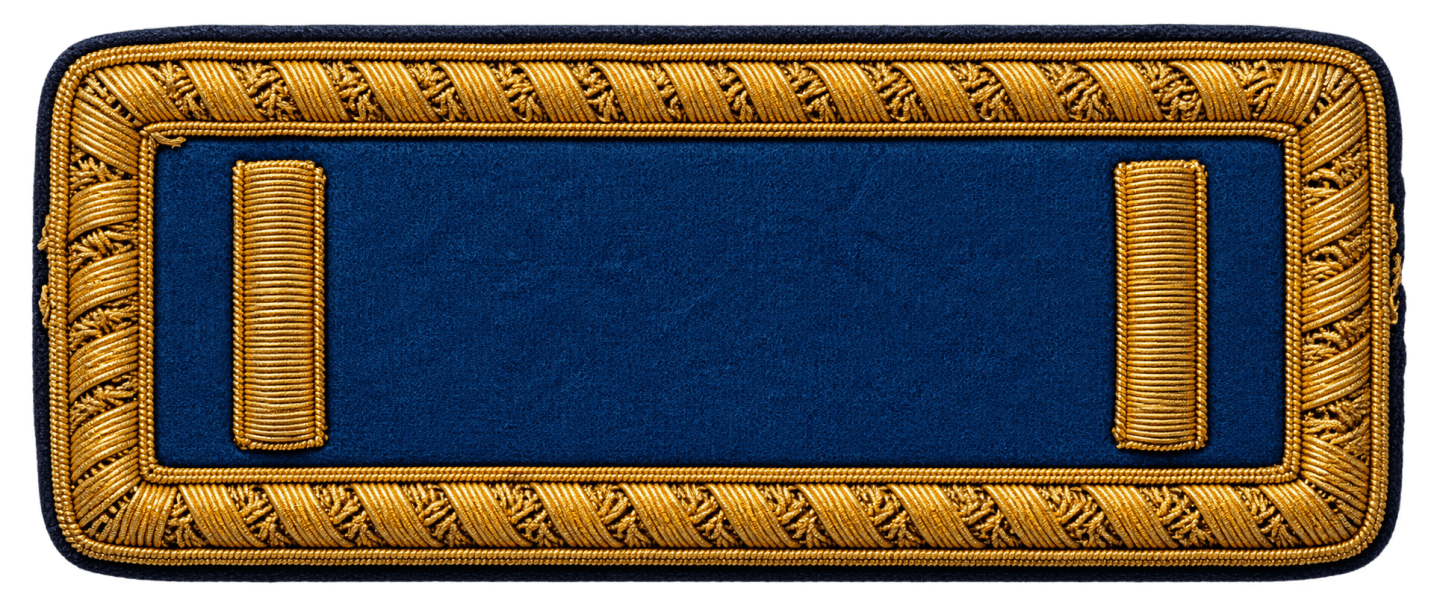
This progression explains the apparently conflicting ranks associated with Wallar today. Corporal was his rank when he earned the Medal of Honor at Gettysburg. Sergeant and First Sergeant were later enlisted ranks, and First Lieutenant was his highest rank.
A photograph showing Wallar wearing sergeant’s chevrons is therefore entirely consistent with his wartime career. It represents another point in a military service that took him from the enlisted ranks to a commissioned officer.
Wallar remained with the 6th Wisconsin through a remarkable portion of its wartime service. He was mustered out on July 14, 1865, after approximately four years in uniform.
After the War
Wallar returned to civilian life in Wisconsin after the war.
Like many veterans whose reputations followed them home, he became active in his community. In 1880 he was elected Sheriff of Vernon County, Wisconsin, serving from 1881 to 1883.
His wartime service, however, remained an important part of his identity. He belonged to a generation of Iron Brigade veterans whose experiences at places such as Second Bull Run, Antietam, Gettysburg and the campaigns of 1864 became part of Wisconsin’s Civil War memory.
Francis Asbury Wallar died on April 30, 1911, at the age of seventy. He was buried at Walnut Mound Cemetery near Retreat, Wisconsin.
His name presents one final historical puzzle. Contemporary and later records variously spell the surname Wallar and Waller. Wisconsin military records themselves contain both forms, while the spelling Wallar was used on the gravestone erected by his family. Some official Medal of Honor records nevertheless identify him as Francis A. Waller.
Whatever spelling appears in a particular record, there is no ambiguity about the soldier.
Francis Asbury “Frank” Wallar was the young Wisconsin corporal who charged into the fighting at Gettysburg on July 1, 1863, emerged with the colors of the 2nd Mississippi Infantry, and then continued serving until he had risen from the ranks to become an officer.
His Medal of Honor commemorates a few extraordinary moments at the railroad cut. His four years with the 6th Wisconsin tell the larger story of the soldier who lived through them.
Become the named supporter for this profile and edit the tribute biography and portrait (Owner account required). Proceeds help keep the archive online.
$25 USD / year — annual sponsorship renewal. Keeps the page online and, where enabled, the family anniversary remembrance emails active.
