★
Loading archive…
Loading archive…
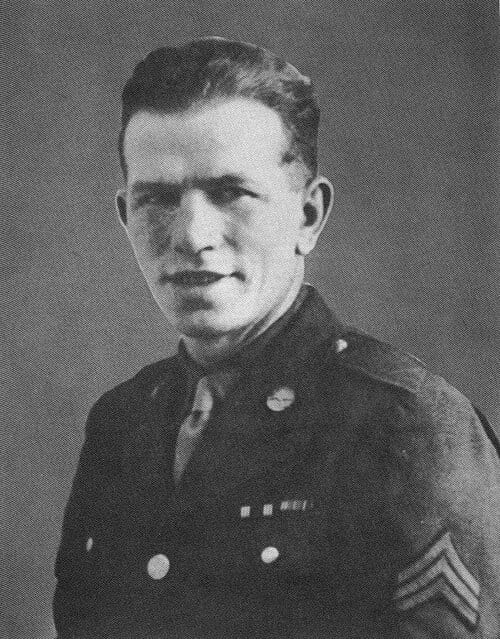
Took command and rescued men under enemy fire
Francis J. Clark was born in Whitehall, New York, on 22 April 1912. He served as a technical sergeant in Company K, 109th Infantry Regiment, 28th Infantry Division during World War II.
On 12 September 1944, near Kalborn, Luxembourg, Clark crossed exposed ground to lead a leaderless platoon to safety, then returned for a wounded soldier. He subsequently attacked enemy positions and disrupted German patrols.
Near Sevenig, Germany, on 17 September, he attacked a machine gun and assumed command of two platoons during a counterattack. Wounded the following morning, he refused evacuation. He continued fighting and later carried food and water to an isolated platoon.
President Harry S. Truman presented his Medal of Honor on 23 August 1945. Clark died on 20 October 1981 and is buried in Evergreen Cemetery in Salem Township, New York. His citation honors leadership, rescue work and continued attacks across several days of fighting.
Medal of Honor citation
He fought gallantly in Luxembourg and Germany. On 12 September 1944, Company K began fording the Our River near Kalborn, Luxembourg, to take high ground on the opposite bank. Covered by early morning fog, the 3d Platoon, in which TSgt. Clark was squad leader, successfully negotiated the crossing; but when the 2d Platoon reached the shore, withering automatic and small-arms fire ripped into it, eliminating the platoon leader and platoon sergeant and pinning down the troops in the open. From his comparatively safe position, TSgt. Clark crawled alone across a field through a hail of bullets to the stricken troops. He led the platoon to safety and then unhesitatingly returned to the fire-swept area to rescue a wounded soldier, carrying him to the American line while hostile gunners tried to cut him down. Later, he led his squad and men of the 2d Platoon in dangerous sorties against strong enemy positions to weaken them by lightning-like jabs. He assaulted an enemy machine gun with hand grenades, killing two Germans. He roamed the front and flanks, dashing toward hostile weapons, killing and wounding an undetermined number of the enemy, scattering German patrols and, eventually, forcing the withdrawal of a full company of Germans heavily armed with automatic weapons. On 17 September, near Sevenig, Germany, he advanced alone against an enemy machine gun, killed the gunner and forced the assistant to flee. The Germans counterattacked, and heavy casualties were suffered by Company K. Seeing that two platoons lacked leadership, TSgt. Clark took over their command and moved among the men to give encouragement. Although wounded on the morning of 18 September, he refused to be evacuated and took up a position in a pillbox when night came. Emerging at daybreak, he killed a German soldier setting up a machine gun not more than five yards away. When he located another enemy gun, he moved up unobserved and killed two Germans with rifle fire. Later that day he voluntarily braved small-arms fire to take food and water to members of an isolated platoon. TSgt. Clark's actions in assuming command when leadership was desperately needed, in launching attacks and beating off counterattacks, in aiding his stranded comrades, and in fearlessly facing powerful enemy fire, were strikingly heroic examples and put fighting heart into the hard-pressed men of Company K.
Become the named supporter for this profile and edit the tribute biography and portrait (Owner account required). Proceeds help keep the archive online.
$25 USD / year — annual sponsorship renewal. Keeps the page online and, where enabled, the family anniversary remembrance emails active.