★
Loading archive…
Loading archive…
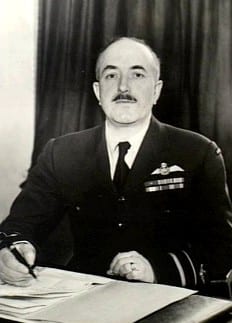
Air Vice Marshal, Royal Australian Air Force
Support & adopt this hero ↓
Badly wounded, he lands under fire to rescue a fellow airman
Bleeding heavily from a severe thigh wound, Francis Hubert “Frank” McNamara landed behind enemy lines near Gaza on 20 March 1917 to rescue a fellow Australian Flying Corps pilot as Turkish cavalry approached. His extraordinary courage made him the first Australian airman to receive the Victoria Cross and the only Australian airman awarded Britain’s highest decoration for valour during the First World War.
Born at Rushworth, Victoria, on 4 April 1894, McNamara was educated locally and at Shepparton Agricultural High School. He trained as a teacher and worked in several Victorian schools before military aviation changed his life. Having served in the Senior Cadets and Brighton Rifles, he was commissioned as a second lieutenant in 1913. Following the outbreak of war, he performed garrison duty at Queenscliff and Point Nepean and became an instructor at the Australian Imperial Force training depot at Broadmeadows.
Selected for flying training at the Central Flying School, Point Cook, in August 1915, McNamara qualified as a pilot that October. He joined No. 1 Squadron, Australian Flying Corps, in January 1916 and sailed from Melbourne for Egypt aboard HMAT Orsova on 16 March. Further training and Royal Flying Corps attachments in Britain and Egypt preceded his return to the squadron for operations during the Sinai and Palestine campaign.
On 20 March 1917, McNamara was attacking a Turkish railway target near Gaza when one of his bombs exploded prematurely, severely wounding his thigh. Turning towards home, he spotted Captain Douglas Rutherford’s aircraft stranded in enemy territory, with Turkish cavalry closing in. McNamara landed nearby despite his injury. Rutherford climbed onto the wing of the single-seat aircraft, but the additional weight and McNamara’s wound made takeoff impossible. The aircraft crashed, leaving both men exposed.
After setting fire to McNamara’s machine, they struggled back to Rutherford’s damaged aircraft under enemy fire. Barely able to stand, McNamara took the pilot’s seat while Rutherford started the engine. With capture imminent, they became airborne. Despite pain and mounting blood loss, McNamara flew approximately 70 miles to El Arish, landed safely and then collapsed unconscious. His Victoria Cross was announced in the London Gazette on 8 June 1917.
Promoted to captain and appointed a flight commander, McNamara could not resume operational flying because of his wound. Back in Australia, he served as an instructor and commanded air reconnaissance patrols before joining the newly established Royal Australian Air Force in 1921. His interwar appointments included command of No. 1 Flying Training School at Point Cook and No. 1 Aircraft Depot at Laverton, an exchange posting with the Royal Air Force and attendance at the Imperial Defence College.
Appointed a Commander of the Order of the British Empire in 1938, McNamara became an air commodore in 1939 and an air vice marshal in 1942. During the Second World War, he held senior appointments in London and commanded British Forces at Aden. He was appointed a Companion of the Order of the Bath in 1945.
After retiring from the RAAF in 1946, McNamara worked in educational administration in occupied Germany and subsequently with Britain’s National Coal Board until 1959. He died at Amersham, Buckinghamshire, on 2 November 1961, aged 67. Quiet, scholarly and unassuming, Frank McNamara combined a distinguished aviation career with the courage and determination that had saved a fellow airman’s life.
Become the named supporter for this profile and edit the tribute biography and portrait (Owner account required). Proceeds help keep the archive online.
$25 USD / year — annual sponsorship renewal. Keeps the page online and, where enabled, the family anniversary remembrance emails active.