★
Loading archive…
Loading archive…
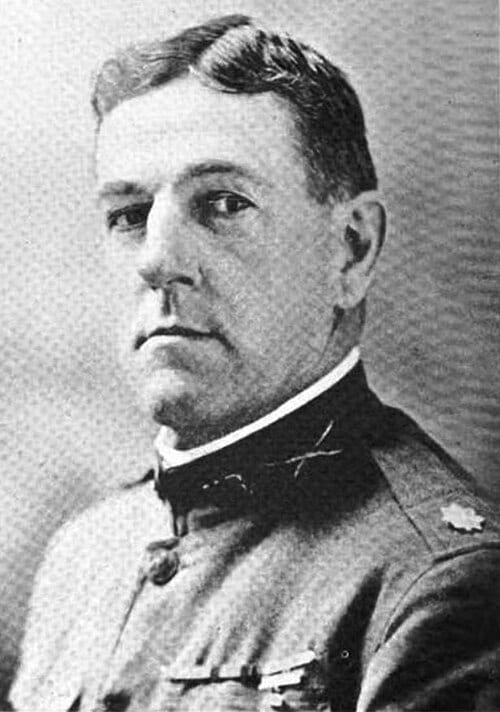
Lieutenant Colonel, U.S. Army
Support & adopt this hero ↓
He drew machine-gun fire so his men could escape the ambush.
Fred Eliphaz Smith brought two decades of Army experience to the fighting in France. Born in Illinois in 1873, he grew up with ties to North Dakota and studied at the University of North Dakota. He joined the state's National Guard in 1898 and served in the Philippines during the war with Spain and the subsequent conflict against Filipino independence forces. Commissioned into the Regular Army in 1899, he remained a professional soldier.
The rapid expansion of the Army after America's entry into the First World War created an urgent need for experienced leaders. Smith advanced to major and then lieutenant-colonel in August 1917. He went overseas in April 1918, initially with the 15th Infantry, and transferred to the 308th Infantry, 77th Division, in July. His French service included the Oise-Aisne and Meuse-Argonne offensives and several defensive sectors.
On 29 September 1918, near Binarville, enemy machine-gun patrols interrupted communication between the regimental command post and the leading battalion. Smith personally took two officers and ten soldiers forward to reopen the runner route and bring ammunition to the front. Their guide lost direction and the party moved beyond friendly outposts, into close-range enemy fire.
Smith ordered his men to shelter, then stood exposed and fired his pistol at the nearest machine-gun crew. Wounded in the side, he rose and continued shooting until most of the party had reached safety. He refused treatment, collected grenades and returned under fire to renew the attack. While locating an enemy position, he was struck again and mortally wounded.
He received the Medal of Honor posthumously. France also appointed him an Officer of the Legion of Honour and awarded the Croix de Guerre with palm; Italy awarded its war cross. He lies in the Meuse-Argonne American Cemetery. His final act combined the responsibilities of a senior officer with a deliberate willingness to face the danger himself.
Official Medal of Honor citation
When communication from the forward regimental post of command to the battalion leading the advance had been interrupted temporarily by the infiltration of small parties of the enemy armed with machine guns, Lt. Col. Smith personally led a party of two other officers and 10 soldiers, and went forward to reestablish runner posts and carry ammunition to the front line. The guide became confused and the party strayed to the left flank beyond the outposts of supporting troops, suddenly coming under fire from a group of enemy machine guns only 50 yards away. Shouting to the other members of his party to take cover, this officer, in disregard of his danger, drew his pistol and opened fire on the German gun crew. About this time he fell, severely wounded in the side, but regaining his footing, he continued to fire on the enemy until most of the men in his party were out of danger. Refusing first-aid treatment, he then made his way in plain view of the enemy to a hand grenade dump and returned under continued heavy machine-gun fire for the purpose of making another attack on enemy emplacements. As he was attempting to ascertain the exact location of the nearest nest, he again fell, mortally wounded.
Become the named supporter for this profile and edit the tribute biography and portrait (Owner account required). Proceeds help keep the archive online.
$25 USD / year — annual sponsorship renewal. Keeps the page online and, where enabled, the family anniversary remembrance emails active.