★
Loading archive…
Loading archive…
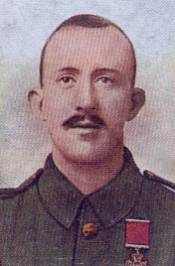
Sergeant, British Army
Support & adopt this hero ↓
Though badly wounded, he held the trench against enemy bombs
Fred McNess grew up in Bramley, near Leeds, and attended Bramley National School. He worked as a carter's assistant before joining the Scots Guards in January 1915. After training with the 3rd Reserve Battalion, he went to France in April 1916 to serve with the 1st Battalion and became an acting lance-sergeant that August.
On 15 September 1916, during the Somme fighting near Ginchy, McNess led his men forward through artillery and machine-gun fire. Reaching the German trenches, they found their left flank exposed and enemy bombers advancing along the position. He organised and personally led a counter-attack. Despite severe wounds to his neck and jaw, he crossed the grenade barrage to replenish his men's ammunition. He then established a defensive block in the trench and continued throwing bombs and encouraging his men until blood loss left him exhausted. These actions earned him the Victoria Cross.
McNess underwent prolonged treatment, including reconstruction of his damaged jaw. King George V presented his VC at Buckingham Palace on 9 December 1916. He subsequently became a sergeant, but his injuries ended his military career: he was discharged as medically unfit in June 1918.
In 1919 he married Dorothy Smith, a nurse who had cared for him. They had a daughter. With money raised in Leeds and Bramley, he opened a shoe-repair business in 1920. After it closed during the Second World War, he worked as a filing clerk for Leeds City Engineers Department. His attempt to re-enlist was unsuccessful.
He retired to Boscombe in 1956. His wounds had left lasting pain, and he also experienced depression and headaches. McNess died by suicide on 4 May 1956. He was cremated at Bournemouth, where his ashes were scattered.
Victoria Cross citation London Gazette, issue 29802, Supplement dated 26 October 1916, page 10395.
No. 13301 Lance-Serjeant Fred McNess, Scots Guards.
For most conspicuous bravery. During a severe engagement he led his men on with the greatest dash in face of heavy shell and machine gun fire. When the first line of enemy trenches was reached, it was found that the left flank was exposed and that the enemy was bombing down the trench.
Serjeant McNess thereupon organised a counter-attack and led it in person. He was very severely wounded in the neck and jaw, but went on passing through the barrage of hostile bombs in order to bring up fresh supplies of bombs to his own men.
Finally he established a "block," and continued encouraging his men and throwing bombs till utterly exhausted by loss of blood.
Become the named supporter for this profile and edit the tribute biography and portrait (Owner account required). Proceeds help keep the archive online.
$25 USD / year — annual sponsorship renewal. Keeps the page online and, where enabled, the family anniversary remembrance emails active.