★
Loading archive…
Loading archive…
Private, U.S. Army
Support & adopt this hero ↓
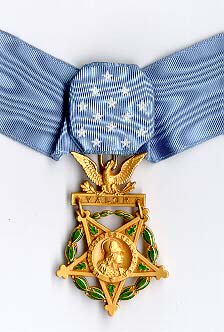
Frederick Alber was born on June 28, 1838, in Germany. He later settled in Michigan, where his life became closely connected with the state that he would eventually represent in the Union Army during the American Civil War. By the summer of 1862, with the conflict entering its second year and the Union Army requiring additional manpower, Alber volunteered for military service. On July 2, 1862, at the age of twenty-four, Alber enlisted at Manchester, Michigan. He entered the United States Army as a Private and was assigned to Company A of the 17th Michigan Infantry. He retained the rank of Private throughout his verified military service, making Private both his rank during his Medal of Honor action and his highest verified rank. The 17th Michigan Infantry was organized during the summer of 1862 and soon entered active campaigning. The regiment became known for hard fighting and suffered significant casualties during its wartime service. Shortly after organization, it moved east and participated in the Maryland Campaign. The regiment fought at South Mountain in September 1862 and soon afterward at Antietam, where Union and Confederate armies met in one of the bloodiest battles of the war. As the conflict continued, the 17th Michigan served in several different theaters of operations. Its wartime assignments carried it from the eastern battlefields into operations farther west and south. The regiment participated in campaigns connected with Kentucky, Mississippi, and East Tennessee before eventually returning to the Army of the Potomac for the great Virginia campaigns of 1864. During the Knoxville Campaign in late 1863, the regiment experienced particularly difficult conditions while Union forces resisted Confederate operations led by Lieutenant General James Longstreet. The 17th Michigan participated in the retreat toward Knoxville and the defense of the area during the subsequent siege. These experiences added another demanding chapter to Alber’s service before his regiment returned east in preparation for the campaigns that would ultimately produce his most famous act of heroism. In the spring of 1864, Lieutenant General Ulysses S. Grant began a coordinated offensive against Confederate forces. The Army of the Potomac crossed the Rapidan River and entered the Wilderness, beginning a relentless series of battles against General Robert E. Lee’s Army of Northern Virginia. The 17th Michigan participated in this campaign as part of the IX Corps. The Battle of the Wilderness in early May was followed almost immediately by the Battle of Spotsylvania Court House. Rather than withdrawing after the bloody fighting in the Wilderness, Grant continued moving south and east, forcing Lee to shift his army toward Spotsylvania. The result was another prolonged and exceptionally violent battle. On May 12, 1864, Union forces launched a massive assault against a prominent section of the Confederate defensive line at Spotsylvania. Fighting around the salient became some of the most intense close-range combat of the entire Civil War. It was during this battle that Private Frederick Alber performed the action that would eventually earn him the Medal of Honor. Lieutenant Charles H. Todd of the 17th Michigan Infantry had fallen into the hands of a group of Confederate soldiers. Alber responded by moving to rescue the captured officer. According to the official account preserved in his Medal of Honor record, Alber shot one of the Confederate soldiers and struck another with the butt of his musket. Alber succeeded in freeing Lieutenant Todd. He then took two Confederate soldiers prisoner and brought them back to the Union position. His action combined personal courage with immediate battlefield initiative: rather than allowing a captured officer of his regiment to be carried away, he directly confronted the Confederate soldiers holding him and successfully recovered Todd. The danger surrounding Alber’s action was heightened by the nature of the fighting at Spotsylvania on May 12. The battlefield was characterized by close combat, heavy small-arms fire, artillery, assaults against fortified positions, and repeated struggles over limited areas of ground. The 17th Michigan itself suffered heavily during the battle, demonstrating the extreme conditions under which Alber carried out the rescue. Despite the significance of his action, Alber did not immediately receive the Medal of Honor. He continued serving as a Private in Company A of the 17th Michigan while the Civil War moved through its final stages. After Spotsylvania, the regiment continued with the major Union operations of 1864 and 1865. Its service included the prolonged operations around Petersburg, where Union armies gradually stretched and broke the Confederate defensive network protecting Petersburg and Richmond. The campaign eventually culminated in the collapse of the Confederate positions in April 1865 and the pursuit of Lee’s army toward Appomattox. General Robert E. Lee surrendered the Army of Northern Virginia at Appomattox Court House on April 9, 1865. With the principal Confederate army in Virginia defeated, the 17th Michigan subsequently moved toward Washington as the Union Army began transitioning from combat operations to demobilization. Frederick Alber completed his wartime service without a verified promotion beyond Private. On June 3, 1865, the 17th Michigan Infantry was mustered out of Federal service in Washington, D.C. Alber therefore returned to civilian life after nearly three years of service in a regiment that had participated in campaigns spanning several major theaters of the Civil War. More than thirty years passed before Alber’s extraordinary conduct at Spotsylvania received the nation’s highest military recognition. On July 30, 1896, Frederick Alber was awarded the Medal of Honor for his actions of May 12, 1864. His official citation recognized his courageous rescue of Lieutenant Charles H. Todd after Todd had been captured by Confederate soldiers. It specifically recorded Alber’s direct engagement with the enemy, his use of both his firearm and the butt of his musket, and his successful capture of Confederate soldiers after freeing the Union officer. The Medal of Honor itself had been created during the Civil War. Congress authorized the Army Medal of Honor in 1862 as a national decoration for soldiers who distinguished themselves through extraordinary conduct. During the Civil War era, the United States possessed far fewer individual military decorations than it would in the twentieth century, making the Medal of Honor the central Federal recognition for exceptional battlefield bravery. Because Alber’s Medal of Honor was issued on July 30, 1896, his award falls within the project’s Medal of Honor 1896–1903 Army period. The Army Medal of Honor ribbon had undergone a change in 1896, while another major redesign of the Army Medal of Honor would follow in 1904. For database purposes, his 1896 presentation is therefore represented by the 1896–1903 Army version rather than the earlier 1862–1895 version associated with awards issued during the preceding period. No additional device or clasp is verified for Alber’s Medal of Honor. The award represents his single documented Medal of Honor action at Spotsylvania. Although Alber was a Civil War veteran and survived well into the twentieth century, the Army Civil War Campaign Medal is not part of his verified medal rack. That campaign medal was established decades after his wartime service, and surviving evidence of service during the Civil War does not by itself prove that an individual veteran was personally issued or specifically entitled to the later decoration. Without recipient-specific documentation establishing Alber’s receipt or entitlement, it remains excluded from his verified medal record. Consequently, Frederick Alber’s final verified ribbon rack consists of one decoration: the Medal of Honor 1896–1903 Army, issued in 1896, with no device or clasp. This smaller verified record reflects the distinction between documented decoration and possible eligibility for later service medals. After leaving the Army, Alber returned to Michigan. The surviving official record is considerably richer regarding his military service and Medal of Honor action than regarding the details of his later civilian career. He remained associated with Michigan for the rest of his life and lived for almost half a century after the end of the Civil War. Frederick Alber died on September 12, 1913, at the age of seventy-five, in Michigan. He was buried in the cemetery at Columbiaville in Oregon Township, Michigan. His burial place later became a site of local remembrance for a veteran whose battlefield courage had received the highest military decoration of the United States. More than a century after the Civil War, Alber continued to be remembered in Michigan. In 1999, the United States Senate formally recorded a tribute to him in connection with a new memorial headstone dedicated by the Oregon Township community. The tribute recalled his enlistment in the 17th Michigan Infantry and the rescue of Lieutenant Todd at Spotsylvania. Frederick Alber’s legacy rests not on high rank or command but on the courage of an enlisted infantryman. He entered the Army as a Private in 1862, remained a Private throughout his verified service, endured the campaigns of a heavily engaged Michigan regiment, and on May 12, 1864, risked his life to rescue a captured officer during the brutal fighting at Spotsylvania. Thirty-two years later, the Medal of Honor formally preserved that deed in the national military record. Alber’s story demonstrates how an ordinary soldier, without senior rank or command authority, could perform an extraordinary act in the confusion of battle. His Medal of Honor remains the defining recognition of a Civil War soldier whose courage in protecting a fellow member of his regiment secured his place in American military history.
Become the named supporter for this profile and edit the tribute biography and portrait (Owner account required). Proceeds help keep the archive online.
$25 USD / year — annual sponsorship renewal. Keeps the page online and, where enabled, the family anniversary remembrance emails active.