Loading archive…
Loading archive…

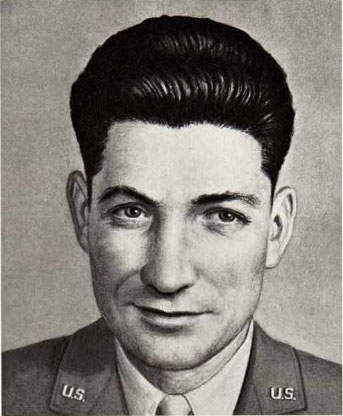
First Lieutenant, U.S. Army
Support & adopt this hero ↓The Medal of Honor Hero Who Stayed Behind

He had every reason to withdraw. He was badly wounded, his platoon was being overwhelmed, communications had been destroyed, and enemy troops were closing on his position. First Lieutenant Frederick Funston Henry chose to stay. On September 1, 1950, near Am-Dong, Korea, Henry ordered his men to pull back while he remained alone with their weapons and ammunition. His decision cost him his life, but it gave his soldiers the time they needed to survive. It was an act of extraordinary courage that would earn him the Medal of Honor, the highest military decoration of the United States.
Frederick Funston Henry was born on September 23, 1919, in Vian, Oklahoma, the son of James and Ida Mae Henry. His parents gave him a name already connected with American military history. He was named for Major General Frederick Funston, himself a Medal of Honor recipient. Henry later grew up in Clinton, Oklahoma, and enlisted in the United States Army on September 16, 1940, shortly before his twenty-first birthday.
His military career began before the United States entered the Second World War. During World War II, Henry served in the Pacific with the Sixth Army. Years of enlisted service eventually brought him a battlefield commission, and in 1945 he became a second lieutenant while still serving in the Pacific Theater. After the fighting ended, Henry served in occupied Germany. There he met Lavon “Bonnie” Southam, an Army combat nurse who became his wife. They later had two children.
His combat record did not end with World War II. When war erupted on the Korean Peninsula in June 1950, Henry returned to combat with the 2nd Infantry Division. By the night of August 31 and the morning of September 1, he was a First Lieutenant and platoon leader in Company F, 2nd Battalion, 38th Infantry Regiment. The Defense POW/MIA Accounting Agency confirms this assignment, resolving later secondary-source confusion over his regiment. His unit was fighting along the Pusan Perimeter as North Korean forces launched a powerful assault against the 2nd Infantry Division.
Then came the moment that defined Frederick Henry's place in American military history.
Henry's platoon occupied a strategic ridge near Am-Dong when a numerically superior enemy force attacked under heavy mortar and artillery fire. The assault began to break apart the American position. Instead of remaining under cover, Henry moved among his soldiers, directing them to hold their ground and continue firing. His leadership steadied the platoon and helped re-establish its defensive line.
Then enemy fire destroyed communications with the main defensive position. Henry was severely wounded, but he refused to leave his men without a way out. Realizing that his platoon might be destroyed if it remained where it was, he ordered the wounded evacuated. He told the withdrawing soldiers to leave their weapons and ammunition with him. Henry then established a one-man defensive position and ordered the rest of the platoon to withdraw.
What followed became the heart of his Medal of Honor citation. Alone and wounded, Henry continued firing every available weapon against the advancing North Korean troops. The official account credited his stand with inflicting approximately 50 enemy casualties. He continued fighting until his ammunition was exhausted and his position was overrun. His resistance delayed the attack long enough for his platoon to escape and for the main American defensive line to prepare to meet the enemy assault.
The Army formally recognized Henry's action in General Orders No. 8, dated February 16, 1951. His official Medal of Honor citation praised his gallantry, initiative, self-sacrifice, and complete disregard for his own safety while saving his platoon. The award was posthumous. On January 9, 1951, President Harry S. Truman presented the Medal of Honor to Henry's widow, Lavon Henry, at the White House as the nation honored several Korean War servicemen whose courage had cost them their lives.
The Medal of Honor was not the only recognition attached to Henry's service. The Oklahoma Military Hall of Fame, which inducted him in 2013, records that he was awarded two Bronze Star Medals and two Purple Hearts in addition to the Medal of Honor. The multiple awards are represented by bronze oak leaf clusters on the Bronze Star Medal and Purple Heart ribbons in his reconstructed ribbon rack. The individual World War II award orders for those additional decorations have not yet been recovered from primary archival files, so their specific citations remain an important subject for continued historical research.
His Korean War service also carried important campaign and unit recognition. Henry's September 1, 1950 action occurred during the Army's UN Defensive campaign, which ran from June 27 through September 15, 1950, supporting one bronze service star on his Korean Service Medal. The official lineage of the 38th Infantry Regiment also records the Republic of Korea Presidential Unit Citation for the Naktong River Line, connecting Henry's regiment directly with one of the desperate defensive battles that prevented the collapse of the Pusan Perimeter.
Henry never returned from the position he defended. He was initially carried as missing in action, and no confirmed evidence ever established that he had become a prisoner of war. On December 31, 1953, he was officially declared dead and posthumously promoted to Captain. His remains have never been recovered. Today, DPAA continues to list his case for active pursuit, and his name is memorialized at the National Memorial Cemetery of the Pacific in Honolulu and on the Korean War Veterans Memorial Wall in Washington, D.C.
Yet Frederick Funston Henry's story did not disappear with him on that Korean ridge. In 1960, Camp Henry in Daegu, South Korea, was named in his honor. His hometown of Vian later dedicated a memorial to him, and in 2013 he entered the Oklahoma Military Hall of Fame. A highway in Oklahoma was subsequently named for him as well.
The most powerful part of Frederick F. Henry's Medal of Honor story is not simply that he fought alone. It is why he did it. A wounded officer facing an overwhelming enemy could have withdrawn with his platoon. Henry instead placed himself between his soldiers and the force pursuing them. He gathered their weapons, ordered them to safety, and remained at his position until he could fight no longer.
First Lieutenant Frederick Funston Henry did not survive the ridge at Am-Dong, but the men he sent away did. His Medal of Honor citation preserves what happened there: one wounded American soldier deliberately accepted almost certain death so that others might live. More than seventy-five years later, his name remains inseparable from the 38th Infantry Regiment, the Pusan Perimeter, the Korean War, and one of the clearest expressions of battlefield self-sacrifice in United States Army history.
Become the named supporter for this profile and edit the tribute biography and portrait (Owner account required). Proceeds help keep the archive online.
$25 USD / year — annual sponsorship renewal. Keeps the page online and, where enabled, the family anniversary remembrance emails active.