★
Loading archive…
Loading archive…
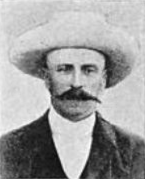
Major, British Army
Support & adopt this hero ↓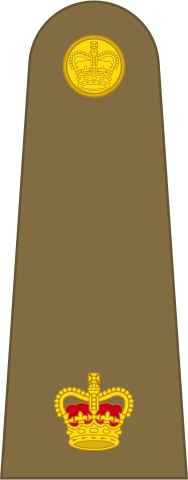
A soldier who repeatedly placed his life in danger to save others. On a battlefield in South Africa, with enemy bullets sweeping across an exposed hillside, he crossed open ground to rescue a wounded comrade and then returned under fire to carry ammunition to the defenders. His extraordinary courage at Fort Itala on 26 September 1901 earned him the Victoria Cross, Britain's highest award for gallantry. Yet Bradley's story did not end with the Boer War. His remarkable military career spanned three major conflicts, service in both the British and South African forces, and a lifetime shaped by duty, sacrifice and an enduring commitment to his fellow soldiers.
Born Frank George Bradley in Shoreditch, London, in 1876, he enlisted in the Royal Artillery on 12 March 1894. He served in several artillery batteries before being posted to South Africa, where he became part of the 69th Battery, Royal Field Artillery. During the Second Boer War, he experienced the harsh realities of campaigning across southern Africa, including the defence of Ladysmith and the operations that would lead to his most celebrated act of bravery.
On 26 September 1901, Bradley was serving at Fort Itala in Natal when a powerful Boer attack threatened the small British garrison. During the fighting, Driver Bradley went forward to assist in rescuing the wounded Driver Lancashire. The danger was extreme, but Bradley refused to leave his comrade behind. Later, when ammunition was urgently needed at an exposed position on the hill, he volunteered to carry supplies across approximately 150 yards of ground swept by enemy rifle fire. Repeatedly exposing himself to deadly fire, he helped maintain the defenders' ammunition supply during the prolonged engagement. His actions demonstrated exceptional courage, initiative and devotion to duty. For this conspicuous gallantry, he was awarded the Victoria Cross. Lord Kitchener presented the decoration to him at Pretoria in June 1902.
Bradley remained closely connected with South Africa after the war. He left regular Army service in March 1906 and subsequently served with the Transvaal Mounted Rifles during the Bambatha Rebellion. He also became involved with the Central South African Railway Volunteers, continuing his military commitments alongside civilian employment. His service in the volunteer and auxiliary forces would eventually earn him both the Colonial Auxiliary Forces Long Service Medal and the Colonial Auxiliary Forces Officers' Decoration, recognising his sustained contribution across different stages of his military career.
The outbreak of the First World War brought another chapter of active service. Bradley served with South African forces during the campaign in German South-West Africa before proceeding to the European theatre. In France, he undertook further military duties with artillery and trench mortar units. The fighting on the Western Front was particularly costly, and in November 1916 he was seriously wounded. His injuries eventually brought his overseas wartime service to an end, and he returned to South Africa in 1917.
His military career nevertheless continued. In December 1919, he transferred to the 2nd Mounted Rifles, better known as the Natal Carbineers. He subsequently rose to the rank of Captain and later held the honorary rank of Major in the Reserve of Officers. His decorations reflected an exceptional record of service extending far beyond the single action for which he became famous. His medal group included the Queen's South Africa Medal with five clasps, the King's South Africa Medal with two clasps, the Natal Native Rebellion Medal, the three principal British First World War campaign medals, the 1937 King George VI Coronation Medal and his two Colonial Auxiliary Forces awards.
Away from military service, Bradley pursued civilian occupations, including work as a publican and general-store proprietor. He also enjoyed shooting and fishing. In 1935, demonstrating that his sense of service extended beyond his own achievements, he donated his annual Victoria Cross pension to the Royal Hospital, Chelsea, supporting the institution that cared for Britain's veteran soldiers. He later worked at a telephone exchange in Gwelo, Southern Rhodesia.
Frederick Henry Bradley died on 10 March 1943 following an operation. He left behind the legacy of a soldier whose courage was demonstrated not merely in a single extraordinary moment, but through decades of military commitment. From the battlefields of the Second Boer War to the campaigns of the First World War, his life reflected the determination to serve and the willingness to face danger when others needed help. His Victoria Cross remains a lasting testament to the extraordinary bravery of a Royal Artillery driver who risked everything to save a fellow soldier and sustain the defence of Fort Itala.
Become the named supporter for this profile and edit the tribute biography and portrait (Owner account required). Proceeds help keep the archive online.
$25 USD / year — annual sponsorship renewal. Keeps the page online and, where enabled, the family anniversary remembrance emails active.