★
Loading archive…
Loading archive…

Captain, U.S. Navy
Support & adopt this hero ↓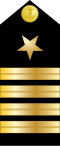
Captain Frederick Vallette McNair Jr., Medal of Honor, Navy Cross, United States Navy
Frederick Vallette McNair Jr. was born on March 13, 1882, in Maryland, into a family already closely tied to the United States Navy. He was the son of Rear Admiral Frederick V. McNair Sr., and followed his father into naval service. McNair graduated from the United States Naval Academy at Annapolis with the Class of 1903 and went on to build a long career as a regular officer in the United States Navy. He ultimately retired with the rank of Captain. (Hall of Valor)
McNair’s name is best remembered for his gallantry during the United States occupation of Vera Cruz, Mexico, in April 1914. At the time, he was serving as a Lieutenant in the United States Navy. During the fighting on April 22, 1914, McNair commanded a battalion ashore and distinguished himself by the way he led his men through the action and into the final occupation of the city. His conduct was formally recognized with the Medal of Honor, awarded under War Department General Orders No. 177, dated December 4, 1915. (Congressional Medal of Honor Society)
The Medal of Honor citation records that Lieutenant McNair was conspicuous in command of his battalion at Vera Cruz and showed both courage and skill while leading his men through the fighting. This was not a rear-area or administrative award. It was given for battlefield leadership under fire during one of the most dangerous episodes of the American landing and occupation. (Congressional Medal of Honor Society)
After Vera Cruz, McNair continued to serve in the Navy during a period of rapid change. In July 1914 he assumed command of the destroyer USS Jenkins. In September 1915 he was assigned to duty at the United States Naval Academy, and on August 28, 1916, he was promoted to Lieutenant Commander. His career then moved directly into the destroyer service that would define his World War I record. (Wikipedia)
During the First World War, McNair commanded the destroyers USS Winslow and USS Woolsey. These duties placed him in the demanding Atlantic convoy and patrol war, where destroyers were responsible for escorting troop and supply convoys, patrolling waters threatened by enemy submarines and mines, and taking offensive and defensive action against enemy naval activity. For this service, McNair was awarded the Navy Cross as a Commander in the United States Navy. (Hall of Valor)
His Navy Cross citation makes clear that the award was not for routine command. It recognized his distinguished service as commanding officer of USS Winslow and USS Woolsey while engaged in hazardous patrol, convoy escort, anti-submarine, mine-danger, and defensive operations during World War I. The award places McNair among the relatively small group of American naval officers whose service was recognized with both the Medal of Honor and the Navy Cross. (Hall of Valor)
Following the war, McNair remained in destroyer command. He supervised the commissioning of USS Dickerson and briefly served as her first commanding officer in 1919. He later commanded Destroyer Division 9 of the Atlantic Fleet. His temporary wartime rank of Commander was made permanent on September 21, 1920. McNair remained in naval service until June 30, 1931, when he was transferred to the retired list. (Wikipedia)
McNair’s service did not end with retirement. During the Second World War he was recalled to active duty. A later service-record source, citing the Bureau of Naval Personnel, states that he reported to the Navy Department in Washington, D.C., for duty with the Naval Examining Board, and that from June 1942 to November 1942 he was attached to U.S. Naval Air Station Jacksonville, Florida. He was relieved from active duty on November 1, 1942. (Internet Archive)
His known medal entitlement is therefore broader than the two high decorations often listed in short biographies. The Bureau of Naval Personnel-derived record lists his decorations as the Medal of Honor, Navy Cross, Mexican Service Medal, World War I Victory Medal with Destroyer clasp, American Defense Service Medal, and World War II Victory Medal. The Mexican Service Medal reflects his Vera Cruz service, while the World War I Victory Medal with Destroyer clasp reflects his destroyer service in USS Winslow. His World War II Victory Medal is supported by his 1942 recall to active duty. (Internet Archive)
McNair died on September 2, 1962. He is buried at the United States Naval Academy Cemetery in Annapolis, Maryland. His grave is recorded by the Congressional Medal of Honor Society as being at the U.S. Naval Academy Cemetery, Annapolis, Maryland. (Congressional Medal of Honor Society)
Captain Frederick Vallette McNair Jr. should be remembered as more than a name on a Vera Cruz Medal of Honor list. His career spanned the old Navy of the early twentieth century, the destroyer war of the First World War, and a final recall during the Second World War. He was a combat leader at Vera Cruz, a destroyer commander in the Atlantic war against submarines and mines, and a senior naval officer whose service continued long after his most famous act of gallantry. His complete rack tells that fuller story: Medal of Honor, Navy Cross, Mexican Service Medal, World War I Victory Medal with Destroyer clasp, American Defense Service Medal, and World War II Victory Medal.
Become the named supporter for this profile and edit the tribute biography and portrait (Owner account required). Proceeds help keep the archive online.
$25 USD / year — annual sponsorship renewal. Keeps the page online and, where enabled, the family anniversary remembrance emails active.