★
Loading archive…
Loading archive…
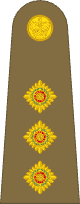
He dug under fire and carried a wounded commander to safety.
Gabriel George Coury was born in Liverpool on 13 June 1896. Educated at Stonyhurst after earlier Catholic schooling, he trained in its Officers' Training Corps and began work in the cotton trade. He enlisted in September 1914, received a commission in the South Lancashire Regiment in April 1915 and went to France that summer, subsequently serving with its 1/4th Battalion.
On 8 August 1916, at Arrow Head Copse on the Somme, Coury directed pioneer platoons digging a communication trench under intense fire. He repeatedly moved into exposed ground to maintain progress. When his commanding officer was wounded in a dangerous position, Coury carried him back through machine-gun fire. He also helped rally infantry threatened by a counterattack. George V presented his Victoria Cross in November.
Coury transferred to the Royal Flying Corps as an observer and flew reconnaissance and artillery-observation missions. After pilot training, he served at Kenley, where the Aircraft Acceptance Park prepared machines for operational squadrons. A crash in November 1917 left him badly burned; Sergeant Woodward rescued him from the wreck. Further injury and illness curtailed his flying career, and he left service in 1919.
He had married Kitty in January 1918, and they raised three daughters. Coury resumed commercial work, including several years in Egypt. When the Second World War began he returned to uniform, joining the Royal Army Service Corps in 1940. He subsequently served in north-west Europe, including France, Belgium, the Netherlands and Germany, before demobilization in 1945.
After the war he operated catering businesses in Liverpool and then returned to cotton management. He died in February 1956. His later civilian employment and second period of military service formed a substantial life beyond the Somme action for which he is remembered.
Official Victoria Cross citation
For most conspicuous bravery. During an advance he was in command of two platoons ordered to dig a communication trench from the old firing line to the position won. By his fine example and utter contempt of danger he kept up the spirits of his men and completed his task under intense fire. Later, after his battalion had suffered severe casualties and the Commanding Officer had been wounded, he went out in front of the advanced position in broad daylight and in full view of the enemy, found his Commanding Officer, and brought him back to the new advanced trench over ground swept by machine gun fire. He not only carried out his original task, and saved his Commanding Officer, but also assisted in rallying the attacking troops when they were shaken and in leading them forward.
Fourth Supplement to The London Gazette of 24 October 1916. 26 October 1916, Numb. 29802, p. 10394
Become the named supporter for this profile and edit the tribute biography and portrait (Owner account required). Proceeds help keep the archive online.
$25 USD / year — annual sponsorship renewal. Keeps the page online and, where enabled, the family anniversary remembrance emails active.
