★
Loading archive…
Loading archive…

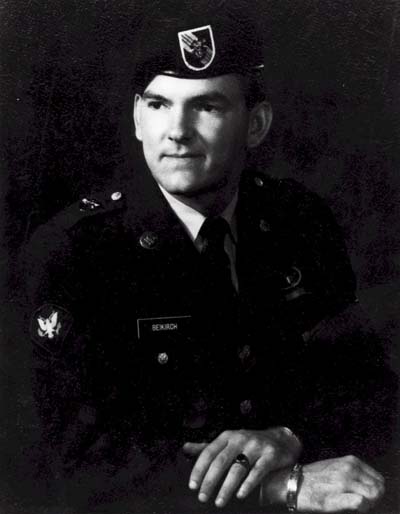
What kind of courage drives a wounded soldier back into enemy fire when he can barely move? For Sergeant Gary Burnell Beikirch, the answer was simple: someone else still needed saving. On April 1, 1970, during one of the fiercest attacks on Camp Dak Seang in the Vietnam War, this U.S. Army Special Forces combat medic repeatedly risked his life to rescue wounded comrades, even as his own injuries threatened to kill him. His extraordinary bravery would earn him the Medal of Honor, but the story of Gary Beikirch was about far more than one remarkable day in battle.
Born on August 29, 1947, in Rochester, New York, Gary Burnell Beikirch enlisted in the United States Army in August 1967. Determined to become a Green Beret, he completed airborne and Special Forces training, qualifying as a medical sergeant. In July 1969, he deployed to South Vietnam with the 5th Special Forces Group (Airborne), serving as a medic with Detachment B-24, Company B, near the Laotian border in Kontum Province. There, among the Montagnard communities of the Central Highlands, he developed a deep commitment to protecting the people whose lives had become intertwined with his own.
At dawn on April 1, 1970, North Vietnamese forces launched a devastating assault on Camp Dak Seang. As mortar explosions tore through the camp and casualties mounted, Beikirch moved through relentless enemy fire to treat the wounded and carry them to safety. When an American officer lay seriously injured in an exposed position, Beikirch rushed to his rescue. Mortar fragments struck him, causing severe injuries, yet he carried the officer back to the medical station. Instead of accepting treatment, he returned to the battlefield.
What followed was an extraordinary demonstration of selflessness. Despite his wounds, Beikirch continued searching for casualties, dragging a critically wounded Vietnamese soldier toward shelter while administering mouth-to-mouth resuscitation. Wounded again, he still refused treatment and continued helping others until he finally collapsed. His Medal of Honor citation recognized his courage, including his "complete disregard for his personal safety" and unwavering dedication to his fellow soldiers. Beikirch later credited his young Montagnard companion, Deo, who lost his life protecting him, as essential to what he accomplished that day.
For his extraordinary heroism at Dak Seang, Beikirch received the Medal of Honor from President Richard Nixon at the White House on October 15, 1973. His distinguished military record also included the Silver Star, Bronze Star Medal, two Purple Hearts represented by one Oak Leaf Cluster, and the Vietnamese Cross of Gallantry with Silver Star. His Army Good Conduct Medal, National Defense Service Medal, Vietnam Service Medal with two Bronze Service Stars, and Republic of Vietnam Campaign Medal reflected his military service. Published military records also acknowledge foreign unit citations earned by the 5th Special Forces Group during his deployment.
The battle left Beikirch with devastating injuries. He spent months recovering at Valley Forge Medical Center, where he had to relearn how to walk. After leaving the Army in August 1971, he eventually found a new calling through ministry, education, and service to fellow veterans. He became an ordained pastor, helped veterans rebuild their lives, and spent more than three decades as a middle school guidance counselor in the Rochester area. The man who once carried wounded soldiers to safety devoted his later years to helping young people and veterans find direction, hope, and purpose.
Gary Burnell Beikirch died on December 26, 2021, at the age of 74. His legacy lives on not only through the Medal of Honor but also through the countless people he helped after the war. His life asks a question as powerful as his battlefield courage: Is true greatness measured by the recognition we receive, or by the lives we change? For Gary Beikirch, the answer was always found in service to others.
Become the named supporter for this profile and edit the tribute biography and portrait (Owner account required). Proceeds help keep the archive online.
$25 USD / year — annual sponsorship renewal. Keeps the page online and, where enabled, the family anniversary remembrance emails active.