★
Loading archive…
Loading archive…
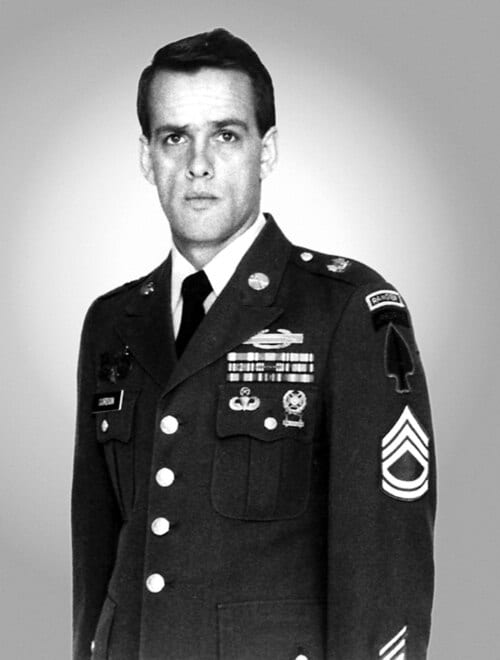
Master sergeant, U.S. Army
Support & adopt this hero ↓
When a helicopter crashed in the streets of Mogadishu, surrounded by an overwhelming enemy force, two American soldiers faced an impossible choice. They could remain in the relative safety of the air or volunteer to descend into the chaos and defend the wounded men trapped below. Master Sergeant Gary Ivan Gordon chose to go. On 3 October 1993, his extraordinary courage, determination and ultimate sacrifice became one of the defining acts of heroism in modern American military history.
Born on 30 August 1960 in Lincoln, Maine, Gary Ivan Gordon entered the United States Army in 1978. Over the next fifteen years, he built a distinguished military career through discipline, professional excellence and an unwavering commitment to his fellow soldiers. Initially serving as a combat engineer, he developed his military skills and eventually qualified as a Special Forces soldier. His career included service with the 10th Special Forces Group and the United States Army's elite special operations community. By 1993, he had attained the rank of Master Sergeant and was serving as a highly experienced sniper team leader with Task Force Ranger.
In October 1993, Gordon was deployed to Mogadishu, Somalia, as part of Operation Gothic Serpent, a United States military operation intended to capture key leaders of Somali warlord Mohamed Farrah Aidid's organization. On 3 October, the operation descended into a fierce urban battle after American helicopters were shot down and ground forces became engaged in prolonged fighting. When a second Black Hawk helicopter crashed, its surviving crew members were left dangerously exposed as hostile forces converged on the wreckage.
Gordon and fellow Delta Force sniper Sergeant First Class Randall D. Shughart were providing aerial sniper support when they learned of the crash. Recognizing the desperate situation facing the wounded crew, both men repeatedly requested permission to be inserted at the crash site. Their requests were initially denied because commanders understood the extraordinary danger of sending them into an increasingly hostile area. Yet Gordon and Shughart continued to volunteer, determined not to leave their fellow soldiers without protection.
Eventually, permission was granted. The two snipers descended into the streets of Mogadishu and fought their way to the wreckage. Under intense enemy fire, they secured the crash site, helped move the surviving crew members to a defensible position and established a perimeter against the approaching attackers. Their ammunition dwindling and the enemy closing in, Gordon and Shughart continued fighting with extraordinary determination.
After Shughart was killed, Gordon continued the desperate defence alone. He recovered another rifle and provided it to the wounded helicopter pilot, Chief Warrant Officer Michael Durant, giving him a better chance of defending himself. Gordon then returned to the fight with his pistol, placing himself between Durant and the advancing attackers. He ultimately lost his life defending the crash site, but his actions helped save Durant, who survived the battle and was subsequently held captive before being released.
For his conspicuous gallantry and extraordinary selflessness, Gary Ivan Gordon was posthumously awarded the Medal of Honor, the United States military's highest decoration for valor. President Bill Clinton presented the medal to Gordon's widow, Carmen, at a White House ceremony on 23 May 1994. Randall Shughart was also posthumously awarded the Medal of Honor for his actions that day. Their awards marked the first Medals of Honor for American military actions since the Vietnam War.
Gary Gordon's sacrifice became an enduring symbol of the extraordinary bond between soldiers and the responsibility they feel toward those who serve beside them. His decision to volunteer for an exceptionally dangerous mission was not motivated by recognition or personal glory. It was driven by the conviction that wounded comrades should never be abandoned when there was still a chance to save them.
The United States Navy later honoured his memory by naming the roll-on/roll-off cargo ship USNS Gordon (T-AKR-296) after him. His name also remains inseparable from the story of the Battle of Mogadishu, where his courage demonstrated the highest traditions of military service.
Master Sergeant Gary Ivan Gordon was only thirty-three years old when he made the ultimate sacrifice. His nearly fifteen years of service culminated in a final act of extraordinary courage that continues to inspire soldiers and civilians alike. His Medal of Honor represents far more than individual bravery. It commemorates a soldier who willingly placed the lives of others above his own, answering a call that few would have the courage to accept.
His legacy endures in the words and actions that defined his final mission: never abandon a fellow soldier.
Become the named supporter for this profile and edit the tribute biography and portrait (Owner account required). Proceeds help keep the archive online.
$25 USD / year — annual sponsorship renewal. Keeps the page online and, where enabled, the family anniversary remembrance emails active.