★
Loading archive…
Loading archive…
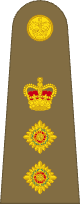
True courage is not always measured by the number of battles fought, but by the willingness to stand firm when every instinct urges retreat. During one of the fiercest engagements of the First World War, Charles Geoffrey Vickers held a shattered trench against repeated German attacks, refusing to abandon his position despite overwhelming danger. His extraordinary bravery earned the Victoria Cross, while a lifetime of military, public, and intellectual service established him as one of Britain's most remarkable soldier-scholars.
Charles Geoffrey Vickers was born on 13 October 1894 in Nottingham, England. Educated at Oundle School, he later studied at Merton College, Oxford, where he developed the intellectual curiosity that would define much of his later life. When the First World War engulfed Europe, Vickers left his studies to join the Sherwood Foresters (Nottinghamshire and Derbyshire Regiment). Commissioned as an officer, he quickly demonstrated exceptional leadership and calmness under fire on the Western Front.
On 14 October 1915, during the Battle of Loos, Vickers commanded a company defending a section of trench at the Hohenzollern Redoubt, one of the most fiercely contested positions on the Western Front. After intense German bombardment destroyed much of the trench system and inflicted heavy casualties, enemy infantry launched repeated assaults against his position. Refusing to withdraw, Vickers personally organized the defence, rallied his exhausted soldiers, and directed accurate rifle and machine gun fire that repelled successive attacks. Even as casualties mounted around him, he remained at his post, inspiring his men through his calm leadership and complete disregard for his own safety. His determination prevented a critical breakthrough and helped secure the British position during one of the battle's most desperate moments.
For his conspicuous bravery and leadership, Charles Geoffrey Vickers was awarded the Victoria Cross, the highest decoration for gallantry in the British and Commonwealth honours system. His official citation praised his outstanding courage, steadfast devotion to duty, and inspiring example under relentless enemy attack. He was also Mentioned in Despatches for his wartime service and later received the 1914–15 Star, British War Medal, and Victory Medal.
Following the First World War, Vickers devoted himself to public service and intellectual life. During the Second World War, he served in senior roles within the British Government's economic intelligence organization, contributing to Allied planning and strategy. His distinguished civilian service was recognized with the Defence Medal, War Medal 1939–45, the King George VI Coronation Medal, the Queen Elizabeth II Coronation Medal, the Queen Elizabeth II Silver Jubilee Medal, and the United States Medal of Freedom with Gold Palm. He also received the Croix de Guerre from France in recognition of his wartime service. In 1946, he was knighted as a Knight Bachelor, becoming Sir Charles Geoffrey Vickers, an honour that reflected his exceptional contributions beyond the battlefield.
After the war, Sir Geoffrey became an internationally respected author, philosopher, and expert in public administration and social systems. His writings on decision-making, governance, and human behaviour influenced generations of scholars and policymakers, demonstrating that the qualities of judgment and leadership displayed in combat could also shape peace and public service.
Sir Charles Geoffrey Vickers died on 16 March 1982 at the age of 87, leaving behind an extraordinary legacy that bridged military heroism, public service, and intellectual achievement. Remembered as both a Victoria Cross recipient and one of Britain's leading twentieth-century thinkers, his life stands as a powerful reminder that courage is measured not only by acts performed under fire, but also by a lifelong commitment to serving others with integrity, wisdom, and unwavering purpose.
Become the named supporter for this profile and edit the tribute biography and portrait (Owner account required). Proceeds help keep the archive online.
$25 USD / year — annual sponsorship renewal. Keeps the page online and, where enabled, the family anniversary remembrance emails active.
