★
Loading archive…
Loading archive…
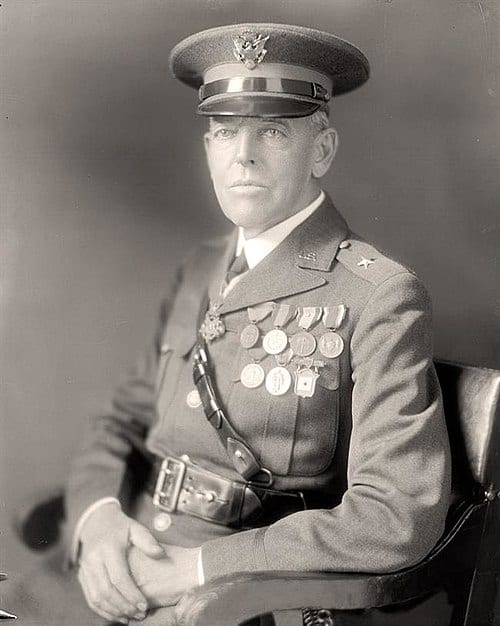
Brigadier General, U.S. Army
Support & adopt this hero ↓
What would you do if the soldiers following you into battle were killed or wounded, leaving you alone on an enemy fortification under relentless fire? On May 4, 1903, First Lieutenant George Clymer Shaw faced precisely that situation in the Philippine Islands. His extraordinary courage during the assault on Fort Pitacus would earn him the Medal of Honor, America's highest military decoration for valor, and establish his place among the most remarkable soldiers of the Philippine-American War era.
George Clymer Shaw was born on March 6, 1866, in Pontiac, Michigan. His military career began with service in the Washington, D.C. National Guard, followed by service in the United States Army. He was also associated with the 1st District of Columbia Volunteer Infantry during the Spanish-American War era in 1898. Shaw eventually embarked on a military career lasting more than three decades, culminating in his promotion to brigadier general.
His defining moment came on May 4, 1903, while serving as a first lieutenant with Company C, 27th U.S. Infantry, during operations near Lake Lanao on Mindanao. American troops were assaulting Fort Pitacus, a defended position where enemy resistance made every advance dangerous. Shaw personally led the attack, climbing onto the fort's parapet despite intense hostile fire.
Then the assault took a devastating turn. The first three soldiers who followed Shaw onto the parapet were killed or wounded, leaving him isolated and exposed. Rather than abandon his position, Shaw held his ground alone while enemy fire continued around him. His determination gave the remaining American soldiers the opportunity to establish a foothold and ultimately secure the fort.
For this extraordinary act of bravery, Shaw received the Medal of Honor on June 9, 1904. His official citation recognized his distinguished gallantry in leading the assault, particularly his courage in "maintaining alone his position on the parapet" until reinforcements gained a foothold and the fort's capture was assured. His documented service in Mindanao also established his eligibility for the Philippine Campaign Medal.
Shaw's military career continued long after the battle that made him a Medal of Honor recipient. He served during an era of profound transformation in the United States Army, including the First World War period. His professional advancement culminated in promotion to brigadier general, effective June 25, 1929, followed by retirement in March 1930.
George Clymer Shaw died on February 10, 1960, at the age of 93, and was laid to rest at Arlington National Cemetery in Virginia. His legacy endures not simply because he received the Medal of Honor, but because of the courage that earned it. Alone on a hostile parapet, with his fellow soldiers falling around him, Shaw refused to surrender his position. His actions remain a powerful example of personal bravery, battlefield leadership, and unwavering determination under fire.
Become the named supporter for this profile and edit the tribute biography and portrait (Owner account required). Proceeds help keep the archive online.
$25 USD / year — annual sponsorship renewal. Keeps the page online and, where enabled, the family anniversary remembrance emails active.