★
Loading archive…
Loading archive…

He charged from the riverbank despite his bayonet head wound
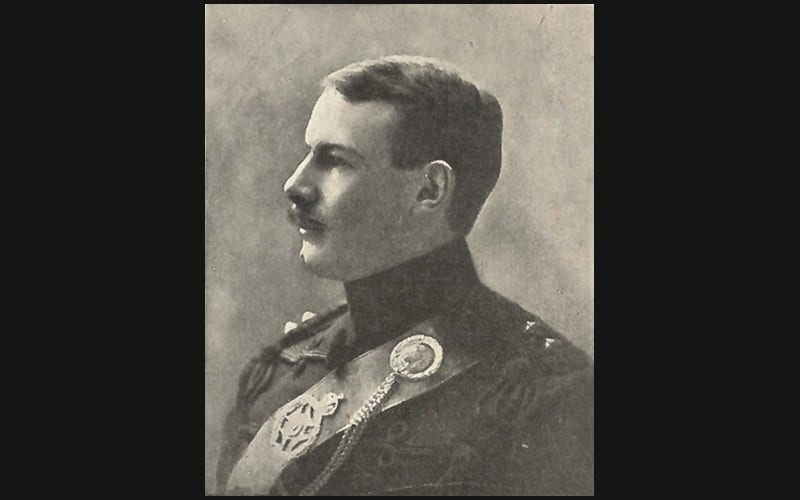
George Campbell Wheeler was born in Yokohama, Japan, on 7 April 1880. His father, formerly a Royal Navy medical officer, had become a physician to the British legation. Sent to England for schooling, Wheeler attended Bedford School, played rugby and cricket and became an accomplished linguist and singer.
Commissioned in 1900, he began his Indian service attached to the East Yorkshire Regiment before transferring to the 2nd Battalion, 9th Gurkha Rifles, in 1902. He rose to captain and married Beatrice Ethel Kynoett in Bengal in 1912. They had three children. By the Mesopotamian campaign he held the rank of major in the battalion.
The Gurkhas reached Basra in January 1916 and took part in efforts to relieve Kut. During the renewed advance the following year, the 37th Indian Brigade was ordered to cross the Tigris at the Shumran Bend, upstream from the town. The crossing on 23 February 1917 began before dawn, using ferries to put assaulting troops onto an enemy-held bank.
Wheeler and a small party established a foothold under intense fire. When Ottoman troops counterattacked with grenades, he led an immediate charge. He suffered a severe bayonet wound in the head but continued fighting, drove off the attackers and helped consolidate the bridgehead. His conduct supported the successful river crossing that helped force the evacuation of Kut and opened the way toward Baghdad.
He received the Victoria Cross from King George V in July 1919. After the war he continued with the Gurkhas, becoming a lieutenant-colonel and battalion commandant in 1923. In 1927 he became commandant and district superintendent of police at Port Blair in the Andaman Islands. He retired in December 1930. He settled at Barton-on-Sea in Hampshire and participated in local amateur theatre, putting his lifelong interest in singing to use beyond military service. He died of pneumonia on 26 August 1938 and was buried at New Milton. His medals later entered the National Army Museum.
Victoria Cross citation London Gazette, 8 June 1917, page5702:
For the most conspicuous bravery and determination.
This officer, together with one Gurkha officer and eight men, crossed a river and immediately rushed the enemy’s trench under heavy bombing, rifle, machine gun, and artillery fire.
Having obtained a footing on the river bank, he was almost immediately afterwards counter-attacked by a strong enemy party with bombers. Major Campbell Wheeler at once led a charge with another officer and three men, receiving a severe bayonet wound in the head, but managed, in spite of this, to disperse the enemy.
This bold action on his part undoubtedly saved the situation.
In spite of his wound, he continued to consolidate his position.
Become the named supporter for this profile and edit the tribute biography and portrait (Owner account required). Proceeds help keep the archive online.
$25 USD / year — annual sponsorship renewal. Keeps the page online and, where enabled, the family anniversary remembrance emails active.