★
Loading archive…
Loading archive…
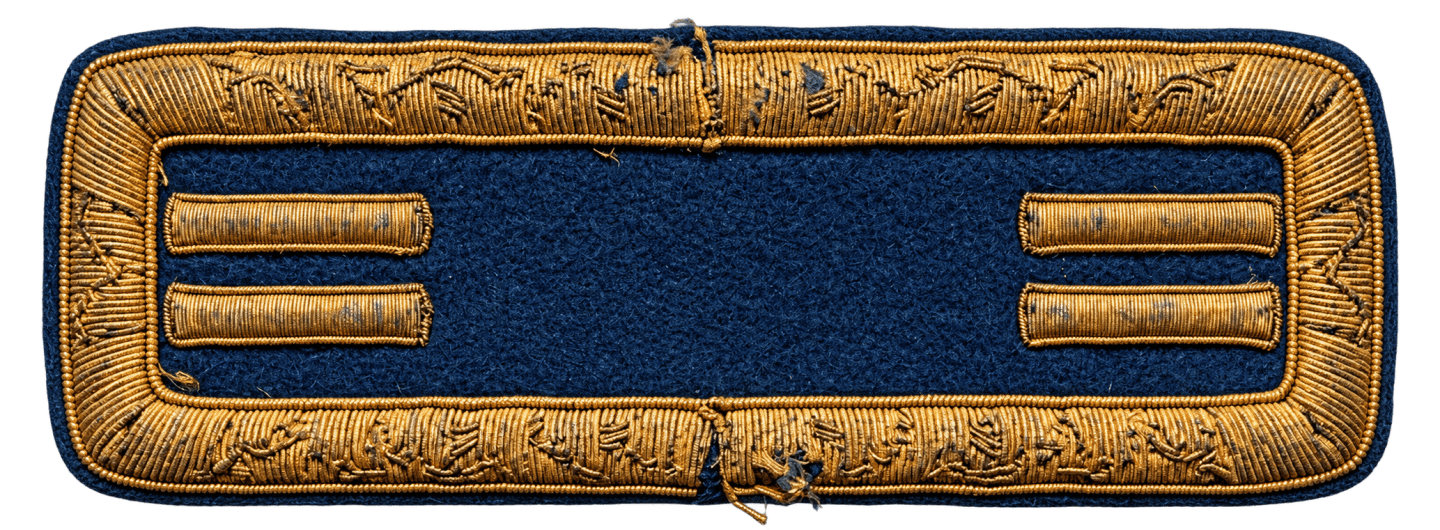
George Emerson Albee was born on January 27, 1845, in Lisbon, New Hampshire. During his youth his family moved west to Wisconsin, and it was from there that Albee began a military career that would eventually span the American Civil War, postwar Regular Army service, the Indian Campaigns, and later service with the Connecticut National Guard. His career was unusually varied, beginning as an enlisted sharpshooter and eventually carrying him to commissioned rank in the Regular Army. The defining distinction of his service came from an action on the Brazos River in Texas in 1869, for which he later received the Medal of Honor.
Albee entered military service during the American Civil War. On June 25, 1862, he enlisted as a Private in Company G of the 1st United States Sharpshooters, the Wisconsin company of the celebrated organization commonly associated with Colonel Hiram Berdan. Berdan's Sharpshooters were selected for exceptional marksmanship and were employed in roles that placed considerable emphasis on accurate long-range rifle fire, skirmishing, reconnaissance, and operations ahead of conventional infantry formations.
Only a short time after entering service, Albee experienced serious combat at the Second Battle of Bull Run, or Second Manassas, in Virginia. On August 30, 1862, Company G fought in the intense engagements around the battlefield, and Albee was wounded. His injury was serious enough that he was eventually discharged for disability on October 20, 1862. Although this first period of military service had lasted only a few months, the wound did not end his military career.
After recovering, Albee returned to the Union Army. On December 23, 1863, he enlisted in the 3rd Wisconsin Light Artillery. His service as an enlisted artilleryman was brief because he soon received an opportunity to become a commissioned officer. On February 11, 1864, he left the artillery organization to accept a commission as Second Lieutenant in Company F of the 36th Wisconsin Infantry.
The 36th Wisconsin Infantry entered some of the most demanding operations of the final years of the Civil War. Albee served with the regiment during the Overland and Petersburg campaigns, including the period of heavy fighting that followed the Army of the Potomac's movement toward Richmond and Petersburg. His surviving wartime material records his experiences during operations that included Cold Harbor, the Siege of Petersburg, and the Battle of Ream's Station.
At Ream's Station on August 25, 1864, Albee became a prisoner of war during the severe fighting there. The battle resulted in substantial Union losses and the capture of numerous Federal soldiers. Albee survived his captivity and later returned to service. His performance and continued military career brought advancement, and he was promoted to First Lieutenant during the Civil War period. He remained with the 36th Wisconsin until the regiment's service concluded in 1865.
The end of the Civil War did not mark the end of Albee's Army career. He continued in military service and received a commission connected with the 36th United States Colored Infantry. This postwar service represented a transition from the temporary volunteer forces raised during the Civil War toward a longer career in the United States Army.
Albee subsequently entered the Regular Army and served with the 41st U.S. Infantry. By 1869 he was a First Lieutenant in Company L of that regiment. The 41st Infantry was one of the post-Civil War Regular Army regiments composed largely of African American enlisted soldiers and was part of the military establishment operating on the western and southwestern frontiers.
It was during this period that Albee performed the action for which he would eventually receive the Medal of Honor. On October 28, 1869, while serving as First Lieutenant of Company L, 41st U.S. Infantry, Albee was operating near the Brazos River in Texas. During the encounter, Albee and only two other soldiers attacked a force of eleven Native American combatants occupying the hills.
Despite being heavily outnumbered, Albee and the two soldiers advanced against the opposing force. Their attack drove the group from the hills, after which Albee continued forward and reconnoitered the country beyond the position. The action combined aggressive leadership with reconnaissance under dangerous circumstances. Rather than remaining with a larger formation, Albee personally participated in a three-man action against a substantially larger opposing force.
This brief but exceptionally bold encounter became the central event of Albee's Medal of Honor citation. The official description of his conduct was concise: he attacked with two men a force of eleven opponents, drove them from the hills, and reconnoitered the country beyond. The citation's simplicity reflects the character of many Medal of Honor awards from the nineteenth-century Indian Campaigns, when gallantry was frequently recorded through short factual descriptions of a specific battlefield action.
At the time of the action Albee's rank was First Lieutenant. This distinction is important because he later reached the higher Regular Army rank of Captain. His profile therefore correctly separates his Medal of Honor action rank from the highest rank he later attained in the United States Army: First Lieutenant at the Brazos River action and Captain as his highest verified Army rank.
Albee later served with the 24th U.S. Infantry, another Regular Army regiment whose enlisted ranks were predominantly African American. He continued his Regular Army career until 1878, when he retired from active Army service. By then his military experience had stretched from Civil War sharpshooting and artillery service through infantry command, captivity during the Civil War, Reconstruction-era service, and frontier operations in Texas.
The valor Albee displayed at the Brazos River was not formally recognized with the Medal of Honor immediately after the 1869 action. Like a number of nineteenth-century soldiers, he received the decoration many years later after his service record and gallant action were formally recognized. His Medal of Honor was issued on January 18, 1894, more than twenty-four years after the event for which it was awarded.
The Medal of Honor itself had been created during the American Civil War. Congress authorized the Army Medal of Honor in 1862, and during the decades that followed it became the United States' highest military decoration for valor. Albee's award belongs to the nineteenth-century Army Medal of Honor period used in the project's historical database. His verified decoration is therefore represented as Medal of Honor 1862–1895 Army — 1894.
No additional star, clasp, bar, oak leaf cluster, or other device has been verified for Albee's Medal of Honor. He received one Medal of Honor, and his award is therefore represented without an additional device. Although his service history included both the Civil War and the Indian Campaigns, a separate Civil War Campaign Medal or Indian Campaign Medal has not been included in his verified ribbon rack. Participation in a qualifying period or campaign does not by itself demonstrate that an individual was personally issued or entitled to a later-created campaign medal. Without sufficient recipient-specific documentation, those medals remain excluded rather than being added through assumption.
After leaving the Regular Army, Albee maintained a strong connection with military life and marksmanship. He became closely associated with firearms and competitive shooting and worked in the firearms industry. His considerable knowledge of rifles and marksmanship gave him a natural role in this field, and he became associated with the Winchester Repeating Arms Company. He worked both as an exhibition marksman and in connection with firearms development, particularly during the period when repeating and magazine-fed rifle technology was advancing rapidly.
Albee also returned to organized military service through the Connecticut National Guard. In 1891 he became Captain of Company D, 2nd Regiment, a unit known as the National Blues. He subsequently advanced to Major and served as Brigade Inspector of Rifle Practice. This National Guard rank was part of his later state military service and should be distinguished from his Regular U.S. Army career, in which his highest verified rank was Captain.
His appointment involving rifle practice was particularly appropriate for a man whose military career had begun with Berdan's Sharpshooters. Decades after serving as a young Civil War marksman, Albee remained professionally connected to marksmanship, weapons, training, and military shooting. His later work therefore formed a remarkable link between the specialized rifle skills of the Civil War era and the increasingly modern firearms technology of the late nineteenth century.
Albee also retained a personal connection to the Civil War battlefield where he had been wounded. In later years he helped mark the position occupied by his Wisconsin company of the 1st U.S. Sharpshooters at Second Manassas. The effort became part of the early memorialization of the battlefield, preserving the location where his company had fought in August 1862. It demonstrated that his Civil War service remained important to him long after he had moved on to Regular Army duty and later civilian pursuits.
On January 18, 1894, the official recognition of his 1869 valor placed Albee permanently among the recipients of the nation's highest military award. The Medal of Honor became the single verified decoration in his final project ribbon rack. Although his record covered multiple military periods and numerous units, the project evidence standard requires each decoration to be demonstrated independently, and no additional medal has been sufficiently established for publication.
George Emerson Albee lived into the twentieth century, carrying with him experience from a period of extraordinary change in the United States military. He had entered the Army while the nation was divided by civil war, served through the turbulent postwar years on the frontier, participated in the professional development of marksmanship and firearms, and continued contributing to military training through the National Guard.
Albee died on March 24, 1918, in Laurel, Maryland, at the age of seventy-three. He was buried at Arlington National Cemetery in Virginia, where his military service and Medal of Honor status are permanently commemorated.
George Emerson Albee's career is notable for its breadth. He began as a young Private in an elite Civil War sharpshooter regiment, survived a battlefield wound and later captivity, earned a commission, continued into the postwar Regular Army, commanded soldiers on the western frontier, and ultimately attained the rank of Captain in the U.S. Army. His later National Guard service and work with firearms extended his connection with military marksmanship well beyond his active-duty years.
At the center of that long career remains the action of October 28, 1869, near the Brazos River in Texas. As a First Lieutenant of Company L, 41st U.S. Infantry, George Emerson Albee advanced with only two men against a force of eleven opponents, drove them from their position, and continued the reconnaissance beyond the hills. More than two decades later, that act of courage was formally recognized with the Medal of Honor 1862–1895 Army — 1894, the verified decoration that defines his place in American military history.
Become the named supporter for this profile and edit the tribute biography and portrait (Owner account required). Proceeds help keep the archive online.
$25 USD / year — annual sponsorship renewal. Keeps the page online and, where enabled, the family anniversary remembrance emails active.
