★
Loading archive…
Loading archive…

Colonel, U.S. Army
Support & adopt this hero ↓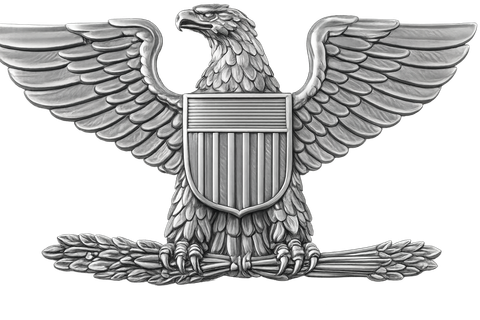
At the Battle of Big Dry Wash in Arizona Territory, George Horace Morgan refused to give ground until a bullet finally stopped him. But that extraordinary stand was only the beginning of a military career that would see him earn the Medal of Honor and two Silver Star citations across three different conflicts.
Born on January 1, 1855, in St. Catharines, Canada West, Morgan graduated from the United States Military Academy at West Point in 1880. Commissioned into the 3rd U.S. Cavalry, he began his service on the American frontier, where he encountered the dangers of mounted operations and frontier warfare.
On July 17, 1882, during the Battle of Big Dry Wash, also known as Big Dry Fork, Morgan volunteered to serve with Lieutenant Frank West's command, which included Indian scouts and troops of the 6th Cavalry. At a critical moment in the battle against Apache warriors, Morgan held his position and continued firing despite the advancing opposition. He remained in place until a gunshot severely wounded him. His official Medal of Honor citation recognized that he "gallantly held his ground at a critical moment" and continued fighting until disabled. The Medal of Honor was presented to him on July 15, 1892.
His courage would be tested again during the Spanish-American War. As a captain commanding Troop H of the 3rd Cavalry, Morgan participated in the Santiago de Cuba Campaign. On July 1, 1898, he distinguished himself during the Battle of San Juan, earning a formal citation for gallantry that was subsequently recognized through the Silver Star Medal.
Less than two years later, Morgan was fighting in the Philippine-American War. Serving as a major in the 28th U.S. Volunteer Infantry, he commanded its 1st Battalion during operations in Cavite. On January 7, 1900, at Putol Bridge in Luzon, he again displayed conspicuous courage in action, earning his second Silver Star citation. His service continued through operations near Dasmariñas, the Taal District, Misamis and the campaign against Miguel Malvar's forces.
Morgan's military contributions extended beyond the battlefield. He served as a professor of military science, commanded cavalry formations, performed administrative and command duties in the Philippines, and served along the Mexican border. During World War I, he remained on active duty in the United States, contributing to the Army's wartime organization and training rather than serving in overseas combat.
He retired as a colonel on January 1, 1919, after nearly thirty-nine years of Army service. His commitment to military education continued during retirement through his work with students in Nashville.
Colonel George Horace Morgan died on February 14, 1948, at the age of 93 and was buried at Arlington National Cemetery. Remembered as a Medal of Honor recipient and twice-cited Silver Star soldier, his legacy rests on three remarkable demonstrations of gallantry and decades of service to the United States Army.
Become the named supporter for this profile and edit the tribute biography and portrait (Owner account required). Proceeds help keep the archive online.
$25 USD / year — annual sponsorship renewal. Keeps the page online and, where enabled, the family anniversary remembrance emails active.