★
Loading archive…
Loading archive…
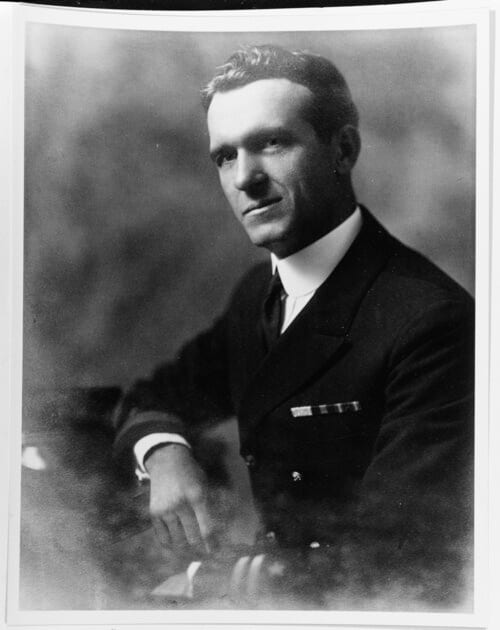
A devastating fire in a Chilean coastal city would reveal the courage of a young American sailor and earn him one of the highest distinctions in the United States military. George Huber Wheeler, a United States Navy sailor and Medal of Honor recipient, demonstrated extraordinary bravery during the Coquimbo fire of 20 January 1909. His actions that day became the defining moment of a naval career that spanned more than three decades.
Born on 26 September 1881 in Charleston, South Carolina, Wheeler enlisted in the United States Navy in August 1905. Through dedication and professional advancement, he attained the rating of Shipfitter First Class. In January 1909, he was serving aboard the armored cruiser USS Tennessee when the ship was operating with the United States Pacific Fleet off the coast of Chile. When a major conflagration broke out in Coquimbo, Tennessee contributed a fire brigade to assist in fighting the blaze. Wheeler distinguished himself through his bravery and extraordinary heroism during this dangerous operation.
His courage was formally recognised through the Medal of Honor, the United States' highest military decoration. The award was authorised under General Orders No. 18, dated 19 March 1909. On 9 May 1909, Wheeler received the decoration aboard USS Tennessee from Rear Admiral William T. Swinburne. His official citation recognised him for the bravery and extraordinary heroism he displayed during the Coquimbo conflagration. His achievement stands as a reminder that exceptional courage is not confined to the battlefield and that the call to serve others can arise in the most unexpected circumstances.
Wheeler continued his naval career long after receiving the Medal of Honor. In October 1914, he was appointed to the warrant rank of Carpenter and subsequently served aboard the battleship USS Vermont. During the First World War, he received a temporary commission as an Ensign in October 1917, followed by promotion to Lieutenant (Junior Grade) in July 1918 and Lieutenant in 1919. In October 1920, he reverted to the warrant rank of Chief Carpenter and continued serving the Navy in a succession of important assignments.
His later service included duty aboard the minesweeper USS Quail, the destroyer tender USS Altair and the light cruiser USS Concord. He also served at Naval Training Station San Diego, the Eleventh Naval District, the Philadelphia Navy Yard, and aboard the battleship USS Oklahoma and repair ship USS Vestal. These assignments reflected a career built on technical expertise, experience and sustained commitment to the United States Navy.
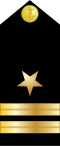
In November 1937, following approximately 32 years of naval service, Wheeler was placed on the retired list with the rank of Lieutenant. He spent his final years away from active naval duty, but his legacy remained connected to the extraordinary act of courage that had distinguished his early career.
George Huber Wheeler died on 20 January 1957 in Bethesda, Maryland, exactly 48 years after the Coquimbo fire for which he had received the Medal of Honor. He was laid to rest at Arlington National Cemetery in Virginia. Remembered as a United States Navy Medal of Honor recipient, Wheeler represents a generation of sailors whose courage, professional dedication and willingness to serve extended beyond the traditional boundaries of naval warfare. His story preserves the memory of a remarkable act of heroism and a lifetime devoted to the service of his country.
Become the named supporter for this profile and edit the tribute biography and portrait (Owner account required). Proceeds help keep the archive online.
$25 USD / year — annual sponsorship renewal. Keeps the page online and, where enabled, the family anniversary remembrance emails active.