★
Loading archive…
Loading archive…
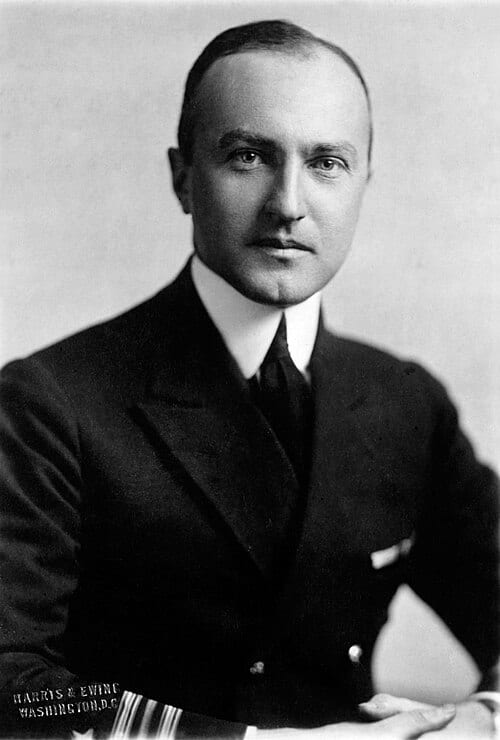
Rear Admiral, U.S. Navy
Support & adopt this hero ↓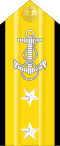
In April 1914, the streets of Veracruz, Mexico, became a battlefield. Amid the gunfire and confusion, a young United States Navy ensign led his sailors directly into danger. His courage during two days of fighting would earn him America's highest military decoration, the Medal of Honor. His name was George Maus Lowry, and his remarkable career would eventually take him from the front lines of a naval assault to the rank of Rear Admiral.
Born on October 27, 1889, in Erie, Pennsylvania, George Maus Lowry graduated from the United States Naval Academy in 1911. He began his naval career aboard battleships, including USS North Dakota and USS Florida. Commissioned as an ensign in March 1912, he was serving aboard Florida when American forces landed at Veracruz on April 21, 1914. It was there that his leadership would be tested under enemy fire.
Lowry commanded 57 sailors of Florida's First Company as they advanced toward the Veracruz Customhouse, a principal objective of the American landing. His men came under rifle and machine-gun fire during the dangerous approach. Lowry directed the fighting and called for volunteers to confront enemy positions near the customhouse. Among those serving under his command was Coxswain George Cregan, who displayed extraordinary courage while helping a wounded comrade. Lowry continued leading his men throughout the fighting of April 21 and 22, demonstrating the composure and determination that distinguished his service.
For his conduct during the Battle of Veracruz, Lowry received the Medal of Honor under General Orders No. 177, dated December 4, 1915. His official citation praised his distinguished battlefield leadership, noting that he remained at the head of his company during both days of combat and led his men with "skill and courage." The award established his place among the United States Navy's most distinguished officers.
But Veracruz was only the beginning of Lowry's military story. During World War I, he served aboard American destroyers, including USS O'Brien and USS Jenkins, during the period when the Navy was engaged in antisubmarine and convoy-protection operations. His career subsequently included assignments at the First Naval District, USS Ringgold and the Bureau of Navigation. He also commanded destroyers before transferring to the Naval Reserve in March 1927. His early service was reflected in the Mexican Service Medal and World War I Victory Medal.
When another world war threatened, Lowry answered the call again. Recalled to active duty in December 1940, he served at the Twelfth Naval District in San Francisco before assuming important operational responsibilities with the Western Sea Frontier. As Operations Officer and Administrative Head of its Joint Operations Center, he contributed to the coordination of naval defense operations and the protection of coastal shipping routes during World War II.
His outstanding wartime service earned him the Legion of Merit. Recorded in the Bureau of Naval Personnel Information Bulletin No. 353 in August 1946, the award recognized his exceptionally meritorious work in the Western Sea Frontier's Joint Operations Center. His wartime service also qualified him for the American Defense Service Medal, American Campaign Medal and World War II Victory Medal.
Relieved from active duty in September 1946, Lowry was advanced to Rear Admiral and transferred to the retired Reserve list the following month. Few officers experience both the immediate dangers of leading sailors into battle and the responsibility of coordinating naval operations during a global war. Lowry's career encompassed both, demonstrating that military leadership demands courage in combat and sound judgment in positions of operational responsibility.
Rear Admiral George Maus Lowry died on September 25, 1981, in Carmel, California, at the age of 91. His ashes were scattered at sea, a fitting final tribute to a life closely connected with the United States Navy.
From the battle-scarred streets of Veracruz to the operational command centers of World War II, Lowry's legacy reflects more than a single act of bravery. It is the story of a Medal of Honor recipient who continued to serve his country across generations of naval history, leaving behind an enduring example of courage, leadership and devotion to duty.
Medal of Honor Citation
For distinguished conduct in battle, engagements of Vera Cruz, 21-22 April 1914; Ens. Lowry was in both days' fighting at the head of his company, and was eminent and conspicuous in his conduct, leading his men with skill and courage.
Become the named supporter for this profile and edit the tribute biography and portrait (Owner account required). Proceeds help keep the archive online.
$25 USD / year — annual sponsorship renewal. Keeps the page online and, where enabled, the family anniversary remembrance emails active.