★
Loading archive…
Loading archive…

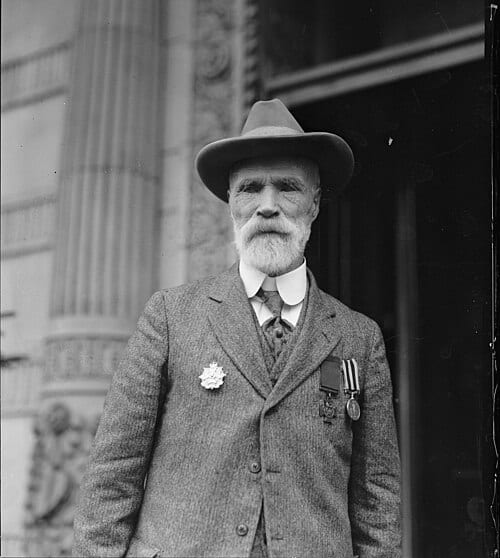
Captured a rebel despite a severe wound that disabled an arm
George Richardson was born at Derrylane, near Killeshandra in County Cavan, on 1 August 1831. His father was a linen weaver. Richardson enlisted in the 34th Regiment of Foot in 1855 and went to India during the uprising. His early military career included disciplinary trouble, but he remained with the regiment during its active operations.
On 27 April 1859 at Kewanie, he pursued and attacked armed opponents at close quarters. Although wounded so severely that one arm was disabled, he continued the encounter and captured a man carrying a loaded revolver. The action brought the Victoria Cross. He returned to Britain as an invalid and left the British Army in 1862.
Richardson emigrated to Canada that year. He worked in Montreal, including employment as a coachman, and subsequently joined the Canadian militia. He served with the Prince of Wales's Royal Rifles and attained the rank of sergeant. His life in Canada extended far beyond his early military experiences and included farming and local public service.
During the 1880s and 1890s he farmed at Vankoughnet in Ontario. In 1895 and 1896 he served as reeve of Oakley Township. This local responsibility gave him a civilian role in the community in which he had settled, decades after the action in India.
In later years he and his wife, Elizabeth, suffered a destructive house fire. Accounts record the loss of his original medals and the issue of replacements. Elizabeth died before him. Richardson survived into his nineties, one of the last living Victoria Cross recipients from the Indian uprising. He died in a London, Ontario, hospital on 28 January 1923 and was buried in Prospect Cemetery, Toronto.
Become the named supporter for this profile and edit the tribute biography and portrait (Owner account required). Proceeds help keep the archive online.
$25 USD / year — annual sponsorship renewal. Keeps the page online and, where enabled, the family anniversary remembrance emails active.