★
Loading archive…
Loading archive…
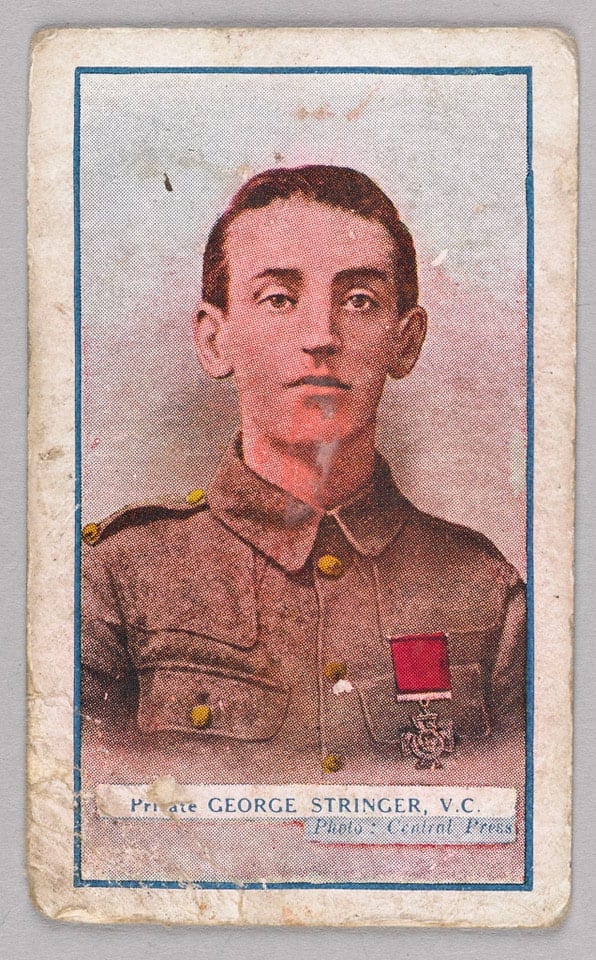
Private (Manchester Regiment), British Army
Support & adopt this hero ↓Held his flank alone with grenades, covering the withdrawal.
George Albert Stringer was born in Manchester on 24 July 1889, the son of George Stringer and Esther, formerly Pendleton. He attended Albert Memorial School in Miles Platting and worked for a local dyeing and bleaching firm. In 1905, aged sixteen, he joined the Lancashire Fusilier Volunteers. He later served with the Territorial Force before joining the Manchester Regiment for wartime service. He married Florence Marie Thornhill in 1908.
Stringer went to France with the 1st Battalion, Manchester Regiment, in June 1915 and served on the Western Front, including at Loos. The battalion left France late that year and moved to Mesopotamia in January 1916. There, it took part in attempts to relieve the British and Indian troops besieged at Kut-el-Amara.
On 8 March 1916, during the attack on the Dujaila Redoubt, Stringer's battalion captured an enemy position. Posted on its extreme right flank, he was responsible for guarding against a hostile attack. An Ottoman counterattack subsequently forced the battalion to withdraw. Stringer remained alone at his post and resisted the advancing enemy with hand grenades until his supply was exhausted. His stand protected the battalion's flank and allowed its men to retire in good order. He received the Victoria Cross for this action.
Stringer was also mentioned in despatches and received Serbia's Gold Medal for Bravery. Wounds and serious illness interrupted his service. In July 1916 he was hospitalised in India with enteric fever and jaundice. He eventually returned to Britain, arriving home to a public welcome in Manchester in June 1917. King George V presented his Victoria Cross at Buckingham Palace on 21 July. His final service rank was private.
After discharge, Stringer received a disability pension and returned to civilian employment in Manchester. He worked for William Hall and Sons and later became a doorkeeper for the Manchester Assistance Board. He maintained his association with the Territorial Army and the Manchester Regiment Old Comrades Association. During the Second World War he worked in munitions, before returning to his civilian post and retiring in 1951.
Stringer moved to Failsworth in 1956. He died at Oldham General Hospital on 10 November 1957, aged 68, and was buried with military honours at Philips Park Cemetery, Manchester. His regiment's Old Comrades Association provided his headstone.
Victoria Cross citation The London Gazette, Supplement, 5 August 1916, page 7744:
No. 15818 Pte. George Stringer, Manch. R.
For most conspicuous bravery and determination. After the capture of an enemy position he was posted on the extreme right of his battalion to guard against any hostile attack. His battalion was subsequently forced back by an enemy counter-attack, but Private Stringer held his ground single-handed and kept back the enemy till all his grenades were expended.
His very gallant stand saved the flank of his battalion and rendered a steady withdrawal possible.
Become the named supporter for this profile and edit the tribute biography and portrait (Owner account required). Proceeds help keep the archive online.
$25 USD / year — annual sponsorship renewal. Keeps the page online and, where enabled, the family anniversary remembrance emails active.