★
Loading archive…
Loading archive…
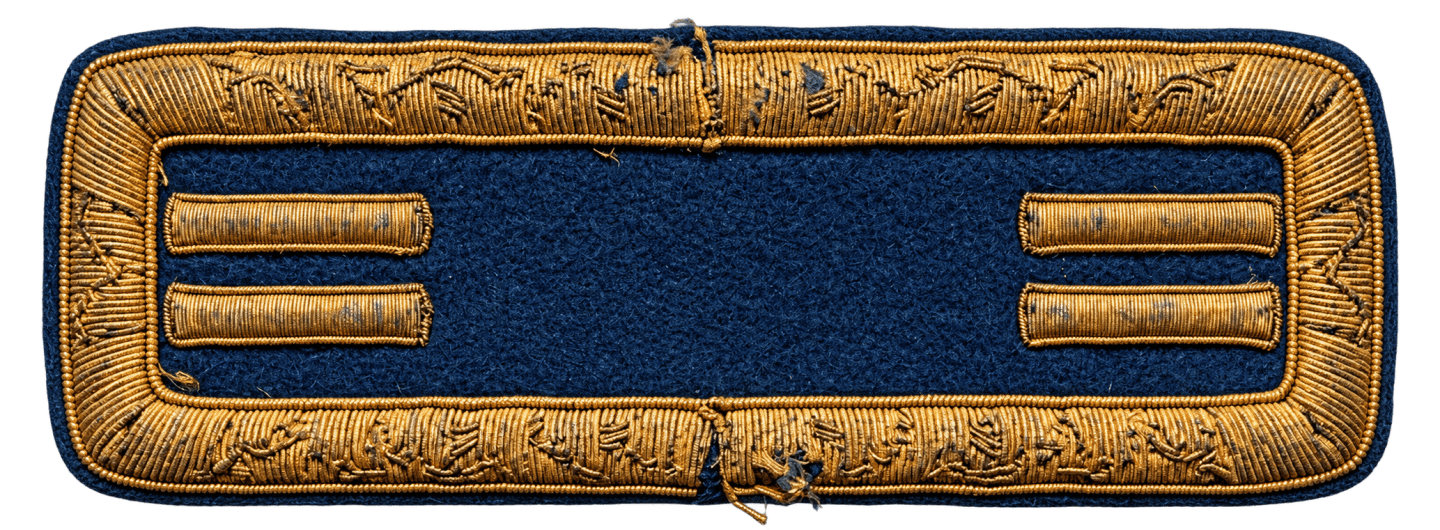
George W. Ford was born in Ireland in 1844 and later made his way to the United States, becoming part of the large Irish-American community that contributed heavily to the Union war effort during the American Civil War. His surviving official military records preserve his name as George W. Ford; the middle initial should not be expanded without stronger evidence establishing his full middle name.
Ford entered Union military service during the Civil War and became associated with Company E of the 88th New York Infantry. The regiment was one of the formations closely connected with the famous Irish Brigade of the Army of the Potomac, an organization whose ranks included large numbers of Irish-born and Irish-American soldiers. The brigade developed a formidable reputation for courage and suffered extremely heavy casualties during repeated combat in the Eastern Theater.
The 88th New York Infantry served through some of the most demanding campaigns of the Army of the Potomac. Its broader regimental history included operations from the Peninsula Campaign through Antietam, Fredericksburg, Gettysburg, the Overland Campaign, Petersburg, and ultimately the pursuit of General Robert E. Lee's Army of Northern Virginia toward Appomattox. Ford's individual participation should not automatically be assumed for every engagement in which the regiment fought, but by the closing stage of the war he was an experienced officer serving with a veteran combat formation.
Ford rose through the ranks during his military career. By April 1865, when he performed the action for which he received the Medal of Honor, he held the rank of First Lieutenant in Company E of the 88th New York Infantry. Medal of Honor records also preserve Captain as his highest recorded rank, distinguishing that later or highest rank from his First Lieutenant rank at the time of his heroic action.
By the spring of 1865, Confederate military resistance in Virginia was rapidly collapsing. Union forces had finally broken through the defenses around Petersburg, forcing General Robert E. Lee to evacuate both Petersburg and Richmond. Lee attempted to move the Army of Northern Virginia westward, hoping to obtain supplies and potentially join other Confederate forces farther south.
The Union Army pursued aggressively. Cavalry and infantry formations moved rapidly to prevent Lee from escaping, while Confederate columns struggled along crowded roads with exhausted soldiers, artillery, supply wagons, and limited food. This pursuit produced a series of engagements during the Appomattox Campaign, culminating in one of the Confederacy's most disastrous defeats at Sailor's Creek on April 6, 1865.
The 88th New York Infantry took part in the Union operations at Sailor's Creek. The battlefield consisted of several interconnected actions as Federal forces struck portions of Lee's retreating army. Confederate formations became isolated from one another, and Union troops attacked with increasing pressure as they attempted to cut off roads leading west.
First Lieutenant George W. Ford was serving with Company E during this fighting. In the course of the battle, he captured a Confederate flag. His official Medal of Honor citation is exceptionally brief, recording simply the capture of a flag, but in Civil War combat such an accomplishment represented an act of considerable personal danger.
Regimental and battle flags were central to nineteenth-century battlefield organization. Amid smoke, noise, broken formations, and limited visibility, soldiers used their colors as rallying points and guides. The flag usually remained near the center of a regiment and was surrounded by a color guard whose duty was to protect it. Color bearers were conspicuous targets, and efforts to seize an enemy flag often involved close-range fighting.
Capturing a Confederate flag therefore generally required a soldier to reach the heart of an opposing formation at precisely the point where resistance could be strongest. Flags also possessed tremendous symbolic importance. Losing one to the enemy was considered a serious humiliation, while capturing an enemy color was regarded as a notable battlefield achievement. Ford's action at Sailor's Creek placed him among a number of Union soldiers whose courage during the battle resulted in the capture of Confederate colors.
The scale of the Confederate defeat at Sailor's Creek was enormous. Thousands of Confederate soldiers were captured, along with several senior officers. Entire sections of Lee's army were effectively destroyed or removed from the campaign. The battle occurred only three days before Lee surrendered the Army of Northern Virginia to Lieutenant General Ulysses S. Grant at Appomattox Court House on April 9, 1865.
Ford's bravery was recognized with unusual speed. On May 10, 1865, little more than a month after the action at Sailor's Creek, he was presented with the Medal of Honor. The award recognized his capture of the enemy flag on April 6 while serving as a First Lieutenant with Company E, 88th New York Infantry.
The Medal of Honor was still a comparatively new American military decoration at that time. The Army version had been established during the Civil War, at a period when the United States did not yet possess the extensive hierarchy of valor medals that would develop in the twentieth century. As a result, the Medal of Honor became the principal national decoration for soldiers whose conduct was judged worthy of exceptional recognition.
Ford's decoration belongs to the Medal of Honor 1862–1895 Army period. Both his heroic action in April 1865 and the presentation of his medal in May 1865 fall within the original Civil War-era Army Medal of Honor period. No clasp, star, oak leaf cluster, or other device has been verified for his Medal of Honor.
The Medal of Honor is the only individual military decoration currently supported strongly enough for inclusion in Ford's final verified medal record. His Civil War service does not by itself establish personal entitlement to the later Army Civil War Campaign Medal. Ford died decades before that campaign medal was established, and no recipient-specific issuance record supports adding it to his medal rack. His final verified medal count therefore remains one.
Following the surrender at Appomattox, the 88th New York remained in Federal service for the closing period of the war. The regiment subsequently moved toward Washington, D.C., where surviving soldiers of the victorious Union armies participated in the events marking the conclusion of the conflict. The regiment was mustered out in June 1865, bringing its long and costly wartime service to an end.
Ford returned to civilian life after the Civil War. Compared with the records documenting his Medal of Honor action, reliable information concerning his later occupation, family circumstances, and daily civilian activities is limited. For that reason, details that cannot be firmly connected to the Medal of Honor recipient should not be added merely to complete the narrative.
He nevertheless belonged to a distinctive generation of Irish-born Americans whose lives were transformed by the Civil War. Having been born in Ireland, Ford ultimately served as an officer in the United States Army and fought as part of a regiment strongly associated with New York's Irish-American military tradition. His service connected the immigrant experience directly with one of the defining conflicts of American history.
George W. Ford died on November 29, 1883, at approximately thirty-nine years of age. He was buried in Calvary Cemetery in Woodside, New York. His comparatively early death meant that he did not live to see the extensive veterans' commemorations and later Civil War campaign-medal programs that developed in the decades after the conflict.
Ford's enduring military legacy rests on the closing days of the Civil War. On April 6, 1865, while serving as a First Lieutenant with Company E of the 88th New York Infantry, he entered the fierce fighting at Sailor's Creek and captured an enemy flag as Confederate resistance was collapsing around him. Four days after Lee's surrender at Appomattox and just over a month after Ford's action, the government formally recognized his courage with the Medal of Honor.
From an Irish-born immigrant to an officer of the United States Army, George W. Ford's military career became permanently connected with the final campaign against the Army of Northern Virginia. His capture of a Confederate flag at Sailor's Creek earned him the nation's highest military decoration and secured his place among the Medal of Honor recipients of the American Civil War.
Become the named supporter for this profile and edit the tribute biography and portrait (Owner account required). Proceeds help keep the archive online.
$25 USD / year — annual sponsorship renewal. Keeps the page online and, where enabled, the family anniversary remembrance emails active.
