★
Loading archive…
Loading archive…
The Fearless Q-Ship Commander Who Turned a Sinking Ship into a Deadly Trap
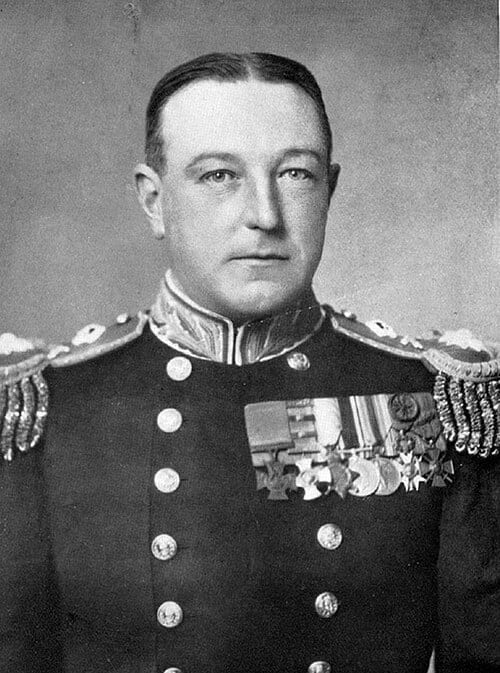
Would you deliberately steer your ship into an enemy torpedo to destroy a submarine? For Vice-Admiral Gordon Campbell, one of the Royal Navy's most remarkable heroes of the First World War, this extraordinary gamble became the defining moment of a career marked by courage, deception and exceptional leadership.
Born on 6 January 1886 in Croydon, Surrey, Gordon Campbell joined the Royal Navy in 1900. During the First World War, he became a pioneer of Q-ship warfare, commanding heavily armed vessels disguised as ordinary merchant ships to lure German U-boats into deadly traps.
His first major success came on 22 March 1916, when his disguised vessel, HMS Farnborough, sank German submarine U-68 off Ireland. Campbell's careful planning and disciplined command earned him the Distinguished Service Order (DSO), announced in the London Gazette on 31 May 1916. The original recommendation praised his organisation and nerve, although wartime secrecy concealed the true nature of his operations from the public.
But Campbell's greatest test was still to come.
On 17 February 1917, commanding HMS Farnborough, also known as Q5, Campbell deliberately allowed a torpedo from German submarine U-83 to strike his vessel. As his damaged ship began sinking, he ordered a carefully rehearsed display of panic, sending part of his crew into lifeboats while concealed gunners remained at their stations.
He waited until the unsuspecting submarine moved into the ideal firing position before revealing his guns and opening fire. U-83 was destroyed, and Farnborough was eventually saved. For this extraordinary action, Campbell received the Victoria Cross, announced in the London Gazette on 21 April 1917, recognising his "conspicuous gallantry, consummate coolness, and skill in command."
Could any commander have shown greater patience while his own ship was sinking?
On 7 June 1917, Campbell repeated his daring tactics aboard HMS Pargust, destroying German submarine UC-29 despite his vessel having suffered severe torpedo damage. His leadership earned him the first Bar to his DSO, gazetted on 20 July 1917 for services in action against enemy submarines. Two members of his crew, Lieutenant Ronald Neil Stuart and Seaman William Williams, received Victoria Crosses for their bravery.
Another remarkable engagement followed on 8 August 1917, when Campbell commanded HMS Dunraven against German submarine UC-71 in the Bay of Biscay. During a prolonged battle, his ship suffered devastating gunfire, explosions and torpedo damage. Even as flames threatened concealed ammunition and gun crews, his men maintained their discipline. Dunraven was eventually lost, but her crew survived.
Campbell received a second Bar to his DSO, announced on 2 November 1917. The official recommendation celebrated the exceptional courage and discipline displayed throughout the action, recording King George V's admiration for the bravery of Campbell and his men.
His achievements also received international recognition. France awarded him the Croix de Guerre 1914–1918 with Palm, gazetted on 2 November 1917, and appointed him an Officer of the Légion d'honneur, announced on 25 January 1918.
His wartime service was further represented by the 1914–15 Star, British War Medal and Victory Medal. During the Second World War, Campbell returned to naval service, undertaking coastal defence responsibilities at Padstow. His later honours included the Defence Medal, War Medal 1939–1945, King George VI Coronation Medal and Queen Elizabeth II Coronation Medal.
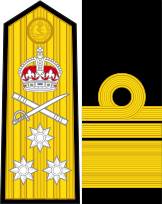
Campbell rose to the rank of Vice-Admiral in 1932. Beyond his naval career, he wrote My Mystery Ships, published in 1928, and served as Member of Parliament for Burnley from 1931 to 1935.
He died on 3 October 1953, aged 67, leaving a legacy that remains deeply connected to the Royal Navy's struggle against German submarines.
Gordon Campbell's story is more than one of extraordinary personal bravery. It is a testament to the discipline, trust and sacrifice of the men who followed him, even when their ships were sinking beneath their feet.
Become the named supporter for this profile and edit the tribute biography and portrait (Owner account required). Proceeds help keep the archive online.
$25 USD / year — annual sponsorship renewal. Keeps the page online and, where enabled, the family anniversary remembrance emails active.