★
Loading archive…
Loading archive…
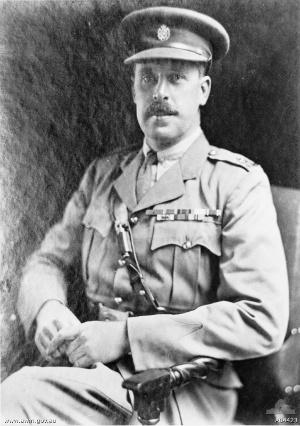
Colonel, British Army
Support & adopt this hero ↓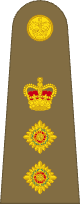
Guy George Egerton Wylly VC, CB, DSO built a military career that stretched from mounted warfare in South Africa to the Western Front and the volatile North-West Frontier of India. Born on 17 February 1880 in Hobart, Tasmania, he was the son of Edward Arthur Egerton Wylly, an Indian Army officer, and Henrietta Mary Wylly, née Clerk. As an infant he accompanied his parents to India, but in 1885 the family returned to Tasmania and settled at Sandy Bay. He attended The Hutchins School in Hobart before completing his education at the Collegiate School of St Peter in Adelaide. His father retired from the army in 1888.
The Second Boer War provided Wylly with his first experience of active service. At the age of twenty he joined the Tasmanian contingent and embarked from Hobart on 26 April 1900 as a lieutenant with the 3rd, or 1st Tasmanian Imperial, Contingent. After reaching South Africa, the Tasmanians were absorbed into the Imperial Bushmen and were soon engaged in the mobile warfare then spreading across the Transvaal. By August 1900 the unit was repeatedly involved in small actions against Boer forces.
Wylly's name entered the history of the Victoria Cross on 1 September 1900 near Warm Bad in the Transvaal. He was with the advanced scouts of a foraging party when eight men entered a narrow, rocky and heavily wooded gorge and came under sudden fire at close range. Six of the eight were wounded, including Wylly. Corporal E. S. Brown had been badly wounded in the leg and his horse had been shot. Wylly returned to him, gave Brown his own horse and then took position behind a rock, firing on the Boer positions to cover the withdrawal of the others. His conduct was credited with saving Brown from death or capture and helping other members of the patrol escape.
His Victoria Cross citation, published in the London Gazette on 23 November 1900, stated:
"On the 1st September, 1900, near Warm Bad, Lieutenant Wylly was with the advanced scouts of a foraging party. They were passing through a narrow gorge, very rocky and thickly wooded, when the enemy in force suddenly opened fire at short range from hidden cover, wounding six out of the party of eight, including Lieutenant Wylly. That Officer, seeing that one of his men was badly wounded in the leg, and that his horse was shot, went back to the man's assistance, made him take his (Lieutenant Wylly's) horse, and opened fire from behind a rock to cover the retreat of the others, at the imminent risk of being cut off himself. Colonel T. E. Hickman, D.S.O., considers that the gallant conduct of Lieutenant Wylly saved Corporal Brown from being killed or captured, and that his subsequent action in firing to cover the retreat was instrumental in saving others of his men from death or capture."
Trooper John Hutton Bisdee of the same Tasmanian contingent also received the Victoria Cross for gallantry during the action. The engagement around Rooikop formed part of a wider operation that resulted in the capture of Boer prisoners, rifles, ammunition, cattle and transport. Wylly, however, had been wounded during the fighting.
Wylly's transition from colonial volunteer to regular officer took place while the South African campaign was still in progress. An initial appointment to the Royal Berkshire Regiment was announced and subsequently cancelled. He was instead commissioned as a second lieutenant in the South Lancashire Regiment on 5 December 1900. Contemporary reporting later listed him as dangerously wounded at Nooitgedacht, although the surviving record does not make it entirely clear whether this represented a separate wound or continuing complications from his earlier injuries. His condition was serious enough for him to be invalided from South Africa. He left Cape Town aboard the hospital ship Avoca on 5 March 1901 and arrived at Southampton on 26 March. The 1901 census found him recuperating with his uncle, retired Colonel Robert M. Clark, at Charlton House, Shepton Mallet.
On 25 July 1901 King Edward VII presented Wylly with the Victoria Cross at St James's Palace. Specialist Victoria Cross records give St James's Palace as the venue.
After recovering, Wylly continued his regular army career. He joined the 2nd Battalion, South Lancashire Regiment in India and was promoted lieutenant with seniority from 5 March 1902. On 1 October 1902 he transferred to the Indian Army. He served with the 46th Punjabis from 1902 to 1904 and then joined the Queen's Own Corps of Guides, first with its infantry and subsequently with its cavalry. On 7 January 1906 he became aide-de-camp to Lord Kitchener, then Commander-in-Chief in India. He remained on Kitchener's personal staff until 1909 and was promoted captain on 26 April of that year.
Seeking advancement through the staff system, Wylly passed the examination associated with entry to the Staff College at Quetta in 1913, although the surviving accounts differ over the precise chronology of his formal qualification. What can be established more securely is that he was appointed staff captain in the Mhow Cavalry Brigade with effect from 14 December 1914 and went to France with the British Expeditionary Force. The Australian Dictionary of Biography compresses this sequence by describing him as already qualified at Quetta before the posting, while a contemporary graduate listing published in February 1916 records his formal completion later. For historical accuracy, the wartime appointment and the formal staff-college qualification should therefore be treated as separate events.
The employment of Indian cavalry in France placed officers such as Wylly in a war very different from the mobile operations for which cavalry formations had been designed. He was wounded in action in August 1915. His appointment as brigade major took effect on 14 September 1915, according to the Gazette-linked service record, although the Australian Dictionary of Biography gives 1 September. He was formally included among the Quetta Staff College graduates in February 1916. He was subsequently promoted temporary major on 26 April 1916 and appointed General Staff Officer, Grade 2, on 20 June 1916.
Wylly's staff service expanded during the following year. In June 1916 he served briefly on the staff of the British 4th Division, then joined the staff of the newly forming 3rd Australian Division in England the following month. From 24 February to 26 July 1917 he served on the staff of I Anzac Corps before returning to India. During his service in France and Belgium he was Mentioned in Despatches three times. His wartime work was further recognised when he was appointed a Companion of the Distinguished Service Order in the 1918 New Year Honours.
Wylly also retained a personal connection with Lord Kitchener. Following Kitchener's death in the sinking of HMS Hampshire in June 1916, Wylly was among former members of his staff who received a personal bequest of £200 under the Field Marshal's will.
His return to India did not bring an end to operational service. During the Third Anglo-Afghan War of 1919 he again served as a General Staff Officer, Grade 2, from 6 May. Over the following fourteen years he participated in a succession of operations on the North-West Frontier. These campaigns ultimately brought him four further Mentions in Despatches, taking his documented career total to seven. The Australian Dictionary of Biography independently confirms three mentions during the First World War and four during his later Indian service.
Wylly was promoted lieutenant colonel on 26 April 1926 and commanded the 6th Duke of Connaught's Own Lancers. On 15 November 1926 he was appointed an aide-de-camp to King George V, an appointment he retained until his retirement. His seniority and staff responsibilities continued to increase. In November 1929 he became Assistant Adjutant and Quartermaster General for the Peshawar District, and on 26 April 1930 he received substantive promotion to colonel, with seniority dating from 15 November 1926.
His work on the frontier brought further official recognition. He was Mentioned in Despatches for operations connected with the disturbances involving Afridi tribesmen and the Red Shirt movement. A further mention was published in September 1933 in connection with operations described in the service record as the Chitral Reliefs. His final operational period included the Mohmand and Bajaur operations conducted from 28 July to 3 October 1933. The mention relating to those operations was published on 3 July 1934, after his retirement, not posthumously. Wylly was alive for almost another twenty-eight years.
In the King's Birthday Honours of 1933, Wylly was appointed a Companion of the Military Division of the Order of the Bath. The official announcement described him as Colonel Guy George Egerton Wylly, VC, DSO, Indian Army, Aide-de-Camp to the King and Assistant Adjutant and Quarter-Master-General, Peshawar District. He relinquished his Peshawar appointment in November 1933 and retired from the Indian Army on 30 December 1933. On 27 February 1934 he attended an investiture at Buckingham Palace to receive the insignia of the Order of the Bath.
Retirement did not sever Wylly's association with the military community. He worked for the Retired Army Officers Employment Bureau in Britain. Although he remained liable for recall until reaching the age limit in February 1940, he was not recalled for service during the Second World War.
Colonel Guy George Egerton Wylly died at Camberley, Surrey, on 9 January 1962, aged eighty-one. He had never married. He was cremated at Woking Crematorium, and specialist records state that his ashes were scattered in the Tennyson Lake Garden of Remembrance. His surviving medal group, including the Victoria Cross, is held by the Tasmanian Museum and Art Gallery in Hobart.
Wylly's career spanned three very different military worlds. He began as a young Tasmanian mounted volunteer in South Africa, earned the Victoria Cross while wounded and under close-range fire, became a professional officer of the Indian Army, served on the Western Front as a staff officer, and ended his active career as a colonel responsible for senior administration on the North-West Frontier. Along the way he was appointed Companion of the Order of the Bath and Companion of the Distinguished Service Order and was Mentioned in Despatches seven times. His record illustrates both exceptional personal gallantry and more than three decades of sustained professional military service.
Become the named supporter for this profile and edit the tribute biography and portrait (Owner account required). Proceeds help keep the archive online.
$25 USD / year — annual sponsorship renewal. Keeps the page online and, where enabled, the family anniversary remembrance emails active.