★
Loading archive…
Loading archive…

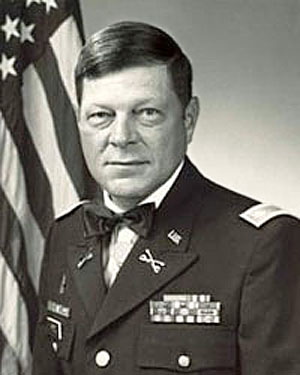
Surrounded, badly wounded, and facing a force that threatened to overwhelm his men, Harold Arthur “Hal” Fritz refused to surrender the initiative. Instead, he climbed onto a burning armored vehicle, rallied his soldiers, fought back at close range, and ultimately helped turn a devastating ambush into an extraordinary American stand. His actions in Vietnam would earn him the Medal of Honor and place his name among the most highly decorated soldiers of the Vietnam War.
Harold Arthur Fritz was born on February 21, 1944, in Chicago, Illinois. His family later moved to Lake Geneva, Wisconsin, where he grew up hunting, fishing, participating in the Boy Scouts, wrestling, playing baseball and taking part in the National FFA Organization. He graduated from Badger High School in 1962 and later attended the University of Tampa. After receiving a draft notice, Fritz chose to enlist in the United States Army in April 1966. He soon entered Officer Candidate School and was commissioned as an Armor officer, beginning a military career that would ultimately span from 1966 to 1993.
Fritz deployed to Vietnam in January 1968 and was assigned to the famed 11th Armored Cavalry Regiment, the “Blackhorse Regiment.” His first major test of courage came on May 18, 1968, while serving as a first lieutenant and tank platoon leader with Company D, 1st Squadron. His unit encountered a heavily entrenched North Vietnamese Army battalion, and Fritz immediately led repeated tank assaults against the enemy positions. According to his official Silver Star citation, he used his tank's main gun against enemy bunkers, continued fighting with an automatic weapon after the main-gun ammunition was exhausted, and repeatedly exposed himself to hostile fire while attacking enemy entrenchments with hand grenades.
An enemy rocket then struck his tank and wounded him. Ordered to the rear, Fritz drove his vehicle to the evacuation area, but rather than immediately accept medical treatment, he helped supervise the evacuation of other wounded soldiers. When another tank arrived with its commander badly wounded, Fritz helped arrange that soldier's evacuation, climbed aboard the tank despite his own injuries, and returned to the battle. The Silver Star citation credited his personal heroism and leadership with inspiring his men during close combat against a numerically superior enemy and noted that the engagement resulted in 28 enemy soldiers killed. Hall of Valor But the action that would define Harold Fritz's military career came eight months later.
On January 11, 1969, Fritz was serving as a platoon leader with Troop A, 1st Squadron, 11th Armored Cavalry Regiment, near Quan Loi in Binh Long Province. He was leading a seven-vehicle armored column along Highway 13 to meet and escort a truck convoy when a reinforced enemy force suddenly opened fire from prepared ambush positions. Fritz's vehicle was struck almost immediately, leaving him seriously wounded while his platoon became surrounded and in danger of being overrun. His response became the basis of his Medal of Honor citation. Despite his wounds, Fritz climbed onto his burning vehicle and directed the positioning of his remaining vehicles and soldiers. Completely exposed to enemy fire, he moved from position to position, helped the wounded, redistributed ammunition, directed defensive fire and encouraged his men to continue fighting. When enemy troops launched an assault against the position, Fritz personally manned a machine gun, helping inspire the concentrated fire that broke the attack.
Minutes later, another enemy force advanced to within roughly two meters of the defenders. Fritz did not wait for them to overrun his wounded platoon. Armed only with a pistol and bayonet, he led a small group of soldiers directly against the attackers. The aggressive counterattack inflicted heavy casualties and drove the enemy back. When a relief force finally reached the battlefield, Fritz again exposed himself to hostile fire to redirect its deployment against the enemy positions. The renewed pressure forced the attacking force to abandon the ambush and withdraw.
Even then, Fritz's fight was not over. Although he had suffered serious wounds, he returned to his men and refused medical treatment until the other wounded soldiers had been treated and evacuated. His Medal of Honor citation praised his extraordinary courage, selflessness and repeated willingness to risk his own life for his soldiers. Fritz later explained the mindset behind his actions simply: in such moments, a leader has to survive long enough to get his people out.
President Richard Nixon presented the Medal of Honor to Captain Harold A. Fritz at the White House on March 2, 1971. The award formally recognized his gallantry and intrepidity above and beyond the call of duty during the January 1969 battle. His Medal of Honor came in addition to the Silver Star he had already earned for his combat leadership in May 1968.
Fritz's Vietnam service brought other evidence of the dangers he faced. He received the Purple Heart twice, represented by the Purple Heart with an oak leaf cluster. His documented honors also include the Legion of Merit, two Bronze Star Medals including an award for valor, the Defense Meritorious Service Medal, three Meritorious Service Medals, and two Army Commendation Medals. The surviving publicly accessible sources clearly establish these decorations, although the complete narrative citations for each of those awards are not readily available and should not be reconstructed without the underlying orders or personnel records.
His career did not end with Vietnam. Fritz continued serving the United States Army for more than two decades, including overseas service in Germany and Korea, as well as assignments in the United States and other military duties. The Army officer who had once fought from a burning vehicle eventually rose to the rank of lieutenant colonel. He retired in 1993 after nearly 28 years of military service.
After retirement, Fritz continued working on behalf of veterans and sharing the meaning of military service with younger generations. He remained active in the Medal of Honor community and later served as president of the Congressional Medal of Honor Society. His story has been preserved through the Library of Congress Veterans History Project, ensuring that future generations can hear not only what happened during the battle, but how the soldier who lived through it understood leadership, courage and responsibility.
Harold Arthur “Hal” Fritz's legacy is larger than a single medal or a single battle. Twice in Vietnam, official award citations recorded the same qualities: personal courage under overwhelming fire, decisive leadership when men were in danger, and an unwillingness to place his own safety ahead of theirs. From the tank battles of May 1968 to the desperate Highway 13 ambush of January 1969, Fritz demonstrated why leadership in combat is measured not by what a soldier says, but by what he is prepared to do when everyone around him is depending on his next decision.
Become the named supporter for this profile and edit the tribute biography and portrait (Owner account required). Proceeds help keep the archive online.
$25 USD / year — annual sponsorship renewal. Keeps the page online and, where enabled, the family anniversary remembrance emails active.