★
Loading archive…
Loading archive…

Captain, British Army
Support & adopt this hero ↓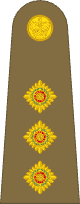
He stayed with the wounded man and held the enemy until dusk
Harry Churchill Beet was born near Bingham, Nottinghamshire, in April 1873. The son of a sculptor, he enlisted in the Sherwood Foresters in February 1892. Posted to India in 1894, he took part in the Punjab Frontier and Tirah operations of 1897–1898 before serving in South Africa with mounted infantry of the Derbyshire Regiment.
On 22 April 1900, near Wakkerstroom, his company and supporting Imperial Yeomanry had to withdraw from a farm beneath a Boer-held ridge. Corporal Burnett of the Yeomanry was left wounded. Beet stayed behind, moved him into shelter and dressed his injuries. Through the afternoon he kept the approaching Boers back with rifle fire. He remained exposed until darkness enabled a medical officer to reach the casualty. His prolonged defence gave the wounded man a chance of survival when withdrawal would have left him unprotected.
Beet's Victoria Cross was announced in February 1901 and presented by the Duke of York at Pietermaritzburg that August. He was subsequently wounded in December and remained in South Africa through the end of the war. His service brought promotion to sergeant.
He later emigrated to Saskatchewan. At the outbreak of the First World War he again volunteered, joining the Canadian Expeditionary Force and serving with the 32nd Reserve Battalion. He received a temporary lieutenant's commission in 1916 and ultimately held captain's rank. After returning to civilian life in Canada, he moved to British Columbia in 1936. He died in the Vancouver area on 10 January 1946 and was buried at Mountain View Cemetery. His medals later entered the Sherwood Foresters museum collection in Nottingham.
Official Victoria Cross citation
At Wakkerstroom, on the 22nd April, 1900, No. 2 Mounted Infantry Company, 1st Battalion Derbyshire Regiment, with two squadrons, Imperial Yeomanry, had to retire from near a farm, under a ridge held by Boers. Corporal Burnett, Imperial Yeomanry, was left on the ground wounded, and Corporal Beet, on seeing him, remained behind and placed him under cover, bound up his wounds,and by firing prevented the Boers from coming down to the farm till dark, when Doctor Wilson, Imperial Yeomanry, came to the wounded man’s assistance. The retirement was carried out undera very heavy fire,and Corporal Beet was exposed to fire during the whole afternoon
(The London Gazette of 12 February 1901, Numb. 27283, p. 1059)
Become the named supporter for this profile and edit the tribute biography and portrait (Owner account required). Proceeds help keep the archive online.
$25 USD / year — annual sponsorship renewal. Keeps the page online and, where enabled, the family anniversary remembrance emails active.