★
Loading archive…
Loading archive…

Shielding a wounded officer, he faced blades at close range.
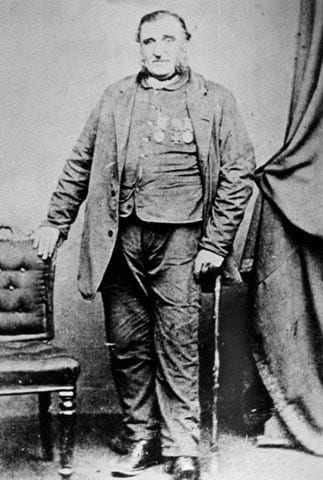
Henry Addison was born at Bardwell, Suffolk, on 1 February 1821. The son of a labourer, he followed the same occupation before enlisting in the 94th Regiment of Foot in February 1841. His service took him to India, where he took part in operations against the Moplahs before transferring to the 43rd Light Infantry in 1854. That year he married Charlotte Dickson at Madras.
On 2 January 1859, during operations near Kurrereah, the political officer Lieutenant Osborne was wounded in an encounter with a much larger enemy force. Addison moved to protect him and engaged his attackers at close quarters. In shielding the officer he received severe sword wounds to his left knee and left forearm. His intervention allowed Osborne to survive, but Addison's own injuries were permanently disabling. His left leg was amputated.
The Victoria Cross recognised his deliberate exposure to danger on another man's behalf. Queen Victoria presented the decoration at Windsor on 9 November 1860. By then he had been discharged from the army because of his injuries, ending nearly twenty years of service. Osborne also provided him with an annual private pension of £20, an enduring acknowledgement of the rescue.
Addison returned to Bardwell and lived there after his military career. His family experienced further loss when his young son died in 1862. His surviving medal group comprises the Victoria Cross, an unclasped Indian Mutiny Medal and the Army Long Service and Good Conduct Medal. He died at Bardwell on 18 June 1887 and was buried in the parish churchyard.
Become the named supporter for this profile and edit the tribute biography and portrait (Owner account required). Proceeds help keep the archive online.
$25 USD / year — annual sponsorship renewal. Keeps the page online and, where enabled, the family anniversary remembrance emails active.