★
Loading archive…
Loading archive…
He Volunteered to Sail Straight Into Vicksburg’s Guns
Henry Casey was born in 1837 in Fayette County, Pennsylvania. Before the American Civil War, Casey moved west to Ohio and settled in Fayette County, where he would eventually establish deep personal and community ties. When the national crisis became war, he left civilian life and entered the United States Army, beginning a military career that would take him through some of the most important campaigns fought in the Western Theater.
Casey enlisted at Bloomingburg, Ohio, in September 1861 and joined Company C of the 20th Ohio Volunteer Infantry. He entered service as a Private. The 20th Ohio became part of the Union forces operating in Tennessee and Mississippi and developed into an experienced combat regiment during the war.
Casey’s early military service exposed him to the difficult campaigning that characterized the Western Theater. The 20th Ohio served with Union forces during operations around Fort Donelson and later at Shiloh, where the fighting in April 1862 became one of the first truly massive and bloody battles of the war. The regiment subsequently continued campaigning through Tennessee and Mississippi as Union armies sought to break Confederate control of the Mississippi Valley.
By early 1863, the struggle for Vicksburg had become one of the most strategically important campaigns of the Civil War. The Confederate stronghold sat high above the Mississippi River and controlled a critical section of the waterway. As long as Vicksburg remained in Confederate hands, the South retained an important connection across the Mississippi between its eastern and western territories.
Major General Ulysses S. Grant had already attempted several approaches against Vicksburg without achieving the decisive result he wanted. By the spring of 1863, Grant adopted a bold new plan. His army would march south along the Louisiana side of the Mississippi, while Union naval vessels and transports would run directly past the powerful Confederate batteries guarding Vicksburg.
The plan was extremely dangerous.
Confederate artillery occupied commanding positions on the high ground overlooking the river. Any vessel attempting to pass Vicksburg would be exposed to concentrated cannon fire while moving through the bend below the city. Unlike armored gunboats, supply transports were particularly vulnerable.
Grant nevertheless needed those transports below Vicksburg. His soldiers were moving farther from their northern supply bases, and the army required boats capable of carrying supplies and later helping move troops across the Mississippi.
The first major naval passage occurred in mid-April 1863, when Union gunboats and transports steamed past the Confederate defenses. Although most of the vessels survived, the operation demonstrated exactly how dangerous the Vicksburg batteries could be.
Several days later, another convoy was prepared to carry vital supplies past the city.
This was the mission Henry Casey volunteered to join.
On April 22, 1863, while still serving as a Private in Company C, 20th Ohio Infantry, Casey voluntarily became one of the crewmen aboard a Union transport ordered to pass the forts at Vicksburg.
It was not an ordinary infantry assignment. Casey was leaving the relative familiarity of his regiment to take part in a hazardous river operation aboard a vessel that would deliberately enter the range of Confederate artillery.
The transports moved down the Mississippi under cover of darkness, towing supply barges needed by Grant’s army. Confederate batteries opened fire as the vessels came within range.
For the crews, there was little opportunity to escape once the passage had begun. The river current carried the transports downstream while Confederate artillery fired from positions overlooking the water. A disabled vessel could drift helplessly beneath the guns, burn, sink, or lose its barges and cargo.
Casey remained with the transport during the passage.
The official Medal of Honor citation later described his action in direct language: he voluntarily served as one of the crew of a transport that passed the forts under heavy fire.
That concise description captures the essential reason Casey was recognized. He was not ordered into the assignment as part of his normal infantry duty. He volunteered to place himself aboard a vulnerable transport knowing that the vessel would deliberately run one of the most heavily defended stretches of the Mississippi River.
The convoy succeeded in delivering additional vessels and supplies below Vicksburg, strengthening Grant’s ability to continue the campaign.
The importance of the operation extended far beyond one dangerous night on the river. With naval vessels and transports available south of Vicksburg, Grant could move his army across the Mississippi and begin the overland campaign that eventually sealed the Confederate stronghold’s fate.
Union forces crossed below Vicksburg, fought their way through Mississippi, captured Jackson, defeated Confederate forces at Champion Hill and the Big Black River, and finally drove Lieutenant General John C. Pemberton’s army behind Vicksburg’s defenses.
After unsuccessful direct assaults in May, Grant settled into siege operations.
On July 4, 1863, Vicksburg surrendered.
The victory gave the Union control of the Mississippi River and represented one of the decisive strategic successes of the Civil War. The dangerous transport operations of April—including the mission for which Henry Casey later received the Medal of Honor—had been an important part of making Grant’s final approach possible.
Casey’s military career continued after Vicksburg.
The 20th Ohio remained active as Union armies pushed deeper into the Confederacy. Casey continued serving through subsequent Western Theater campaigns and remained with the regiment as the war moved into Georgia. His service extended through the campaigns associated with Atlanta and the operations that followed.
The regiment later participated in Major General William T. Sherman’s movement through Georgia and the Carolinas. By this stage Casey was no longer the new Private who had enlisted in 1861. Years of campaigning had made him an experienced veteran.
On January 27, 1865, Casey was appointed Corporal.
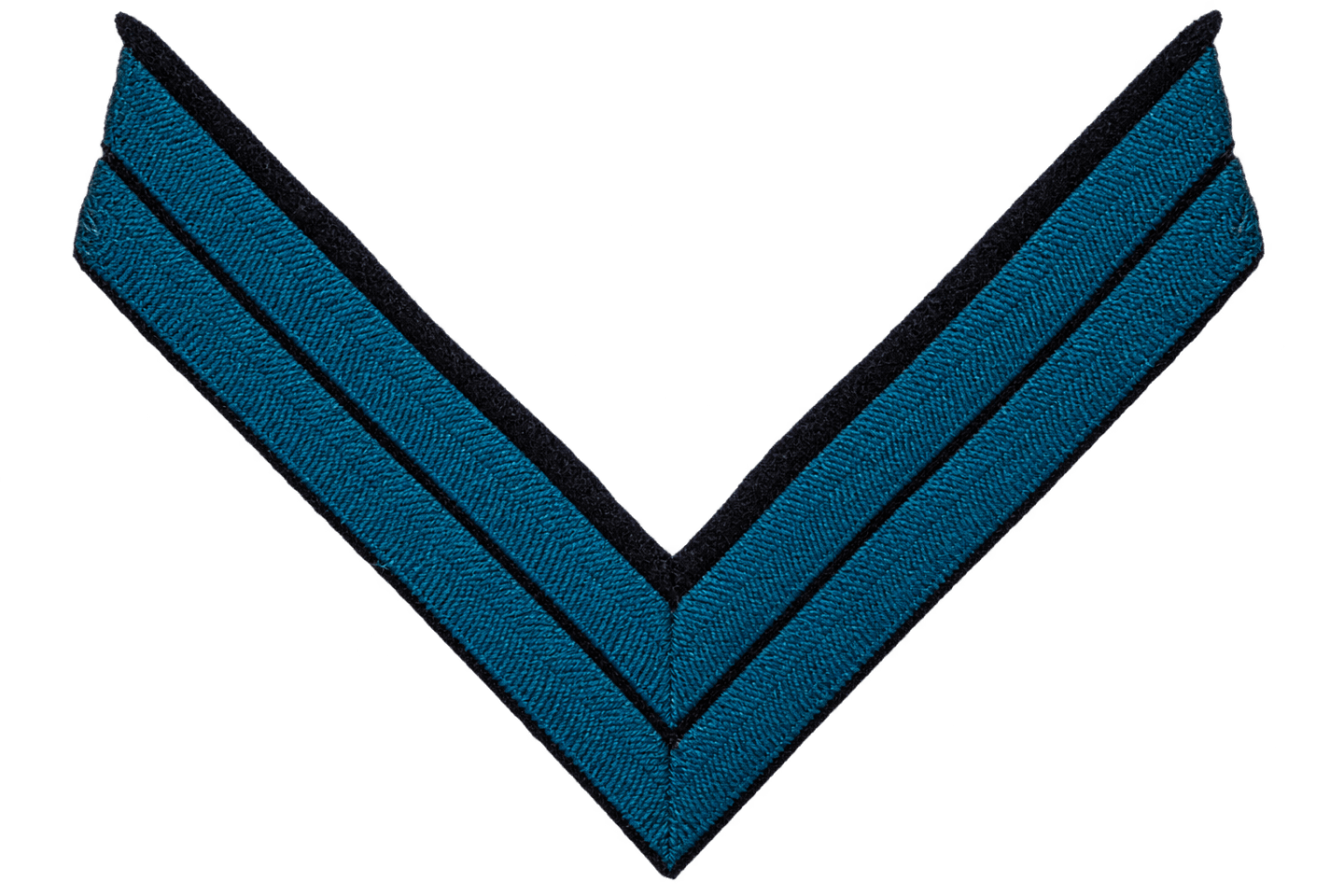
This distinction is important for his final military profile. Casey held the rank of Private on April 22, 1863, when he performed the action that earned the Medal of Honor. Corporal was the highest verified rank he later attained.
Casey remained in military service until July 1865, after the major Confederate armies had surrendered and the Civil War had effectively ended. His service therefore stretched across most of the conflict, from the early Western campaigns to the final months of Union victory.
After returning to Ohio, Casey resumed civilian life.
He married Catherine W. Holland after the war and established a family in Fayette County. Much of Casey’s civilian career was devoted to farming, and over the decades he became a well-established resident of the Bloomingburg area.
Like many Civil War veterans, Casey maintained connections with the generation that had served during the conflict. He participated in veterans’ and community life and became associated with local organizations in Bloomingburg. His long residence there transformed him from a returning soldier into one of the community’s recognized Civil War veterans.
For more than three decades after the war, however, the extraordinary action at Vicksburg remained without the nation’s highest formal recognition.
That changed in September 1897.
More than thirty-four years after the night he volunteered to pass the Confederate batteries, Henry Casey received the Medal of Honor.
The Army Medal of Honor had been authorized by Congress in 1862, during the Civil War. At that time, the United States Army did not possess the later hierarchy of valor decorations that would eventually include awards such as the Distinguished Service Cross and Silver Star. The Medal of Honor therefore became the principal national decoration for extraordinary military conduct.
A significant number of Civil War soldiers received their Medals of Honor years or even decades after the actions for which they were recognized. Casey was one of those veterans whose wartime courage was formally honored long after the fighting had ended.
Because Henry Casey received his Medal of Honor in 1897, the correct historical representation for the database is Medal of Honor 1896–1903 Army — 1897.
The date does not mean his heroic action occurred in 1897. His Medal of Honor action occurred on April 22, 1863, at Vicksburg. The 1897 date identifies the year in which the decoration was formally presented during the later historical Army Medal of Honor period.
No clasp, bar, star, oak leaf cluster, or other device has been verified for Casey’s decoration. His verified award therefore remains Medal of Honor 1896–1903 Army — 1897 — No device or clasp.
Casey continued living in the Bloomingburg area after receiving the medal. By the early twentieth century, he belonged to a rapidly diminishing generation of veterans who had personally experienced the Civil War and watched the United States change dramatically in the decades following it.
Henry Casey died on May 9, 1919, in Bloomingburg, Ohio, at the age of eighty-one.
He was buried in Bloomingburg Cemetery, the community that had been closely connected with both his enlistment and his long postwar life.
Henry Casey’s Medal of Honor story did not begin with a charge across an open battlefield or the capture of an enemy flag. It began with a request for volunteers for a mission whose danger was obvious.
A transport had to pass beneath the Confederate guns at Vicksburg.
Henry Casey volunteered to be aboard.
Under heavy artillery fire, the transport continued down the Mississippi and through the defenses. That decision helped support one of the most consequential campaigns of the Civil War and, more than three decades later, earned Henry Casey the Medal of Honor 1896–1903 Army — 1897.
Become the named supporter for this profile and edit the tribute biography and portrait (Owner account required). Proceeds help keep the archive online.
$25 USD / year — annual sponsorship renewal. Keeps the page online and, where enabled, the family anniversary remembrance emails active.
