★
Loading archive…
Loading archive…
He Crossed the Trestle Under Fire for Reinforcements
Henry Fox was born on October 3, 1833. By the beginning of the American Civil War, he was living in Lincoln, Illinois, where he became part of the Union war effort. In August 1862, Fox entered the United States Army and joined Company H of the 106th Illinois Volunteer Infantry. He entered service as a Sergeant, already carrying responsibility for the enlisted soldiers around him.
The 106th Illinois Infantry was organized at Lincoln and mustered into Federal service in September 1862. In November the regiment moved south through Missouri and Kentucky before reaching Jackson, Tennessee. Its soldiers were divided among several positions to protect Jackson and stretches of the Mobile and Ohio Railroad, an important transportation route vulnerable to Confederate raids and attacks.
Only a few months after entering service, Fox faced the event that would define his military legacy. On December 23, 1862, his command was stationed near Jackson when it became surrounded by a much stronger Confederate force. The Union position was in serious danger, and reinforcements were needed if the soldiers were to avoid being overwhelmed.
Fox volunteered to attempt the dangerous journey for help. Leaving the relative protection of the defensive works, he exposed himself to enemy fire and made for the railroad trestle that stood between his isolated command and the route toward Jackson. He climbed onto the structure and crossed the exposed trestle while Confederate troops concentrated their fire upon him.
There was little protection available as he crossed. A single hit could have ended both his life and the attempt to obtain help. Nevertheless, Fox continued across the trestle, escaped the Confederate pressure surrounding his position, and made his way toward Jackson. He successfully reached friendly forces and secured reinforcements for the relief of his command.
That journey became the central heroic act of Fox's career. He had voluntarily left safety when his comrades were surrounded, crossed exposed ground and railroad structure under concentrated enemy fire, and completed a mission upon which the survival of the isolated Union force depended. The action occurred when he was still a Sergeant, years before the United States formally recognized what he had done.
Fox's military career continued well beyond the action near Jackson. His performance as a soldier was followed by advancement into the commissioned officer ranks. In June 1863, he became Captain of Company C of the 1st Tennessee Infantry Regiment (African Descent), a Union regiment composed of Black enlisted soldiers commanded by commissioned officers. The regiment was later redesignated as the 59th United States Colored Infantry.
His promotion from Sergeant to Captain marked a substantial transformation in responsibility. Fox was no longer simply responsible for his own conduct or for a small group of enlisted soldiers; as a company commander he was responsible for discipline, organization, training, administration, and battlefield leadership. His service with the United States Colored Troops placed him within one of the most important developments of the later Civil War, as African American soldiers became an increasingly significant part of the Union Army.
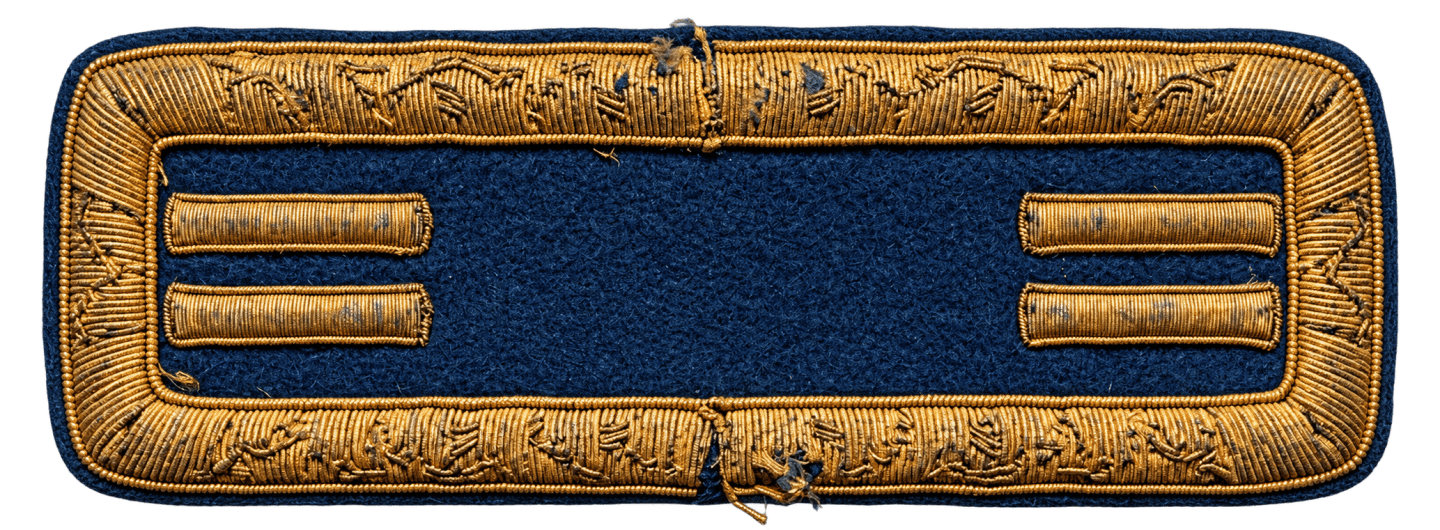
Fox remained in military service through the closing period of the Civil War and beyond the Confederate surrender. His unit operated primarily in West Tennessee and northern Mississippi, protecting Union positions and transportation routes and participating in the broader effort to maintain Federal control of the region. He continued as a Captain until he was mustered out of service on January 31, 1866. Captain therefore became the highest verified rank of his military career, while Sergeant remained the rank he held during his Medal of Honor action.
After leaving the Army, Fox returned to Lincoln, Illinois, and entered civilian business. The transition brought him from military command back into the rapidly developing postwar society of Illinois. In 1874 he moved to Dwight, Illinois, where he began a long association with the extensive agricultural properties of the Scully estate. He served as resident manager of thousands of acres of land and remained in that position for the rest of his life.
Fox also built a large family. He and his first wife had eight children. After more than two decades of marriage, his wife died in October 1879. On October 28, 1880, Fox married Hattie Chamberlain, who remained with him through the later years of his life.
His connection with fellow Civil War veterans also continued long after he left the Army. Fox belonged to the Grand Army of the Republic and was associated with Dwight Post No. 626 in Illinois. He was also a member of the Military Order of the Loyal Legion of the United States, an organization closely associated with Union officers and the preservation of Civil War military memory. His civic and fraternal affiliations also included membership in the Masons and the Independent Order of Odd Fellows.
Although Fox's famous act had taken place in 1862, formal national recognition came extraordinarily late. More than thirty-six years after he crossed the railroad trestle under enemy fire, the United States awarded him the Medal of Honor on May 16, 1899. He was still alive to receive the decoration.
For his final verified medal record, the decoration is Medal of Honor 1896–1903 Army — 1899, with no additional device or clasp. The historical designation reflects the Army Medal of Honor version applicable when his award was issued in 1899. His heroic action itself remained the December 23, 1862 mission near Jackson, Tennessee. Separating those dates is essential to his story: the courage occurred during the opening years of the Civil War, while formal recognition arrived more than three decades later.
The Medal of Honor transformed an act remembered within the history of the 106th Illinois Infantry into nationally recognized military history. Fox had not earned it through senior rank or command authority. He earned it as a Sergeant who voluntarily left a threatened defensive position, crossed an exposed railroad trestle under concentrated enemy fire, escaped the surrounding Confederate force, and obtained reinforcements for his comrades.
Fox continued his civilian life in Dwight after receiving the medal. By then he was an established land manager, veteran, family man, and former Army Captain whose Civil War experience stretched from enlisted service in an Illinois regiment to commissioned command in the United States Colored Troops.
Henry Fox died in Dwight, Illinois, on September 3, 1906, just one month before his seventy-third birthday. He was buried at Oak Lawn Cemetery in Dwight.
His military legacy connects two distinct chapters of Civil War service. As Sergeant of Company H, 106th Illinois Infantry, he risked his life alone under enemy fire to bring help to an surrounded command. As Captain of Company C, later part of the 59th U.S. Colored Infantry, he carried the responsibilities of commissioned leadership through the later years of the conflict. Decades afterward, the Medal of Honor formally preserved the moment that defined his courage: one soldier leaving the protection of the breastworks, crossing an exposed trestle under fire, and refusing to stop until reinforcements were secured.
Become the named supporter for this profile and edit the tribute biography and portrait (Owner account required). Proceeds help keep the archive online.
$25 USD / year — annual sponsorship renewal. Keeps the page online and, where enabled, the family anniversary remembrance emails active.
