★
Loading archive…
Loading archive…
Henry Hill was born in 1843 in Schuylkill County, Pennsylvania. He spent much of his life in the Schuylkill Haven area and came from a community that supplied many men to Pennsylvania's volunteer regiments during the American Civil War. Before and after the war, his life was closely connected with the working communities of Schuylkill County.
When the Civil War began, Hill entered the United States Army and joined Company C of the 50th Pennsylvania Infantry. He initially served as an enlisted soldier and eventually rose through the ranks. His regiment became a veteran Union infantry organization whose service extended across several major campaigns and battlefields.
The 50th Pennsylvania Infantry entered Federal service in 1861 and experienced an unusually broad range of campaigning. The regiment served in operations along the Atlantic coast and later fought in Virginia and Maryland, eventually becoming involved in some of the most severe battles of the Eastern Theater.
Hill's wartime experience therefore extended far beyond the single action for which he later became famous. His regiment fought through years of demanding service, including campaigns that exposed its soldiers to long marches, disease, artillery bombardments, musket fire, and repeated close combat.
Hill continued with the regiment and reenlisted as a veteran during the war rather than leaving the service when his original term approached completion. By the spring of 1864, he held the rank of Corporal in Company C.
In May 1864, Lieutenant General Ulysses S. Grant began the Overland Campaign against General Robert E. Lee's Army of Northern Virginia. Grant's strategy was to maintain constant pressure on Lee and continue moving toward Richmond regardless of the enormous casualties suffered in individual engagements.
The first great battle of this campaign took place in the Wilderness of Virginia on May 5 and 6, 1864. The battlefield was covered with dense woodland, tangled vegetation, and narrow roads. Visibility was extremely limited, making command and control difficult and turning many parts of the battle into confused, close-range infantry combat.
Smoke from muskets and burning woodland further reduced visibility. Regiments frequently lost contact with neighboring formations, and soldiers sometimes had little understanding of events occurring only a short distance away.
On May 6, 1864, Corporal Henry Hill and Company C of the 50th Pennsylvania Infantry became involved in this desperate fighting.
During an unsuccessful Union charge, Hill's regiment was forced backward in confusion. Under such circumstances, soldiers normally withdrew with their formation in order to avoid being isolated, captured, or killed.
Hill made a very different decision.
As his regiment fell back, Henry Hill and one other soldier refused to retire with the disorganized troops. Instead of moving toward safety, the two men advanced and continued firing against the Confederate forces.
They remained forward while their own regiment reorganized behind them. Their sustained resistance helped maintain pressure on the enemy during a moment when the Federal line had temporarily lost cohesion.
Hill and his companion continued fighting until the regiment was able to reform and recover its position. Their decision meant that for a critical period they were operating with very little immediate support while facing enemy troops in front of them.
The action demonstrated a form of courage based on determination and battlefield initiative. Hill did not earn recognition by capturing a flag, taking prisoners, or commanding a large formation. His distinction came from refusing to abandon the fight when the soldiers around him were withdrawing in confusion.
The Battle of the Wilderness was particularly brutal. Neither army achieved a clean tactical victory, and both sides suffered enormous casualties. What distinguished Grant's campaign from many earlier Union operations was what happened afterward: instead of retreating north, the Army of the Potomac continued south toward Spotsylvania Court House.
For Hill, May 6 also carried a deeply personal dimension. His brother William H. Hill, who served in the same regiment, was killed during the fighting at the Wilderness. Henry survived the battle and continued his service.
The 50th Pennsylvania Infantry moved on with the Union army into the next stages of the Overland Campaign. Hill participated in the continuing operations as Grant and Lee fought through Virginia during the spring and summer of 1864.
Only weeks after the Wilderness, Hill faced another major battle at Cold Harbor. The fighting there became notorious for the terrible casualties suffered during Union assaults against strongly prepared Confederate positions.
During the Cold Harbor operations, Hill was wounded. Surviving accounts indicate that he suffered a serious wound during the battle, but he survived and remained connected with his regiment's wartime service.
Hill's decision to reenlist meant that his Army career continued beyond the three-year service period completed by many of the original volunteers. He remained with Company C as the conflict entered its final year.
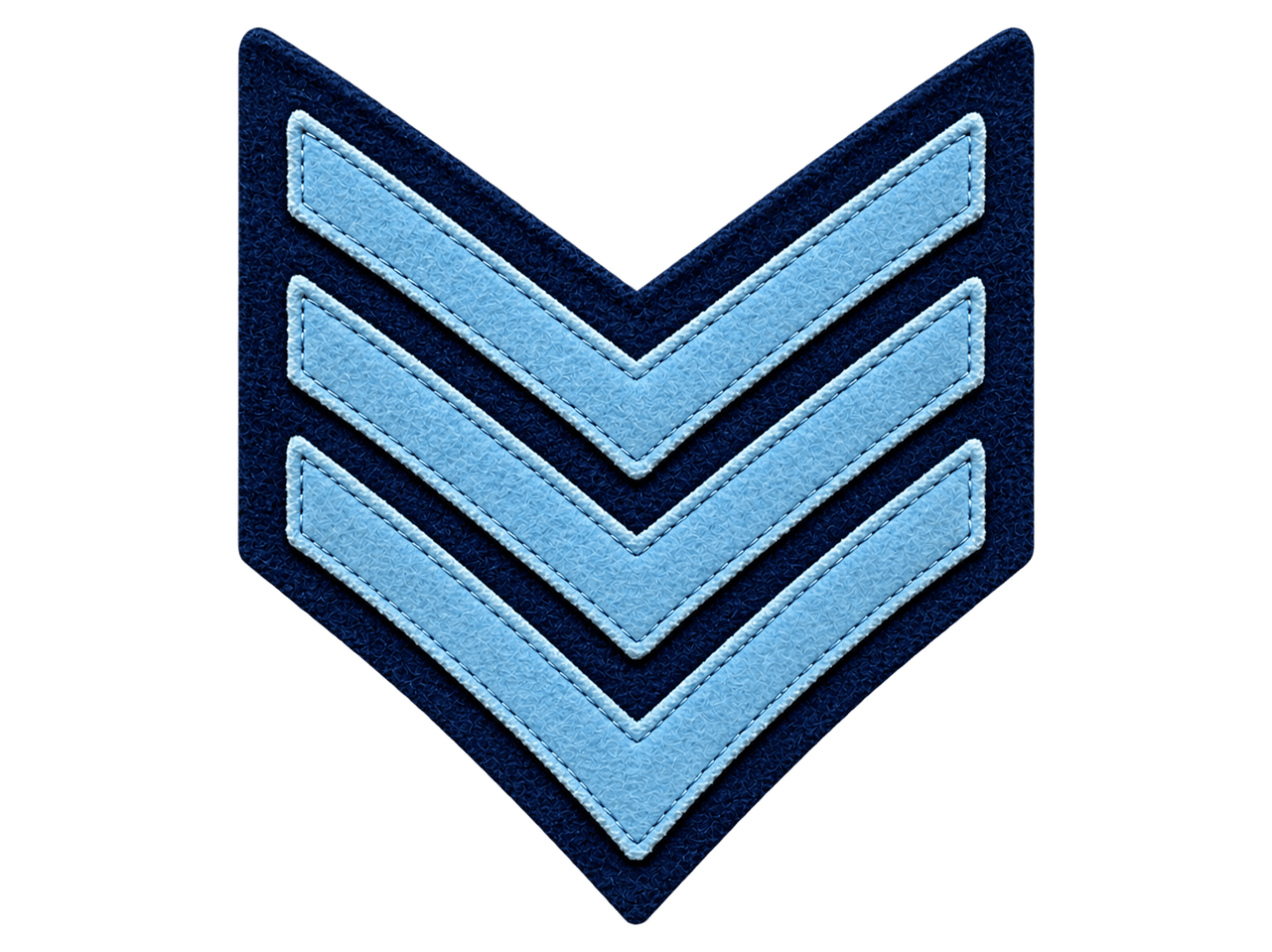
On March 20, 1865, Henry Hill was promoted to Sergeant. This was the highest verified rank of his military career.
The distinction between his two ranks is important. At the Battle of the Wilderness, when he performed the action later recognized with the Medal of Honor, Hill was a Corporal. Sergeant was the higher rank he attained later in his service.
The Civil War came to its decisive conclusion only weeks after Hill's promotion. Confederate forces abandoned Richmond and Petersburg, and General Robert E. Lee surrendered the Army of Northern Virginia to Grant at Appomattox Court House on April 9, 1865.
Hill remained in military service beyond Lee's surrender while Union volunteer organizations completed their remaining duties. His service with the 50th Pennsylvania Infantry finally ended in the summer of 1865.
He was mustered out on July 30, 1865, after years of wartime service that had taken him through major campaigns, battlefield losses, personal wounds, reenlistment, promotion, and the final Union victory.
Hill then returned to civilian life in Pennsylvania.
He became closely associated with Schuylkill Haven, where he spent most of his postwar years. Earlier in life he had worked around the local canal system, an important part of the transportation economy of nineteenth-century Schuylkill County.
In later years Hill worked as a night watchman and turnkey at the Schuylkill County Prison. His postwar occupation was far removed from the dense woods and battlefield confusion of Virginia, but his identity as a Civil War veteran remained an important part of his life.
He was also involved in veterans' activities. Hill became associated with Jere Helms Post No. 26 of the Grand Army of the Republic, the major national fraternal organization for former Union soldiers and sailors.
The Grand Army of the Republic allowed Civil War veterans to maintain connections with men who had shared similar wartime experiences. Local posts participated in memorial observances, veterans' gatherings, funeral ceremonies, and efforts to preserve the memory of Union service.
Hill was among the original men associated with the local post in Schuylkill Haven, and decades later he continued participating in activities connected with surviving veterans of the 50th Pennsylvania Infantry.
His extraordinary action at the Wilderness did not receive the nation's highest military recognition immediately. More than thirty-three years passed before the United States formally awarded him the Medal of Honor.
On September 23, 1897, Sergeant Henry Hill was presented with the Medal of Honor for what he had done as a Corporal on May 6, 1864.
The official citation preserved the central facts of the action: when his regiment withdrew in confusion following an unsuccessful charge, Hill and one companion refused to retire. Instead, they advanced and continued firing on the enemy until their regiment re-formed and regained its position.
The Medal of Honor had originally been established during the Civil War. Congress authorized the Army Medal of Honor in 1862, at a time when the United States had not yet developed the broad system of valor decorations that would exist in later generations.
For Civil War soldiers, the Medal of Honor therefore became the principal national decoration recognizing extraordinary battlefield courage and distinguished military conduct.
Hill's medal was issued in 1897, more than three decades after his heroic action. By that time the Army's Medal of Honor ribbon had changed from the original Civil War-era form.
The Army introduced a new ribbon design in 1896, and it was officially promulgated before Hill received his decoration in September 1897. For the project database, the historically correct representation of his award is therefore Medal of Honor 1896–1903 Army — 1897.
The date 1897 represents the year in which the Medal of Honor was formally presented to Hill. His heroic action itself remains dated May 6, 1864, during the Battle of the Wilderness.
No clasp, star, bar, oak leaf cluster, or other device has been verified for Henry Hill's Medal of Honor. His verified Medal of Honor entry therefore consists of one award without additional devices.
The Medal of Honor is also the only military decoration currently supported strongly enough for inclusion in Hill's final verified medal record.
Hill lived until 1909, meaning he survived into the period when the later Army Civil War Campaign Medal existed. However, survival into the eligibility period and documented Civil War service do not establish that an individual veteran actually received or was issued that medal.
No sufficiently strong recipient-specific issuance or entitlement evidence has been established for Henry Hill. The Army Civil War Campaign Medal is therefore not included in his verified ribbon rack.
Hill remained active in the veteran community during his later years. As late as 1908, he was involved with arrangements connected with a reunion of surviving members of the 50th Pennsylvania Veteran Volunteer Infantry at Schuylkill Haven.
These reunions allowed the aging veterans to preserve the history of their regiment and remember men who had died during the war or in the decades afterward. By then, only a diminishing number of the soldiers who had served during the early years of the conflict remained alive.
Henry Hill died on August 2, 1909, in Schuylkill Haven, Pennsylvania, after an illness. He was sixty-six years old.
His funeral reflected his standing within the local community and among Civil War veterans. Veterans' organizations participated, and he was buried with military honors at Union Cemetery in Schuylkill Haven.
Hill's life represented the experience of a long-serving Union volunteer soldier. He entered the Army during the early period of the Civil War, served through multiple campaigns, reenlisted rather than leaving when his original obligation ended, endured the death of his brother at the Wilderness, survived a battlefield wound, and ultimately rose from the enlisted ranks to Sergeant.
Yet one moment remained the defining act of his military career.
On May 6, 1864, while serving as a Corporal in Company C of the 50th Pennsylvania Infantry, Henry Hill saw his regiment retreat in confusion after an unsuccessful attack. Instead of following it to the rear, he and one companion remained forward, advanced against the enemy, and continued firing until their fellow soldiers reorganized and recovered their position.
More than thirty-three years later, the United States formally recognized that act of courage by presenting Henry Hill with the Medal of Honor on September 23, 1897.
With no additional military decoration supported by sufficient recipient-specific evidence, Medal of Honor 1896–1903 Army — 1897 remains Henry Hill's single verified medal and the defining official recognition of his courage during the American Civil War.
Become the named supporter for this profile and edit the tribute biography and portrait (Owner account required). Proceeds help keep the archive online.
$25 USD / year — annual sponsorship renewal. Keeps the page online and, where enabled, the family anniversary remembrance emails active.
