★
Loading archive…
Loading archive…
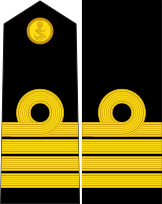
Kept directing naval operations despite eight severe wounds.
Henry Peel Ritchie was born in Edinburgh on 29 January 1876, the son of a doctor. Educated at George Watson's College, he entered the Royal Navy as a cadet in 1890. He developed a specialization in gunnery and served in a succession of warships and training establishments before becoming a commander in December 1911.
He married Christiana Lillias Jardine Aikman in 1902, and they had two daughters. His earlier service included an unsuccessful attempt to save a drowning seaman, for which he received the Admiralty's thanks. In March 1914 he joined the battleship Goliath as her second in command.
At the outbreak of war Goliath operated in the Channel before being sent to East Africa, where British naval forces sought the German cruiser Konigsberg. On 28 November 1914 Ritchie commanded search and demolition work in Dar es Salaam harbour. The operation exposed boats and landing parties to fire from the shore as they attempted to inspect and disable shipping and harbour facilities.
Ritchie was repeatedly wounded but continued directing the operation and encouraging the men around him. He maintained command through successive injuries until an eighth wound rendered him unconscious. Only then did his personal participation end. His persistence under fire brought the Victoria Cross, the first naval award arising from the First World War.
He spent six weeks in hospital at Zanzibar before evacuation to Britain. Although he returned to duty in May 1915, the effects of his injuries eventually ended his active career. He retired as medically unfit in March 1917 and was subsequently promoted to captain on the retired list. Ritchie lived for many years after the war, receiving later royal commemorative medals. He died in Edinburgh on 9 December 1958, aged eighty-two. His ashes were interred in the family grave in Dean Cemetery.
Official Victoria Cross citation
For most conspicuous bravery on the 28th November 1914 when in command of the searching and demolition operations at Dar es Salaam East Africa Though severely wounded several times his fortitude and resolution enabled him to continue to do his duty inspiring all by his example until at his eighth wound he became unconscious The interval between his first and last severe wound was between twenty and twenty five minutes
Supplement to The London Gazette of 9 April 1915. 10 April 1915, Numb. 29123, p. 3549
Become the named supporter for this profile and edit the tribute biography and portrait (Owner account required). Proceeds help keep the archive online.
$25 USD / year — annual sponsorship renewal. Keeps the page online and, where enabled, the family anniversary remembrance emails active.
