★
Loading archive…
Loading archive…
Held a Turkish trench alone until reinforcements secured it.
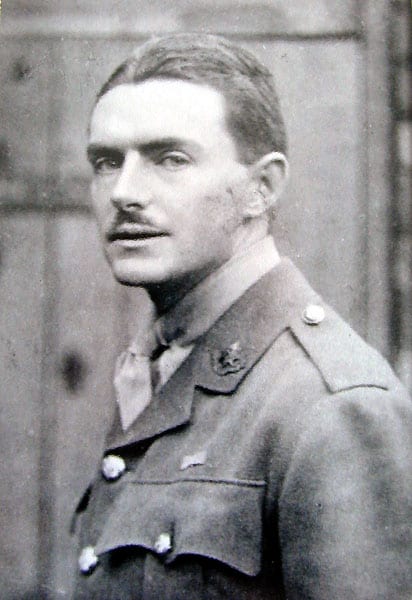
Herbert James was born in Birmingham in 1887 and grew up in Edgbaston. He worked as a teacher before enlisting in the 21st Lancers in April 1909. Service in Egypt and India followed, and he became a lance-corporal in July 1911. In November 1914, after the outbreak of the First World War, he received a commission in the 4th Battalion, Worcestershire Regiment.
James landed at Gallipoli in April 1915. Wounded during the fighting following the landings, he returned to his battalion in June. During the offensive around Gully Ravine on 28 June, he found neighbouring troops whose officers had been put out of action. Acting on his own initiative, he gathered men and led them forward under heavy fire, then returned to organise and lead a second party.
During a subsequent attack up a Turkish communication trench, almost all his bomb throwers became casualties. James held back the enemy alone until a barrier could be constructed behind him and the position secured. The official citation dates this action to 3 July, although the regimental history places it on 2 July. These actions earned him the Victoria Cross. King George V presented the decoration at Buckingham Palace on 15 January 1916.
His active service continued. While serving as battalion adjutant, he helped recover wounded men from no man’s land. A serious foot wound in September 1915 led to evacuation to Egypt. In March 1916 he joined the 1st Battalion in France, but was wounded again during fighting at Contalmaison on the Somme that July. On 5 September 1916 he married Gladys Beatrice Devonport, the daughter of a Royal Engineers officer.
Returning to France in 1917, James continued to distinguish himself. His Military Cross, announced in October 1918, recognised reconnaissance under heavy fire, his leadership of men from other units and his formation of a defensive flank where a gap had opened. He also received two mentions in despatches, the French Croix de Guerre with palm and Panama’s Medal de la Solidaridad, approved in February 1920.
James remained in the Army after the Armistice. He served in the honour guard at the burial of the Unknown Warrior in November 1920 and transferred to the East Lancashire Regiment that December. Subsequent service included the West Indies, Staff College and a staff appointment at the War Office. He was brigade major at Aldershot between October 1927 and November 1928, later transferring to the York and Lancaster Regiment. Ill health brought his military career to an end in March 1930.
In later life, Major James lived quietly in Kensington, reportedly dealing in paintings. His fellow residents did not know that he held the Victoria Cross. After he was found unconscious in August 1958, his landlord discovered his distinguished record through a book of VC recipients marked against his name. James died in London on 15 August 1958.
Victoria Cross citation
“For most conspicuous bravery during the operations in the Southern Zone of the Gallipoli Peninsula.
On the 28th June 1915, when a portion of a Regiment had been checked owing to all the Officers being put out of action, Second Lieutenant James, who belonged to a neighbouring unit, entirely on his own initiative gathered together a body of men and led them forward under heavy shell and rifle fire. He then returned, organised a second party, and again advanced. His gallant example put fresh life into the attack.
On the 3rd July, in the same locality, Second Lieutenant James headed a party of bomb throwers up a Turkish communication trench, and, after nearly all his bomb throwers had been killed or wounded, he remained alone at the head of the trench and kept back the enemy single-handed till a barrier had been built behind him and the trench secured. He was throughout exposed to a murderous fire.”
The London Gazette, September 1915, supplement 29281, page 8700.
Become the named supporter for this profile and edit the tribute biography and portrait (Owner account required). Proceeds help keep the archive online.
$25 USD / year — annual sponsorship renewal. Keeps the page online and, where enabled, the family anniversary remembrance emails active.