★
Loading archive…
Loading archive…

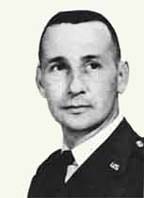
Flying low to protect Rangers from an ambush
Hilliard Almond Wilbanks earned the Medal of Honor for protecting South Vietnamese Rangers during the Vietnam War. Born in Cornelia, Georgia, on July 26, 1933, he served as an Air Force captain with the 21st Tactical Air Support Squadron.
On February 24, 1967, near Dalat, Wilbanks discovered a concealed enemy force while flying reconnaissance ahead of a Ranger battalion. With supporting aircraft unable to arrive in time, he made repeated low passes in his unarmed light aircraft, firing his rifle from a side window and drawing fire away from the Rangers. His actions interrupted the enemy advance and enabled the soldiers to withdraw. He was mortally wounded during his final pass, and his aircraft crashed.
Air Force Secretary Harold Brown presented his posthumous Medal of Honor to his widow at the Pentagon on January 24, 1968. Wilbanks was buried in Fayette Methodist Cemetery in Mississippi. His award commemorates a pilot’s sacrifice to protect soldiers on the ground.
Official Medal of Honor citation
For conspicuous gallantry and intrepidity in action at the risk of his life above and beyond the call of duty. As a forward air controller Capt. Wilbanks was pilot of an unarmed, light aircraft flying visual reconnaissance ahead of a South Vietnam Army Ranger Battalion. His intensive search revealed a well-concealed and numerically superior hostile force poised to ambush the advancing Rangers. The Viet Cong, realizing that Capt. Wilbanks' discovery had compromised their position and ability to launch a surprise attack, immediately fired on the small aircraft with all available firepower. The enemy then began advancing against the exposed forward elements of the ranger force which were pinned down by devastating fire. Capt. Wilbanks recognized that close support aircraft could not arrive in time to enable the rangers to withstand the advancing enemy onslaught. With full knowledge of the limitations of his unarmed, unarmored light reconnaissance aircraft, and the great danger imposed by the enemy's vast firepower, he unhesitatimgly assumed a covering, close support role. Flying through a hail of withering fire at treetop level, Capt. Wilbanks passed directly over the advancing enemy and inflicted many casualties by firing his rifle out of the side window of his aircraft. Despite increasingly intense antiaircraft fire, Capt. Wilbanks continued to completely disregard his own safety and made repeated low passes over the enemy to divert their fire away from the rangers. His daring tactics successfully interrupted the enemy advance, allowing the rangers to withdraw to safety from their perilous position. During his final courageous attack to protect the withdrawing forces, Capt. Wilbanks was mortally wounded and his bullet-riddled aircraft crashed between the opposing forces. Capt. Wilbanks' magnificent action saved numerous friendly personnel from certain injury or death. His unparalleled concern for his fellow man and his extraordinary heroism were in the highest traditions of the military service, and have reflected great credit upon himself and the U.S. Air Force.
Become the named supporter for this profile and edit the tribute biography and portrait (Owner account required). Proceeds help keep the archive online.
$25 USD / year — annual sponsorship renewal. Keeps the page online and, where enabled, the family anniversary remembrance emails active.